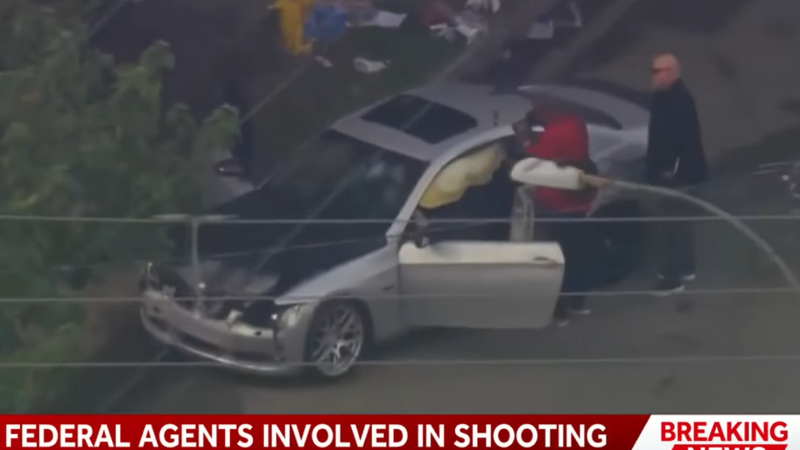

During an immigration enforcement operation in Compton, California, federal agents, including ICE and Border Patrol personnel, attempted to arrest William Eduardo Moran Carballo, a Salvadoran national with a prior removal order and past arrests. According to both liberal- and conservative-aligned accounts, Carballo allegedly used his vehicle to ram or attempt to run over a federal agent, prompting at least one officer to open fire; no rounds struck the suspect. Carballo then fled on foot but was quickly apprehended, and one federal officer was injured during the incident. Both sides agree the confrontation occurred in the context of a targeted operation, that the suspect was in the country unlawfully, and that federal oversight bodies such as the Department of Homeland Security are involved in describing the event.
Coverage from both perspectives situates the incident within broader concerns about the dangers faced by immigration officers and the rise in vehicle attacks against law enforcement during such operations. Outlets across the spectrum acknowledge that DHS has reported an uptick in vehicle-based assaults on officers and tie this episode to ongoing debates over U.S. immigration enforcement, sanctuary jurisdictions, and cross-border smuggling activity. Both note the institutional backdrop of ICE and CBP operations in urban areas like Compton, emphasize that the suspect was already subject to immigration proceedings, and frame the shooting as part of a larger pattern of high-risk encounters during attempts to apprehend noncitizens with prior records.
Areas of disagreement
Framing of the suspect and crime. Liberal-aligned sources typically describe Carballo primarily as an undocumented or removable noncitizen with prior arrests and an outstanding removal order, focusing on his legal status and history with the immigration system, sometimes mentioning but not foregrounding alleged human smuggling. Conservative outlets consistently label him an illegal alien and strongly highlight alleged involvement in a human smuggling operation, presenting the incident as part of organized criminal activity. As a result, liberal coverage tends to frame the case as a dangerous but specific enforcement encounter, while conservative coverage uses the suspect’s description to underscore broader narratives about border crime and national security.
Causation and policy context. Liberal-leaning reporting, where it references causes, tends to fold this into a general debate over immigration enforcement risks and the complexity of removing noncitizens with prior orders, without placing singular blame on local policies. Conservative coverage, by contrast, more directly links the incident to what it characterizes as permissive immigration and sanctuary policies, and sometimes to failures of the current federal administration’s border strategy. While liberal sources may mention DHS concerns about vehicle attacks as part of a factual backdrop, conservative outlets invoke these statistics to argue that lenient laws and non-cooperation by local jurisdictions embolden such assaults.
Portrayal of law enforcement actions. Liberal-aligned reports tend to relay that the agent opened fire after being rammed and emphasize that no bystanders were injured, presenting the gunfire as a reactive use of force within established enforcement risks, but with relatively restrained language. Conservative sources more emphatically stress that officers were attacked, injured, and justified in firing, using stronger rhetoric about the dangers officers face and framing the response as both necessary and heroic. This produces a tonal difference, with liberal coverage leaning toward procedural description of the shooting and conservative coverage using it to highlight the perils of front-line immigration enforcement.
Broader political implications. Liberal-oriented coverage, where it broadens out, tends to situate the incident within nuanced discussions about immigration courts, deportation backlogs, and the challenges of managing noncitizens with prior removal orders, often avoiding sweeping partisan conclusions. Conservative outlets more explicitly tie the episode to arguments for tougher border controls, stricter interior enforcement, and rollbacks of sanctuary policies, using it as evidence that current approaches endanger officers and communities. Consequently, liberal framing treats the case as one example in a complex system needing reform, whereas conservative framing portrays it as symptomatic of a failing, overly lax immigration regime.
In summary, liberal coverage tends to present the shooting in Compton as a high-risk but contained enforcement incident situated within systemic immigration challenges, while conservative coverage tends to cast it as a vivid illustration of the dangers created by lenient border and sanctuary policies and the criminality of illegal immigration.