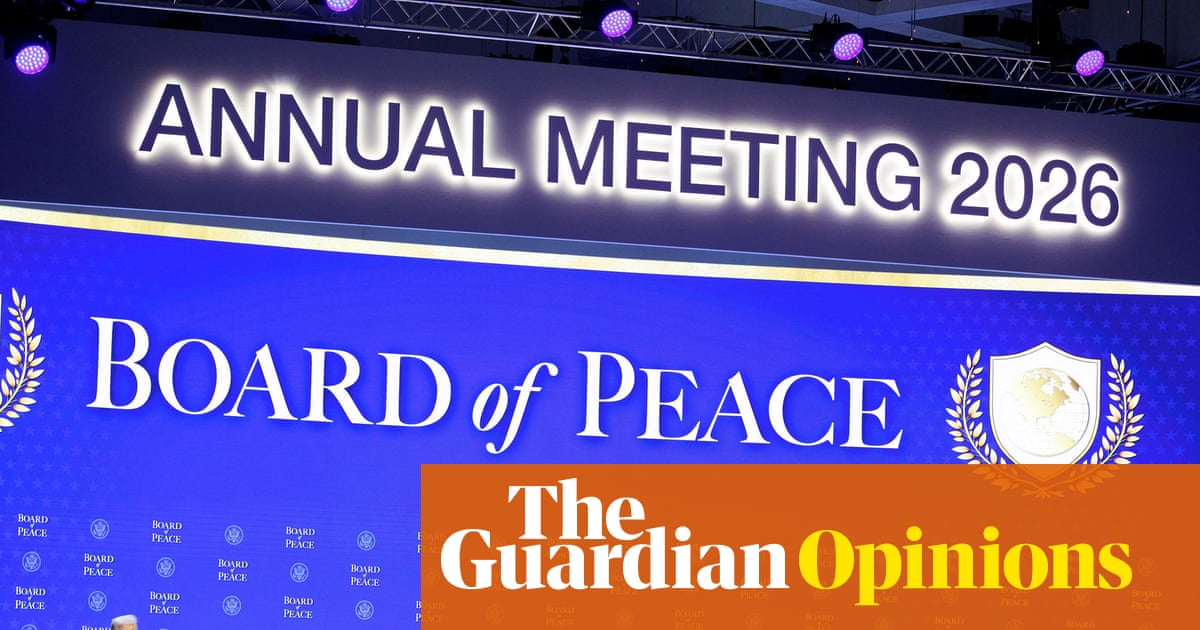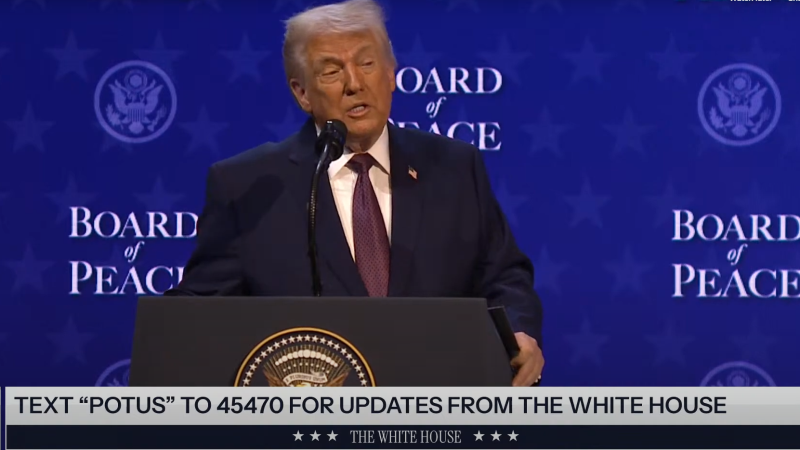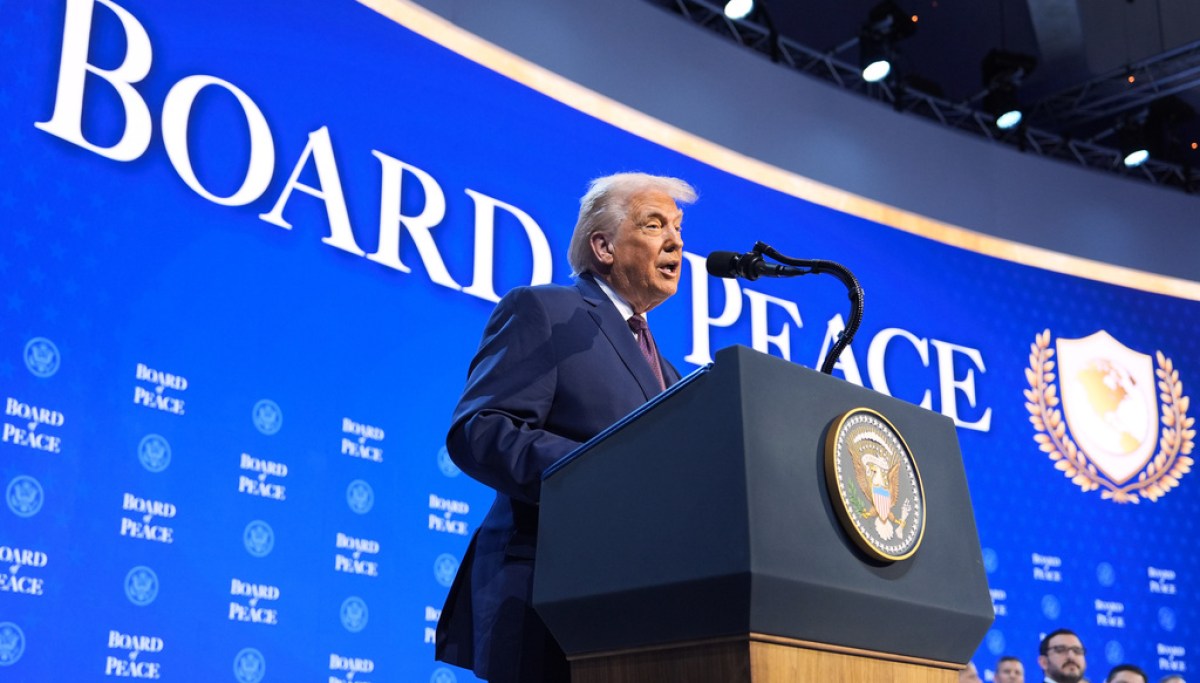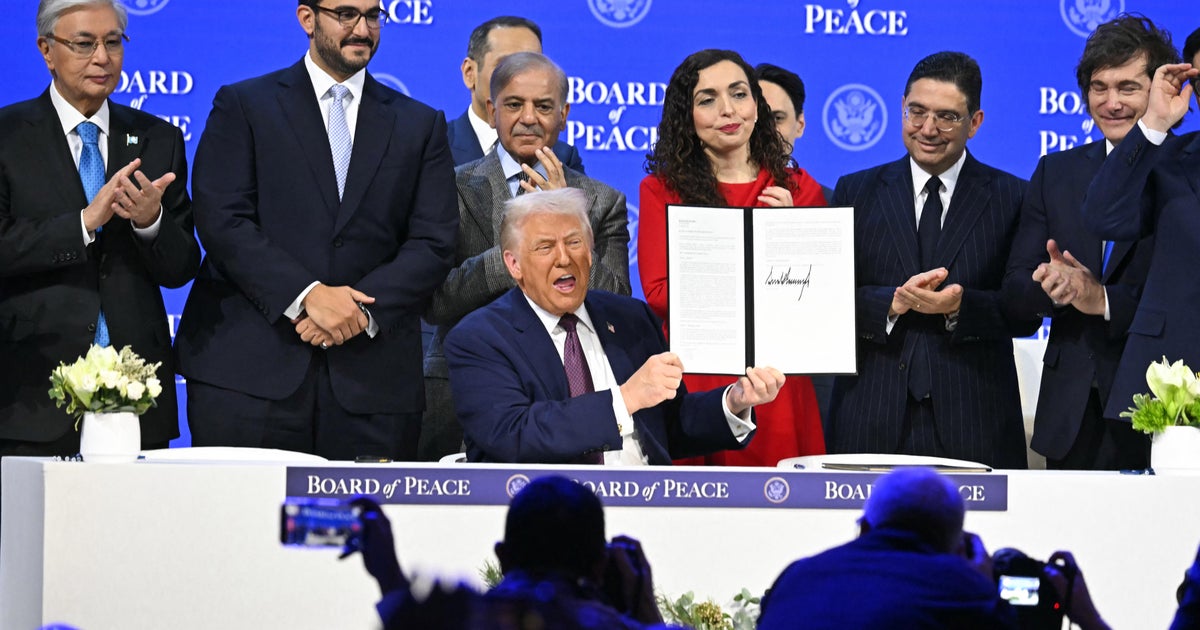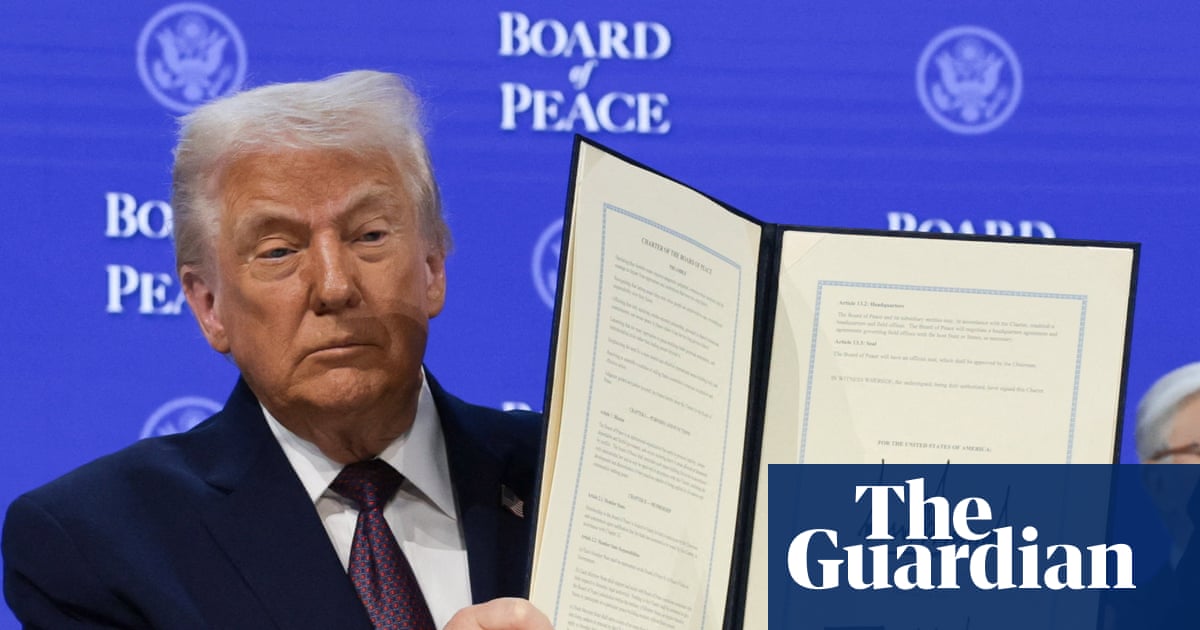






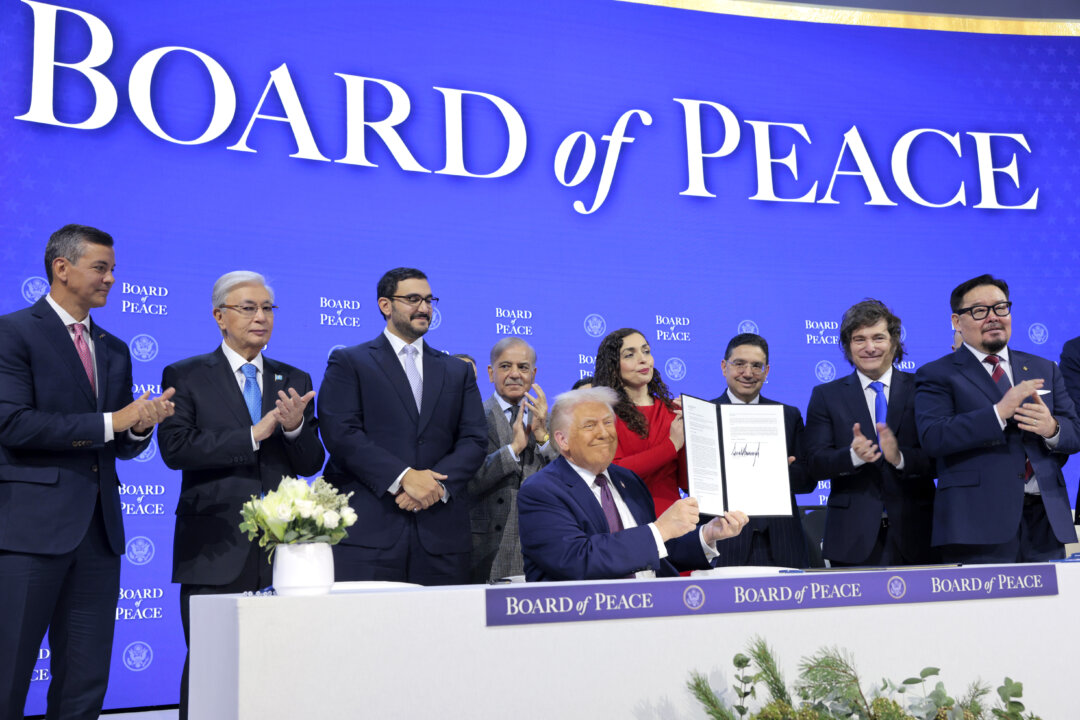
President Donald Trump unveiled the "Board of Peace" at the World Economic Forum in Davos, Switzerland, formally signing its founding charter and presenting it as an international body to oversee the Gaza ceasefire, manage Gaza’s transition and reconstruction, and potentially address other global conflicts. Both liberal and conservative outlets agree that Trump will serve as chairman, that the initiative is being framed around sustaining a U.S.-backed Gaza ceasefire and rebuilding Gaza, that roughly a couple dozen countries (about 22, per conservative reporting) have signed on as founding members, and that key signatories include states such as the UAE, Hungary, and Pakistan while several major European allies stayed away. Coverage on both sides notes the board’s financial structure involving a large buy-in (around $1 billion for permanent membership), the high-profile Davos ceremony, the parallel announcement of steps like reopening the Rafah crossing and presenting a Gaza reconstruction blueprint led by Jared Kushner, and that Russia was invited but did not participate in the signing. Both agree that the move raises questions about the future relationship between this new body and the United Nations, including whether it will complement or compete with UN peace and reconstruction mechanisms.
Liberal and conservative sources also converge on contextual points: the board emerges amid long‑running dissatisfaction with the UN’s effectiveness on Gaza and other conflicts, and it is the latest in a pattern of U.S.-driven attempts to reshape international conflict management outside traditional institutions. Both sides describe how the announcement fits Trump’s broader foreign‑policy style—favoring ad hoc coalitions and personal diplomacy—and recognize that many traditional Western allies are wary, even as a mix of U.S.-aligned and non‑Western states have embraced the initiative. They likewise agree that the board’s mandate is formally broader than Gaza even though Gaza is the immediate catalyst, and that questions remain about its precise authority, its relationship to existing ceasefire agreements, and how it will coordinate with or potentially bypass the UN Security Council and other multilateral bodies.
Areas of disagreement
Legitimacy and motives. Liberal-aligned outlets frame the Board of Peace as an ego-driven, Trump‑centric vehicle, stressing that its charter barely mentions Gaza despite being marketed as Gaza-focused and depicting it as an instrument to aggrandize Trump and possibly sideline established institutions. Conservative outlets instead emphasize Trump’s leadership as an asset, portraying his chairmanship as a source of decisiveness and clarity in contrast to what they present as UN paralysis or ineffectiveness. Liberal coverage questions whether the board is truly about peace or about consolidating U.S. and Trump-branded influence, while conservative coverage generally accepts its stated mission at face value and treats it as a pragmatic innovation.
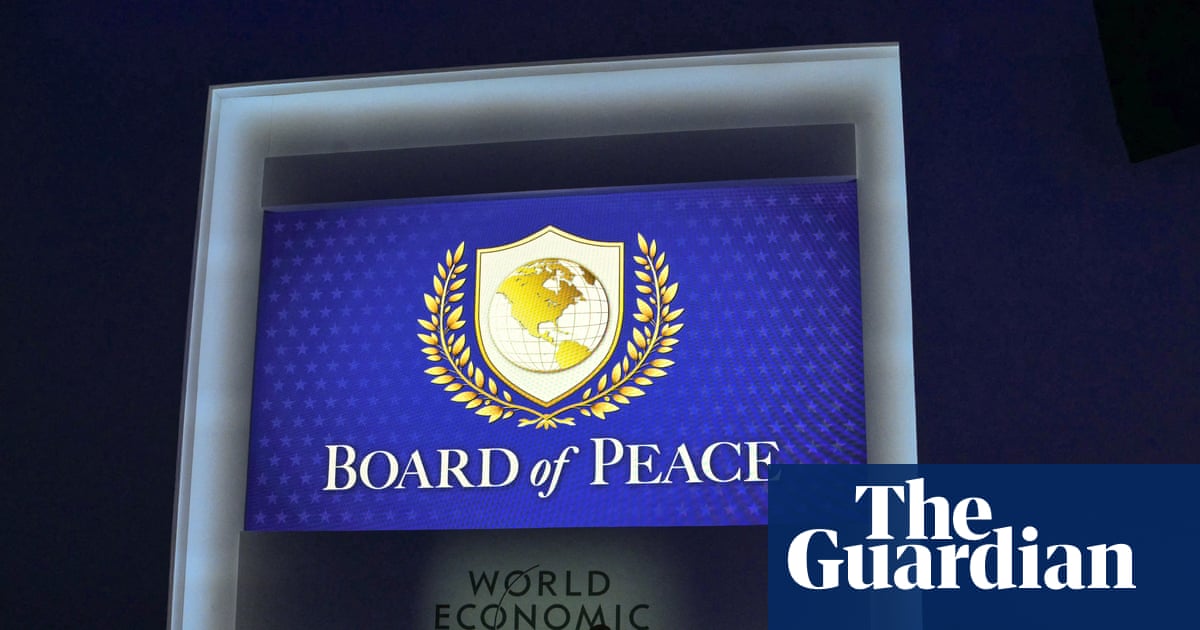
Relationship to the United Nations. Liberal sources highlight European and UN‑friendly criticism that the board’s logo and structure mimic the UN while effectively undercutting it, warning that the initiative could supplant or hollow out multilateral norms and marginalize Palestinian rights within a less accountable framework. Conservative sources tend to present the board as a necessary corrective or complement to an aging UN system, sometimes openly floating the idea that it could replace the UN in some arenas while also citing administration assurances that it is not a formal rival. Where liberal reporting stresses the danger of fragmentation and a power grab against the UN Security Council, conservative reporting focuses on perceived UN failures and treats the board as a bold alternative path.
Membership, money, and inclusivity. Liberal coverage dwells on the conspicuous absence of key U.S. allies like France, Germany, and the UK, the invitation to controversial states, and the $1 billion permanent membership fee as evidence of a pay‑to‑play club with questionable legitimacy and skewed representation. Conservative coverage highlights the fact that 20‑plus countries joined at launch as proof of meaningful international buy‑in, devoting less attention to who declined and portraying the financial structure as a serious commitment mechanism rather than a barrier or monetization scheme. Liberals emphasize concerns that poorer or critical states will be excluded or pressured, while conservatives stress that willing partners are lining up to participate and fund a more effective peace apparatus.
Impact on Gaza and broader conflicts. Liberal-aligned outlets question whether the board’s vague mandate and Trump‑centric design will genuinely protect Palestinian rights or deliver equitable reconstruction, warning it could entrench a narrow, U.S.- and ally‑driven vision of Gaza’s future while expanding into a general‑purpose geopolitical tool. Conservative outlets frame the initiative as a concrete step toward enforcing the Gaza ceasefire, reopening crossings like Rafah, and channeling resources for rebuilding, and they often extrapolate its design as a model for resolving other conflicts where the UN has struggled. Liberals tend to stress risks of unaccountable power and sidelining of local voices, while conservatives stress perceived urgency, action, and Trump’s claim that the world is “richer, safer” and better positioned for peace than a year ago.
In summary, liberal coverage tends to cast the Board of Peace as a personalized, UN‑undermining project with opaque motives, shaky legitimacy, and serious risks for multilateral norms and Palestinian rights, while conservative coverage tends to present it as a bold, results‑oriented innovation that fills gaps left by the UN, validates Trump’s leadership style, and offers a promising framework for sustaining the Gaza ceasefire and tackling other global conflicts.