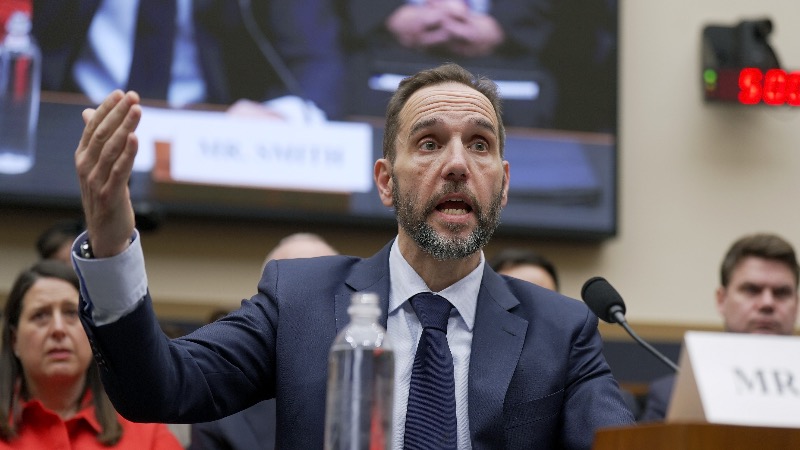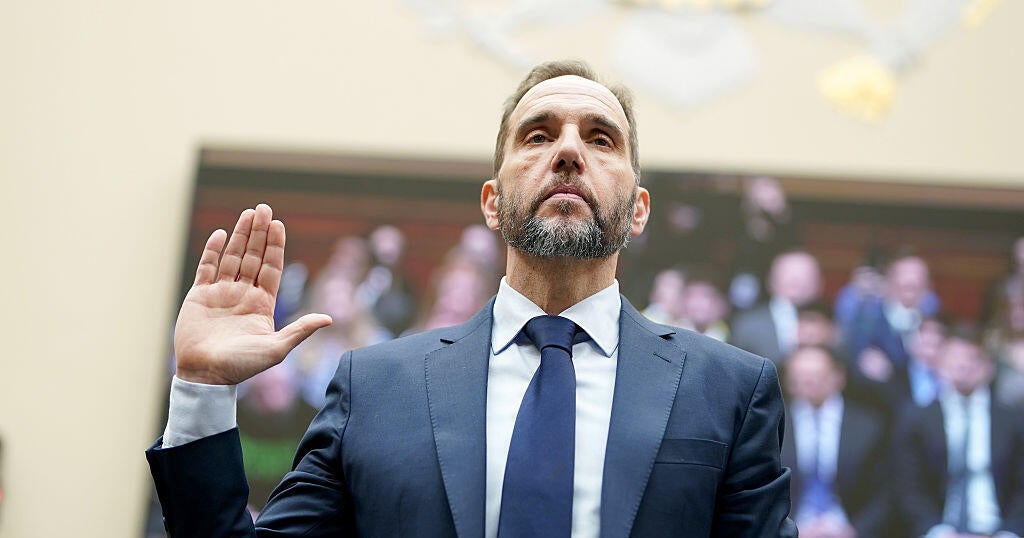




Jack Smith, the former Justice Department special counsel overseeing federal criminal cases against Donald Trump, testified publicly for the first time before a Republican‑led House committee in Washington, answering questions about his investigations into Trump’s efforts to overturn the 2020 election and related conduct. Across coverage, both liberal- and conservative-aligned outlets agree that Smith defended his work as grounded in evidence and law, insisted that no one should be above the law, and maintained he acted independently of partisan politics. Reports on both sides note that Republicans on the committee, including Jim Jordan and other Trump allies, aggressively questioned him about alleged political bias, his charging decisions, and his handling of witnesses and investigative tools, while Democrats generally used their time to underscore the seriousness of Trump’s alleged conduct and to praise Smith’s adherence to the rule of law. Both sides also report that Smith described having many witnesses, emphasized the gravity of threats and intimidation around the cases, and acknowledged that, although he is no longer special counsel, a future Justice Department could theoretically revisit charges against Trump.
Coverage from both perspectives situates the hearing within broader institutional conflicts between the legislative and executive branches, and the ongoing struggle over the scope of prosecutorial independence in politically sensitive cases. Liberal and conservative sources agree that the hearing is part of a long‑running Republican campaign to cast Trump investigations as politicized, and that Smith’s appearance followed months of GOP criticism of the Justice Department and FBI, as well as Trump’s own denunciations of “weaponization” of law enforcement. Both sides reference well-known background episodes such as the January 6 attack and Trump’s efforts to remain in power after losing the 2020 election as the core subject of Smith’s work, and they present Congress as using its oversight powers to probe the conduct of the special counsel’s office. There is also shared acknowledgment that the testimony has implications beyond Trump personally—touching on separation of powers, the Speech or Debate Clause, surveillance and subpoena practices, and the precedent this sets for future presidents and prosecutors.
Areas of disagreement
Legitimacy of the investigations. Liberal-aligned outlets portray Smith’s investigations as a necessary and sober response to serious threats to democracy, highlighting his insistence that no one, including a former president, is above the law and that the evidence shows Trump willfully broke it. Conservative outlets instead frame the same investigations as a partisan or “deep state” operation, echoing Trump’s language that the prosecutions are a “Democrat scam” and describing Smith as “deranged” or abusive of the rule of law. While liberal coverage emphasizes prosecutorial independence and rule-of-law norms, conservative coverage emphasizes selective enforcement and alleges a double standard against Trump and his supporters.
Characterization of Trump’s conduct and guilt. Liberal coverage tends to accept or underline Smith’s assertion that Trump is guilty beyond a reasonable doubt, often echoing or amplifying his argument that Trump sought to prey on his supporters and cling to power in ways that culminated in the January 6 attack. Conservative coverage treats those same claims as overreach, questioning both the factual basis and the legal theory, and presenting Republican members as successfully “decimating” Smith’s narrative. Where liberal outlets describe Smith calmly detailing Trump’s alleged offenses as a form of accountability, conservative outlets describe him as arrogantly declaring Trump a criminal despite what they see as weak or politicized evidence.
Portrayal of the congressional hearing dynamics. Liberal-aligned sources depict Republicans as flailing or performing theatrics, suggesting their aggressive questioning backfired against a composed and methodical Smith who reiterated his adherence to law and evidence. Conservative outlets instead depict GOP questioners as exposing Smith’s supposed misconduct and contradictions, amplifying moments where he was pressed on surveillance of lawmakers, use of subpoenas, or reliance on contested witnesses. In the liberal framing, the hearing is embarrassing for Republicans and vindicating for Smith, whereas in the conservative framing it is Smith who is getting “grilled,” “caught in lies,” and politically weakened.
Use of witnesses, surveillance, and institutional abuse claims. Liberal coverage generally treats controversies over witnesses like Cassidy Hutchinson and investigative tools such as subpoenas for lawmakers’ records as procedural skirmishes that do not undermine the core cases, noting that Smith characterized such evidence as hearsay where appropriate and stood by his compliance with DOJ policy. Conservative outlets center these issues as proof that Smith “walked all over the Constitution,” alleging illegal spying on Republican members of Congress, misuse of non‑disclosure orders, and a willingness to lean on contested testimony to target Trump and his allies. Thus, liberals tend to see the institutional story as one of prosecutors defending democratic norms against a rogue president, while conservatives see it as one of prosecutors themselves trampling constitutional protections and separation of powers.
In summary, liberal coverage tends to depict Jack Smith as a principled prosecutor defending democracy and the rule of law against a lawless former president and his enablers, while conservative coverage tends to depict him as a partisan or deep‑state actor weaponizing the justice system to destroy Trump and silence his political movement.