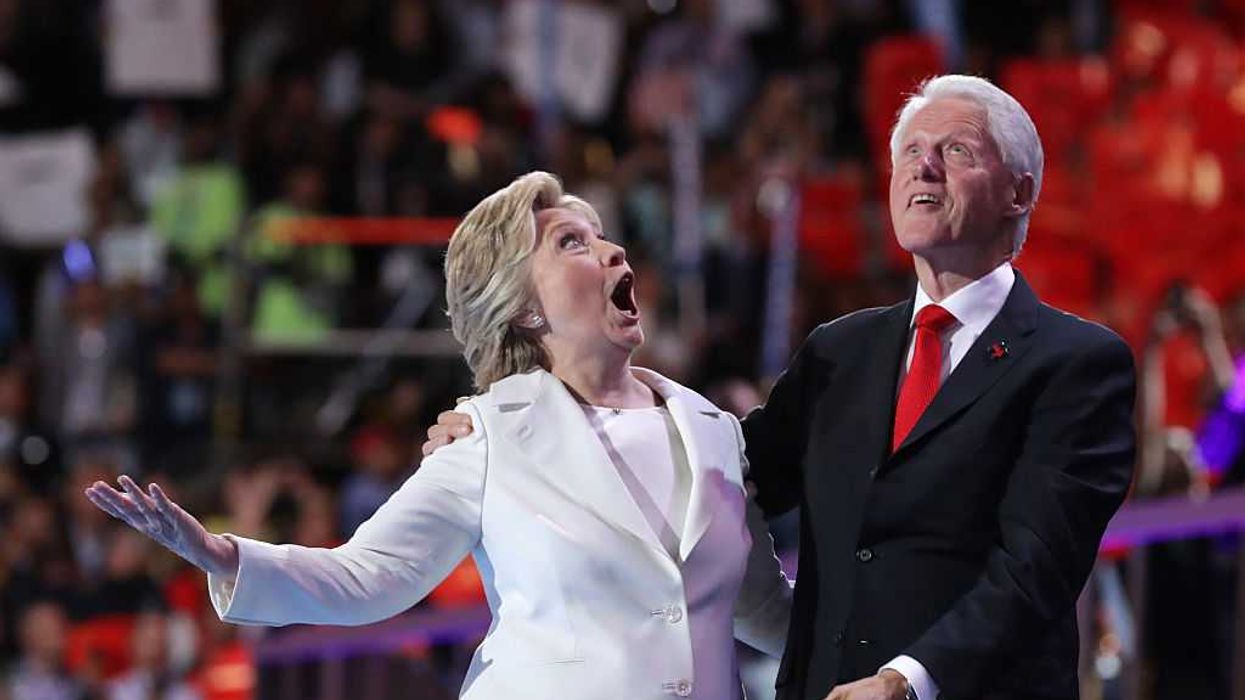
The latest coverage from both liberal and conservative outlets agrees that the House Oversight Committee, controlled by Republicans, has voted to advance criminal contempt resolutions against Bill and Hillary Clinton for allegedly defying subpoenas in the committee’s Jeffrey Epstein probe. Reports concur that the contempt findings are recommendations that must now go to the full House, that a number of Democrats joined Republicans on at least one of the contempt votes, and that if the House ultimately approves the reports, the matter would be referred to the executive branch for potential criminal prosecution that could, in theory, carry possible jail time.
Across the spectrum, outlets describe the action as an early procedural step in a broader, ongoing investigation into Epstein’s network and possible connections to high-profile figures, including the Clintons. Coverage aligns on the fact that the Clintons and their representatives dispute the validity and scope of the subpoenas, that negotiations over possible testimony or document production have been taking place, and that any actual prosecution decision would rest with the Justice Department rather than the committee itself. Both sides also note that the road from committee vote to any real legal consequences is uncertain and could be protracted.
Areas of disagreement
Motives and legitimacy. Liberal-aligned coverage frames the contempt move as a politically driven escalation by Republicans using the Epstein investigation to target the Clintons and generate headlines, casting doubt on whether the subpoenas are narrowly tailored or substantively necessary. Conservative outlets instead portray the committee’s actions as a straightforward bid to enforce lawful subpoenas, arguing that investigations must apply to powerful Democrats as much as to Republicans, and emphasizing that the Clintons are not above the law.
Severity and precedent. Liberal sources tend to stress the preliminary nature of the vote, underscoring that a full House vote is uncertain and that criminal prosecution is far from guaranteed, thereby downplaying the likelihood of actual jail time or a major legal outcome. Conservative coverage, by contrast, emphasizes the seriousness of contempt of Congress, drawing explicit parallels to past cases like Steve Bannon’s and arguing that failure to pursue prosecution would reflect a double standard in how subpoena defiance is punished.
Framing of the Clintons’ conduct. Liberal reporting often gives weight to the Clintons’ position that the subpoenas are invalid or overly broad and notes ongoing negotiations as evidence that they are not simply stonewalling, framing the dispute as a legal and procedural clash rather than clear-cut defiance. Conservative outlets largely characterize the Clintons’ response as noncompliance or evasion, highlighting missed deadlines and resistance to appear as signs that they are trying to avoid accountability in the Epstein probe.
Broader political narrative. Liberal-aligned pieces situate the contempt vote within a pattern of House Republicans launching high-profile investigations that rarely culminate in substantive findings, hinting that this may serve campaign messaging more than governance. Conservative coverage embeds the story in a narrative of long-standing Democratic impunity and selective enforcement, arguing that prior Democratic figures have escaped consequences for similar conduct while Republican allies have been aggressively prosecuted.
In summary, liberal coverage tends to treat the contempt votes as a politically charged but still tentative maneuver in a broader partisan struggle over investigations, while conservative coverage tends to cast them as a necessary and serious step toward equal enforcement of congressional subpoenas against powerful Democrats.
Story coverage