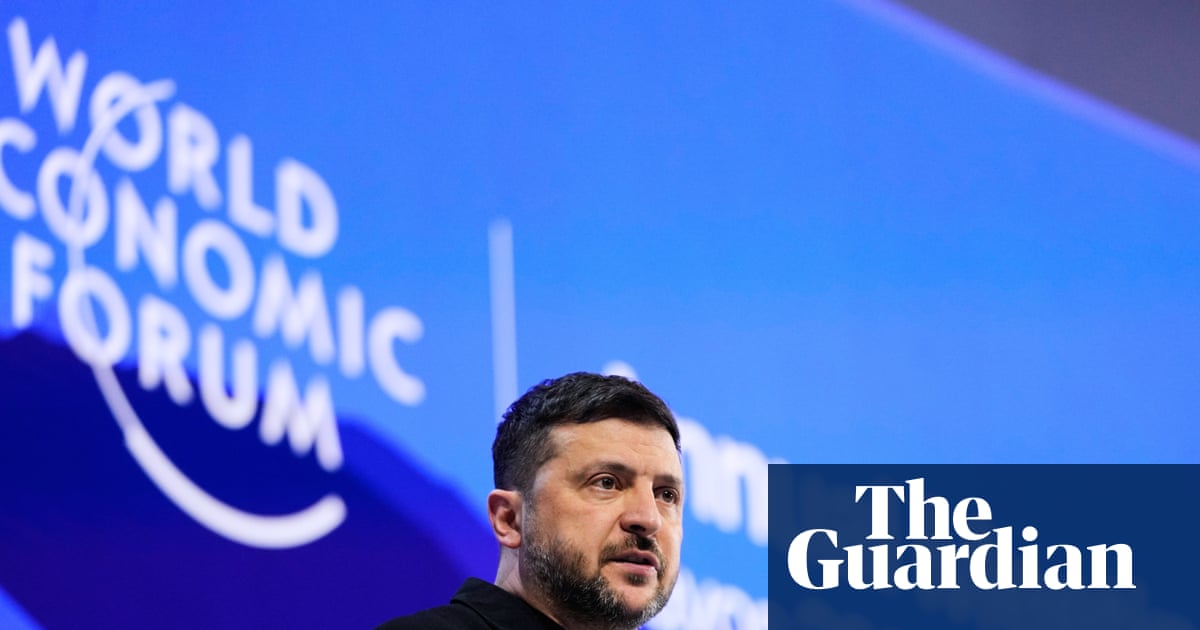

Ukrainian President Volodymyr Zelenskyy used a speech at the World Economic Forum in Davos to sharply criticize European leaders for what he called a slow, fragmented, and insufficient response to Russia’s full-scale invasion of Ukraine. Across outlets, reports agree that he accused Europe of being "lost," stuck in a "Groundhog Day" pattern of repeating debates without decisive action, and operating in a passive "Greenland mode" where it waits for U.S. leadership rather than assuming its own security responsibilities. He pressed Europeans to increase defense spending, strengthen air defenses, and take more aggressive steps against Russia, including sanctioning or seizing Russian oil tankers and targeting the so‑called shadow fleet. Coverage also aligns that Zelenskyy contrasted this criticism of Europe with comments about a "very good" meeting with Donald Trump in which they discussed documents and air defense, and that he suggested a peace framework or deal is "almost ready," contingent on Russian compromises.
Reporting from both liberal- and conservative-aligned outlets situates the speech within the broader context of Ukraine’s prolonged struggle against Russia and Europe’s long-standing reliance on the United States for security guarantees. They concur that European governments have debated how far to go in confronting Russia, balancing energy and economic considerations with security imperatives, and that institutional constraints within the European Union and NATO have slowed some decisions on sanctions and military aid. Both sides emphasize that Zelenskyy’s remarks reflect mounting frustration after years of war, continuing Russian attacks on Ukrainian infrastructure, and concerns about Western fatigue and political divisions on both sides of the Atlantic. They also agree that his Davos appearance was aimed at jolting European leaders into a more proactive, unified geopolitical role that complements, rather than merely follows, U.S. policy, and at signaling that any emerging peace track will still require sustained Western pressure on Moscow.
Areas of disagreement
Tone and characterization of Zelenskyy. Liberal-aligned coverage often portrays Zelenskyy as an urgent, sometimes "angry" wartime leader pushing complacent Europeans to wake up, framing his criticism as tough but justified pressure on reluctant partners. Conservative coverage tends to depict him more neutrally or skeptically, emphasizing his complaints and frustration with allies and sometimes highlighting the risk of him overreaching or alienating supporters. While liberals focus on his moral authority as a president defending his country, conservatives more frequently stress his dependence on Western aid and the transactional nature of his demands.
Assessment of European leaders. Liberal sources stress Europe’s strategic drift and lack of "political will," echoing Zelenskyy’s language about a "lost" continent that must finally assume global responsibilities, yet they usually frame Europeans as capable partners who simply need to overcome internal divisions. Conservative outlets more harshly emphasize European weakness and indecision, underlining the repetitive "Groundhog Day" dynamic and questioning why Europe still relies so heavily on U.S. leadership despite its economic weight. Liberals lean toward seeing Europe as a crucial pillar that must be empowered, whereas conservatives are likelier to underscore European free‑riding and failures to match rhetoric with action.
Role of the United States and Trump. Liberal-aligned coverage highlights Zelenskyy’s criticism of Europeans for trying to "change" the U.S. president rather than fixing their own defense posture, while also noting his "very good" meeting with Trump in a way that raises concerns about how a future Trump role might reshape the conflict. Conservative coverage more readily seizes on the positive notes about Trump and the focus on documents and air defense to suggest that Zelenskyy sees value in engaging with him and recognizes the primacy of U.S. decisions. Liberals tend to frame U.S. involvement as essential but worry about Trump-era unpredictability, whereas conservatives emphasize U.S. leverage and sometimes imply that Europe should carry more of the burden so Washington, under any president, is not overextended.
Peace process and endgame. Liberal sources present Zelenskyy’s claim that a peace deal is "almost ready" in the context of sustained pressure on Russia and insistence that Moscow must compromise, often linking it to institutional diplomacy involving Ukraine, Russia, and the United States. Conservative outlets highlight the same remark but are more prone to question whether European and Western strategies so far have actually moved the war closer to resolution, given the repeated cycles of inaction he describes. Liberals frame the emerging peace track as dependent on continued robust Western backing, while conservatives more frequently suggest that current approaches may be flawed or insufficient to force meaningful Russian concessions.
In summary, liberal coverage tends to cast Zelenskyy as a justified and urgent critic pushing Europe toward greater strategic autonomy and sustained pressure on Russia, while conservative coverage tends to underscore European weakness, Zelenskyy’s heavy reliance on Western aid, and questions about whether current Western and European strategies can realistically deliver a stable peace.
Story coverage