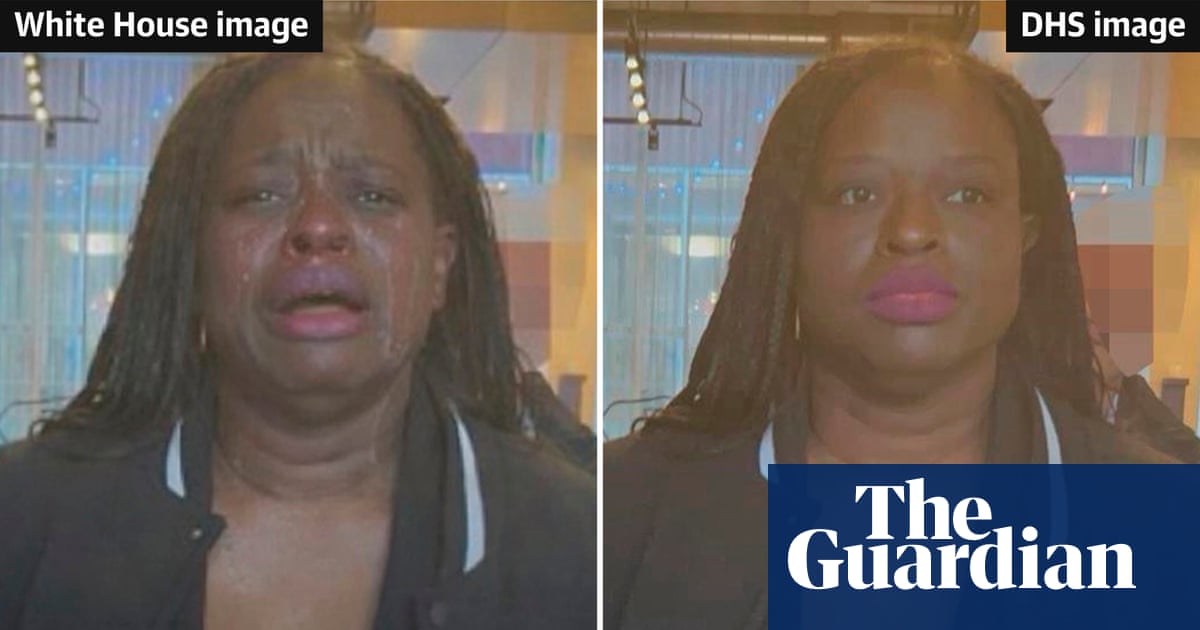

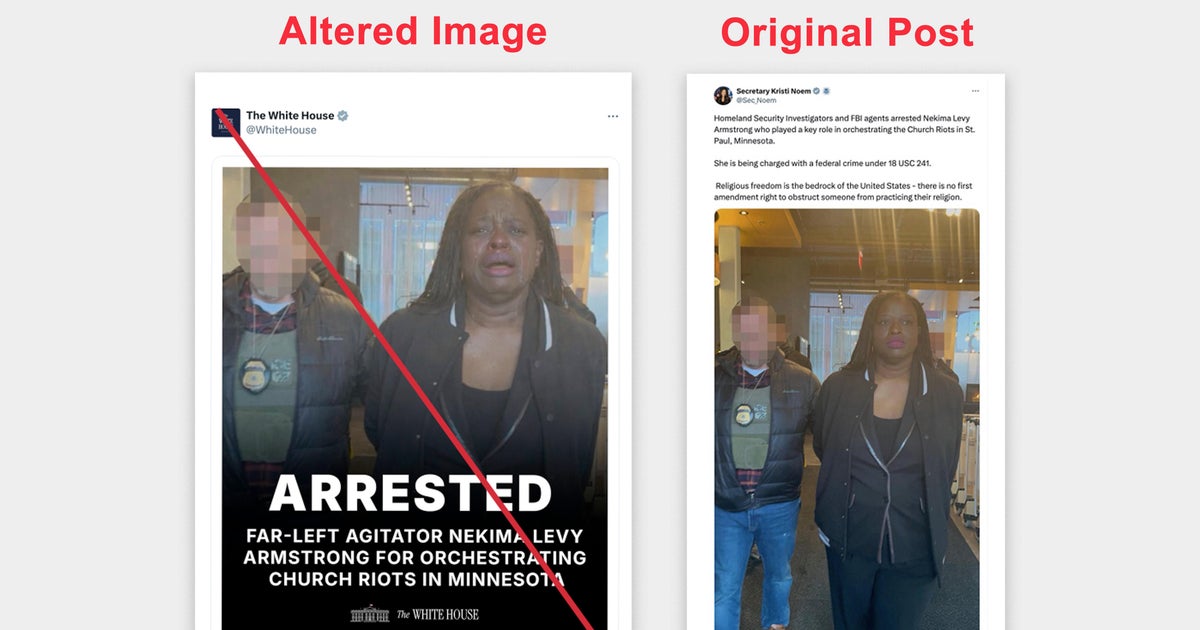
Liberal and conservative sources agree that the White House posted an obviously altered image of Minnesota activist and protester Nekima Levy Armstrong being arrested at an anti-immigration enforcement / ICE-related protest. Both sides report that the original arrest photo, first shared by Homeland Security Secretary Kristi Noem with Armstrong’s neutral expression, was later circulated by the White House in a version that made her appear to be crying and with darker skin tone, and that a White House deputy communications official dismissed concerns by saying that law enforcement would continue and “memes will continue.” They also concur that Armstrong has been charged in connection with the protest and that, after the doctored image drew scrutiny, she released her own video of the arrest.
Coverage across the spectrum notes that legal and media experts regard the altered image as potentially relevant in court mainly for challenging government credibility rather than nullifying the underlying criminal case. Outlets on both sides mention that the image appears to have been modified using digital tools, likely AI-assisted editing, and that this episode feeds into broader worries about manipulated political content from official channels. There is shared recognition that the controversy touches on institutional trust in the White House and federal law enforcement, the standards for official communications in the digital era, and how the justice system might weigh the use of doctored images when protests, immigration enforcement, and public narratives collide.
Areas of disagreement
Seriousness of the offense. Liberal-aligned outlets frame the altered photo as a grave breach of public trust by an official government account, emphasizing that using a manipulated image of a real person’s arrest—especially darkening her skin—raises ethical, racial, and democratic integrity concerns far beyond ordinary meme culture. Conservative coverage, while acknowledging the image was manipulated, tends to treat the episode as a political dust-up secondary to the protest itself, focusing more on the legality of Armstrong’s actions and the broader issue of enforcement against disruptive demonstrations than on the dangers of digital doctoring by the White House.
Focus on protest vs. propaganda. Liberal reporting centers Armstrong’s role as a protester and civil-rights activist challenging immigration enforcement, arguing that the doctored image functions as government propaganda meant to humiliate or discredit a critic of federal policy. Conservative sources instead foreground that she was arrested and charged in connection with an anti-immigration enforcement protest, highlighting concerns about public order and support for immigration law, and presenting the manipulated photo mainly as a side story that prompted her to release her own arrest video rather than as the core democratic issue.
Implications for the justice system. Liberal outlets devote attention to legal experts who say the image could be used by the defense to question the government’s credibility and argue prejudice, and they warn that such behavior from the executive branch can erode juror trust and normalize manipulated evidence in the public sphere. Conservative coverage, to the extent it addresses legal implications, tends to stress that the case against Armstrong is rooted in her alleged conduct, not in online imagery, and implies that while the photo controversy may be embarrassing for the White House, it is unlikely to undermine legitimate law enforcement or the prosecution.
Characterization of the White House response. Liberal sources portray the “memes will continue” comment as flippant and disturbing, suggesting it reflects an administration willing to blur the line between official communication and partisan trolling, and to use AI-style edits for narrative advantage. Conservative outlets are more inclined either to note the quote without extended outrage or to fold it into a broader narrative that administrations routinely spin or ridicule their critics, implying that critics may be overreacting to rhetoric and that the real debate should remain centered on immigration enforcement and protest tactics.
In summary, liberal coverage tends to cast the altered photo as a serious abuse of official power that weaponizes AI-style manipulation against a protester and corrodes public trust, while conservative coverage tends to frame it as a secondary controversy around messaging that should not distract from questions about protest legality and firm immigration enforcement.
Story coverage