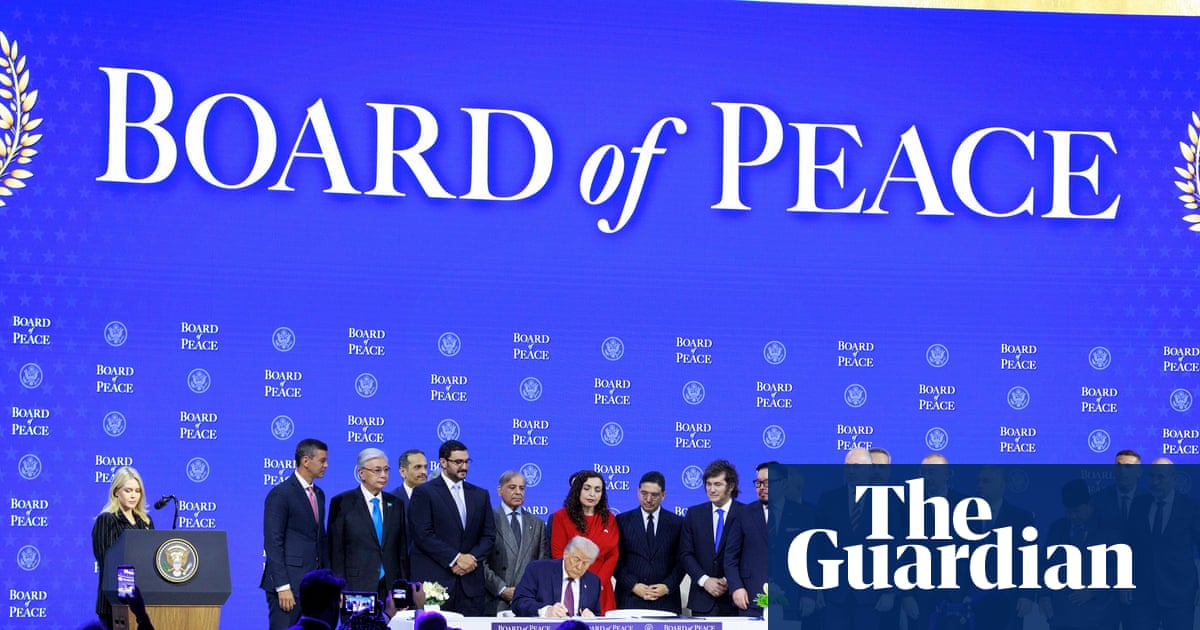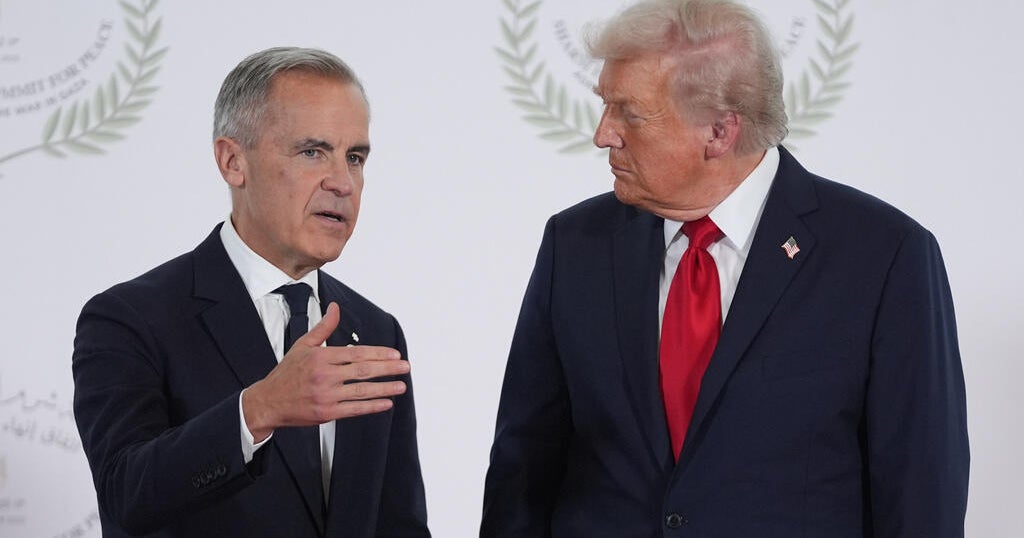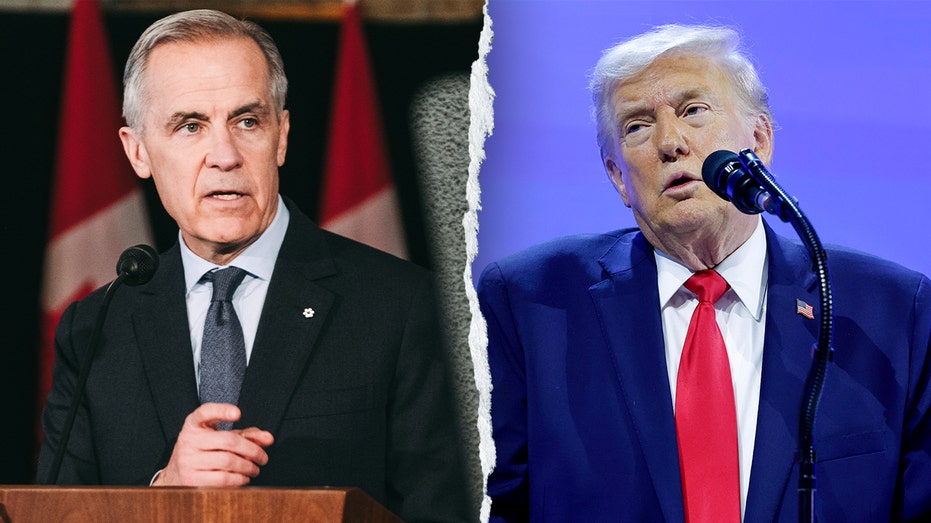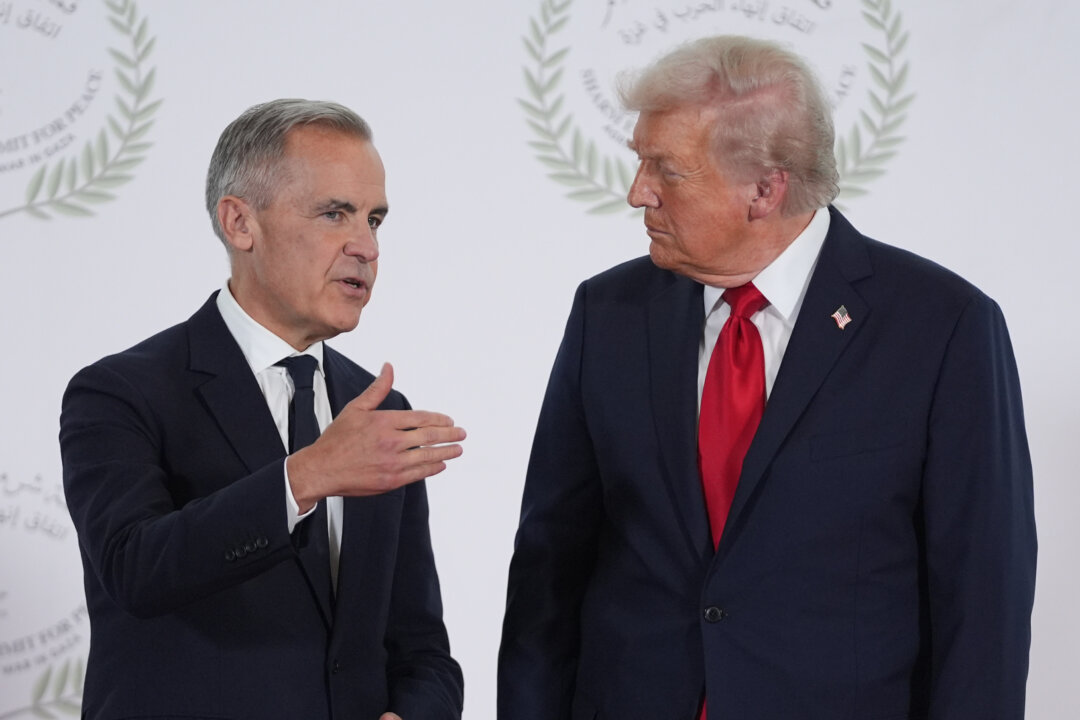





President Donald Trump revoked Canada’s invitation to join his U.S.-led Board of Peace after a public clash with Canadian Prime Minister Mark Carney, with both liberal and conservative outlets agreeing on the core sequence of events. They concur that the dispute unfolded around an international economic gathering in Switzerland, identified as the World Economic Forum in Davos, where Trump and Carney traded barbs, and that Trump later made the revocation public, including via Truth Social. Across the coverage, there is agreement that the Board of Peace is focused initially on the Gaza Strip’s post-war governance and reconstruction under an Israel-Hamas ceasefire framework, that more than a dozen countries signed on while Canada is now excluded, and that Trump tied membership to a substantial financial commitment that Canada declined to make.
Both sides also agree that Carney had voiced skepticism about the board’s design, scope, and financing, and raised concerns about national sovereignty and the role of international institutions. Outlets across the spectrum describe Trump as interpreting Carney’s comments, including criticisms of tariffs and assertions about Canada’s independence, as a personal slight that contributed to the deterioration of the relationship. They share the view that the episode reflects broader tensions in U.S.-Canada relations and differing visions for how to manage the Gaza reconstruction process and multilateral cooperation more broadly. There is also shared framing that this dispute is part of a larger pattern of sharp rhetorical exchanges between Trump and allied leaders over trade, security, and burden-sharing.
Areas of disagreement
Responsibility and blame. Liberal-aligned coverage tends to emphasize Trump’s personal thin-skinned reaction to Carney’s policy criticism, portraying the revocation as a retaliatory move driven by ego and disdain for multilateral norms. Conservative coverage more often frames the clash as a mutual escalation in which Carney openly challenged Trump’s claims and national-security framing, with Trump responding in kind to what is cast as Canadian ingratitude. While liberals see the episode mainly as Trump punishing a partner for dissent, conservatives highlight Carney’s rhetorical pushback as a trigger that justified a recalibration of the invitation.
Characterization of the Board of Peace. Liberal sources frequently cast the Board of Peace as a loosely defined or even transactional body, underscoring the billion-dollar price tag for permanent membership and raising questions about whether it meaningfully advances Gaza’s governance or mainly consolidates U.S. and Trump-led influence. Conservative outlets generally describe the board more straightforwardly as a U.S.-led council to manage Gaza’s reconstruction and post-war future, treating the financial commitments as standard burden-sharing rather than pay-to-play. This leads liberals to depict the revocation as undermining a supposedly peace-focused institution over a political spat, whereas conservatives argue it shows Trump is willing to exclude partners who are not fully aligned or invested.
U.S.-Canada relationship and power dynamics. Liberal coverage often stresses that Trump’s remark that “Canada lives because of the United States” is historically dismissive and reflects a broader pattern of belittling allies, amplifying Carney’s rebuttal about Canadian identity and self-mastery as a justified assertion of sovereignty. Conservative coverage tends to echo or at least normalize Trump’s emphasis on U.S. military and economic support as the bedrock of Canadian security, casting his statement as blunt realism rather than gratuitous insult. As a result, liberals frame the incident as a symptom of strained alliances under Trump, while conservatives present it as a necessary reminder of underlying power realities and contributions.
Significance and stakes of the rift. Liberal-aligned outlets are more inclined to interpret the revocation as a serious diplomatic setback that could weaken coordinated Western efforts on Gaza and signal instability in U.S.-Canada cooperation. Conservative reporting more often downplays the long-term damage, portraying it as a sharp but limited dispute that does not fundamentally alter the strategic partnership and may even reinforce U.S. leverage in negotiations. Thus, liberals emphasize the potential costs to multilateral diplomacy and institutional credibility, whereas conservatives stress Trump’s willingness to act unilaterally without fearing permanent rupture.
In summary, liberal coverage tends to portray Trump’s move as a largely self-inflicted diplomatic embarrassment that politicizes a sensitive Gaza-related initiative and strains a key alliance, while conservative coverage tends to frame it as a justified assertion of U.S. leverage in response to a combative Canadian leader and an example of Trump enforcing alignment and burden-sharing on America’s terms.
Story coverage