

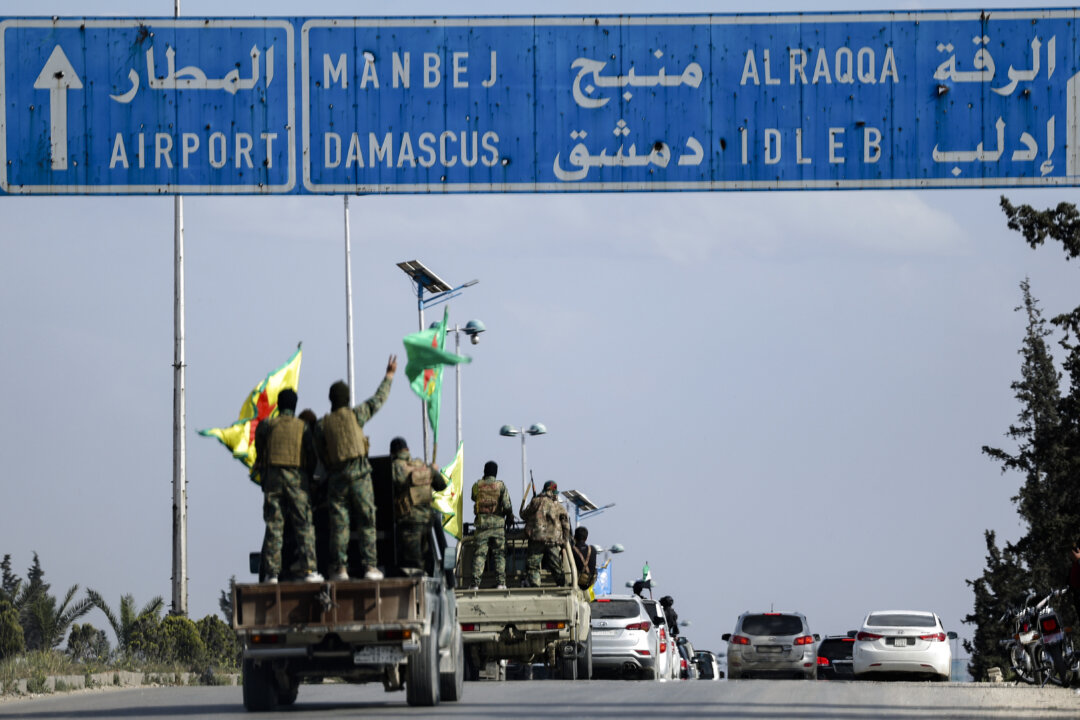
Syrian and Kurdish-aligned sources generally agree that Syrian government forces have taken control of a prison facility in northern Syria that holds Islamic State members and suspects, after Kurdish-led fighters withdrew under a negotiated arrangement. Both liberal and conservative coverage describe this as a formal transfer of authority from the Kurdish-led Syrian Democratic Forces to Syria’s state structures, with dates around late January and specific reference to a facility in or near Raqqa, previously guarded by Kurdish units. They concur that the Kurdish fighters were evacuated to safer locations with coordination from the international coalition, and that Syrian Interior Ministry officials subsequently entered the site.
Coverage across the spectrum agrees that the facility’s purpose is to detain ISIS-linked inmates and that this transfer is part of a broader reconfiguration of security control in northern Syria. Both sides highlight the SDF’s role as the main local partner of the U.S.-led coalition against ISIS, and note that Syrian state authorities are now directly responsible for the prison’s security and management. There is shared acknowledgment that the Interior Ministry has launched some form of review or assessment of the prison’s conditions and security protocols, suggesting an institutional shift rather than an abrupt abandonment of the site.
Areas of disagreement
Responsibility and blame. Liberal-aligned sources tend to frame the handover as a risky move forced by broader geopolitical pressures, emphasizing fears that Syrian government control could weaken human rights protections or enable abuses. Conservative outlets more often present the transfer as a pragmatic consolidation of Syrian state authority over its own territory, describing it as a logical outcome of shifting military priorities and limited Kurdish resources. While liberals raise alarms about potential future instability or prison breaks under Damascus’ watch, conservatives tend to stress the need to reduce the burden on the SDF and normalize governance in formerly insurgent-held areas.
Security implications and risk. Liberal coverage usually highlights the danger that ISIS detainees could exploit weaker oversight, portraying the Syrian security apparatus as less reliable and more opaque than the SDF–coalition structure, and warning that extremist networks might reconstitute if the prison is mismanaged. Conservative coverage is more likely to argue that Syrian state forces have longstanding experience handling high-risk prisoners and counterterrorism, suggesting that centralizing control could enhance long-term stability. Where liberals emphasize uncertainty and possible erosion of international monitoring, conservatives underline national sovereignty and the potential for more unified security chains of command.
Portrayal of Kurdish forces and Syrian government. Liberal outlets often portray the SDF as overburdened but professional partners of the West who are reluctantly ceding control, and they cast the Syrian government in a more negative light, focusing on its authoritarian record and alleged abuses. Conservative outlets, while sometimes acknowledging the SDF’s role against ISIS, are more inclined to depict Kurdish units as temporary custodians yielding to the rightful central government, and they describe Damascus as reasserting order over a fragmented landscape. Liberals thus spotlight the SDF’s sacrifice and vulnerability after the handover, whereas conservatives highlight state restoration and downplay concerns about Syrian security forces’ motives.
Role of international actors. Liberal-aligned coverage tends to stress the responsibility of the U.S.-led coalition and Western governments, suggesting their strategic choices and drawdowns left the SDF with few options but to relinquish facilities like this prison. Conservative reporting more often characterizes the coalition’s role as limited facilitation of a necessary local decision, presenting external involvement as support rather than as a driving cause. Liberals frame international disengagement as a betrayal that may imperil counter-ISIS gains, while conservatives frame it as an overdue step back that encourages local and national actors to assume full responsibility.
In summary, liberal coverage tends to cast the prison transfer as a worrisome, externally driven shift that endangers detainee oversight and Kurdish allies, while conservative coverage tends to present it as a pragmatic restoration of Syrian state control that can streamline security responsibilities and reduce the burden on Kurdish forces.
