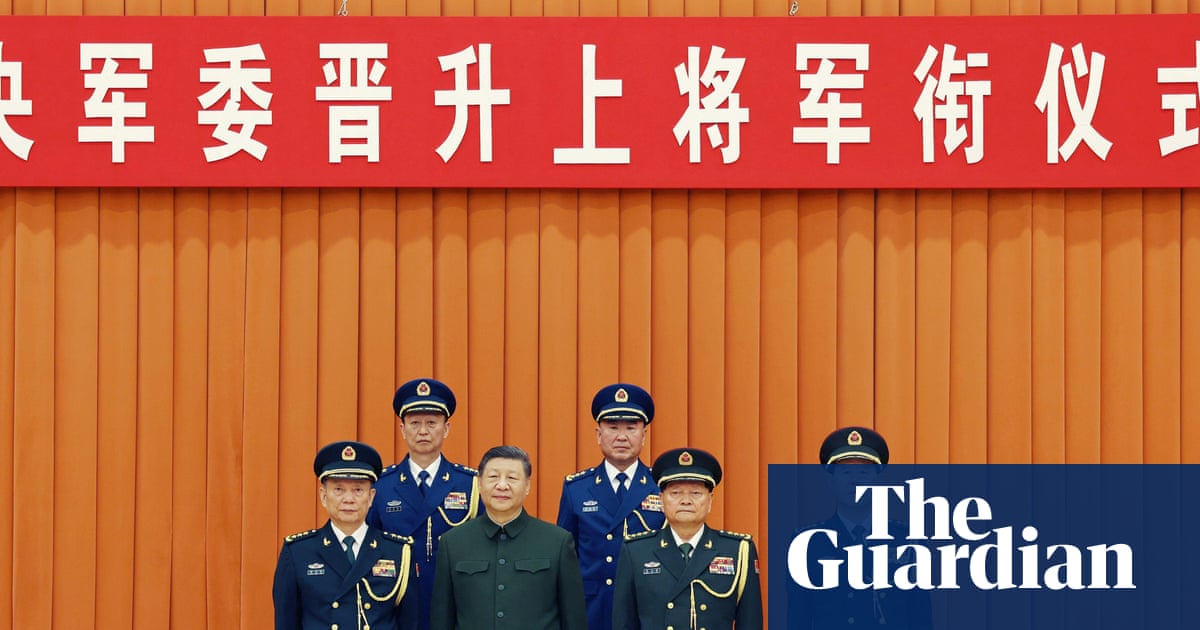

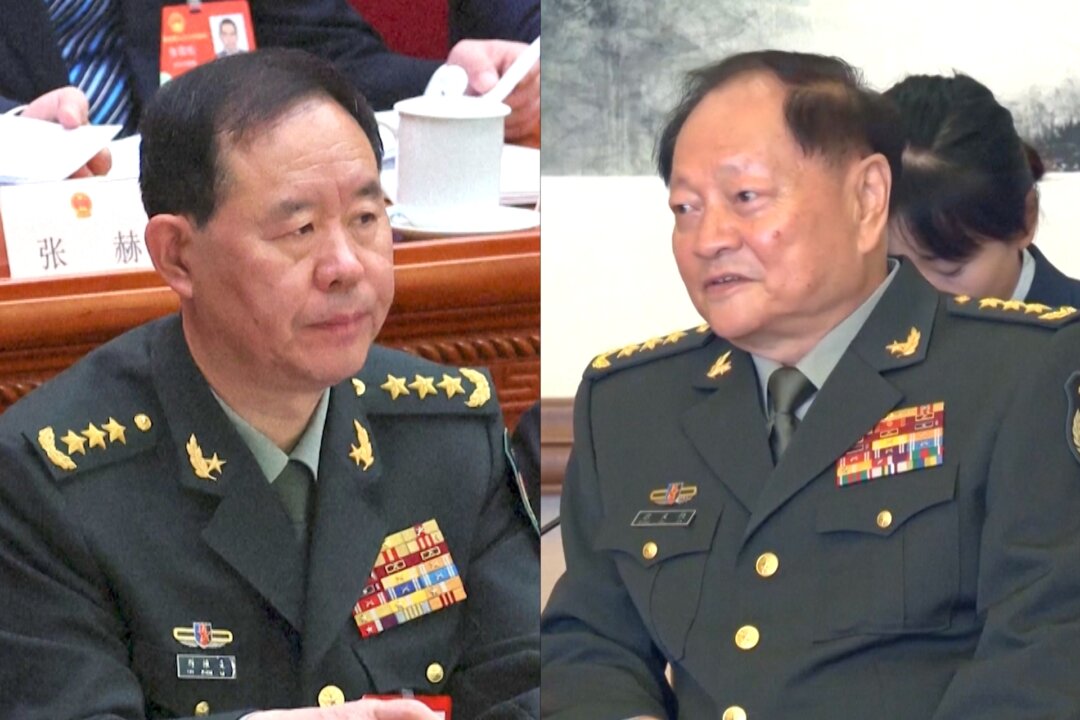
China’s Defense Ministry has confirmed that two of the country’s highest-ranking generals, Zhang Youxia and Liu Zhenli, both members of the Central Military Commission, have been placed under investigation for “serious violations of discipline and law.” Liberal and conservative outlets agree that this marks an unusually high-level purge within the People’s Liberation Army, with Zhang in particular described as the most senior serving officer and a long‑time Xi Jinping ally. Both sides report that criminal cases have been filed and that the probes are being handled by party disciplinary and state supervisory bodies, though without official disclosure of specific charges; they also agree the move follows earlier removals of senior Rocket Force and equipment officials and is publicly framed by Beijing as part of an ongoing anti‑corruption drive. Timelines also largely align: the announcement came via the Defense Ministry on a Saturday, was positioned as a formal escalation from internal discipline to criminal investigation, and was immediately interpreted as part of a broader reordering of the PLA leadership.
Coverage from both liberal- and conservative‑aligned media situates the investigation within Xi Jinping’s decade‑long effort to consolidate control over the military and to root out entrenched graft in procurement, logistics, and advanced weapons programs. Outlets across the spectrum highlight the role of the Central Military Commission as the apex of China’s military command and stress that such a move against sitting CMC members is rare, making this one of the most significant military purges since Mao‑era political campaigns. They converge on the idea that the probes could reflect deeper structural problems in the PLA, including questions about combat readiness, modernization, and the reliability of forces in any future conflict, particularly across the Taiwan Strait. There is also shared acknowledgment that previous anti‑corruption campaigns within the PLA have targeted both genuine financial and procurement abuses and rival political networks, blurring the lines between discipline, institutional reform, and power politics.
Areas of disagreement
Nature and motive of the purge. Liberal‑aligned outlets tend to frame the investigations as driven at least as much by internal power struggles and factional politics as by straightforward corruption enforcement, emphasizing how the move may reflect Xi’s insecurity about his grip on the PLA. Conservative sources, while also acknowledging Xi’s consolidation of power, more often present the events as a sweeping “purge” aimed at crushing dissent and potential rivals, sometimes tying it to dramatic claims like coup rumors and alleged treason. Liberals generally stress systemic PLA corruption and institutional weaknesses as plausible underlying causes, whereas conservatives foreground the narrative of Xi eliminating threats in a top‑down authoritarian manner.
Security implications and allegations. Liberal coverage focuses on what the shake‑up says about PLA readiness and internal dysfunction, especially in relation to Taiwan, suggesting that the removal of such senior figures could expose serious problems in weapons procurement and command reliability. Conservative outlets give far more airtime to sensational security‑related allegations, such as reports that one purged general is being probed for leaking nuclear secrets to the United States, and they sometimes connect the probes to rumors of coup plotting. While liberal sources treat such dramatic possibilities cautiously or as speculative, conservative reporting is more willing to treat them as key context that underscores instability and potential espionage at the top of China’s military.
Assessment of Xi’s strength and regime stability. Liberal‑leaning media often interpret the investigations as a sign of both Xi’s dominance and his vulnerability, arguing that needing to discipline trusted loyalists indicates persistent instability and mistrust within the military hierarchy. Conservative outlets more frequently portray the purge as evidence of an increasingly paranoid and personalized rule, suggesting Xi is lashing out preemptively at perceived enemies and that such moves could indicate serious fractures within the regime. Liberals stress the continuity of anti‑corruption campaigns and institutional logic behind them, whereas conservatives highlight the spectacle of loyalty tests, rumors of coups, and the erosion of collective leadership norms.
Implications for foreign policy and Taiwan. Liberal coverage tends to link the shake‑up to questions about the PLA’s operational capacity in a potential Taiwan contingency, implying that corruption and political purges could undermine readiness even as Xi talks tough abroad. Conservative commentary, while also referencing Taiwan, more strongly emphasizes how Xi’s purges may be designed to ensure personal control in any future conflict and underscores the risk that a more isolated, hard‑line leader could behave unpredictably toward the United States and its allies. Liberals generally stress institutional fragility as a constraint on Chinese military power, whereas conservatives stress ideological rigidity and internal repression as drivers of external risk.
In summary, liberal coverage tends to treat the investigations as a window into systemic corruption, institutional fragility, and the complex mix of power consolidation and insecurity surrounding Xi’s control of the PLA, while conservative coverage tends to emphasize the purge narrative, rumors of coups and espionage, and the image of an increasingly autocratic Xi acting ruthlessly to eliminate perceived threats at the very top of China’s military.
Story coverage