

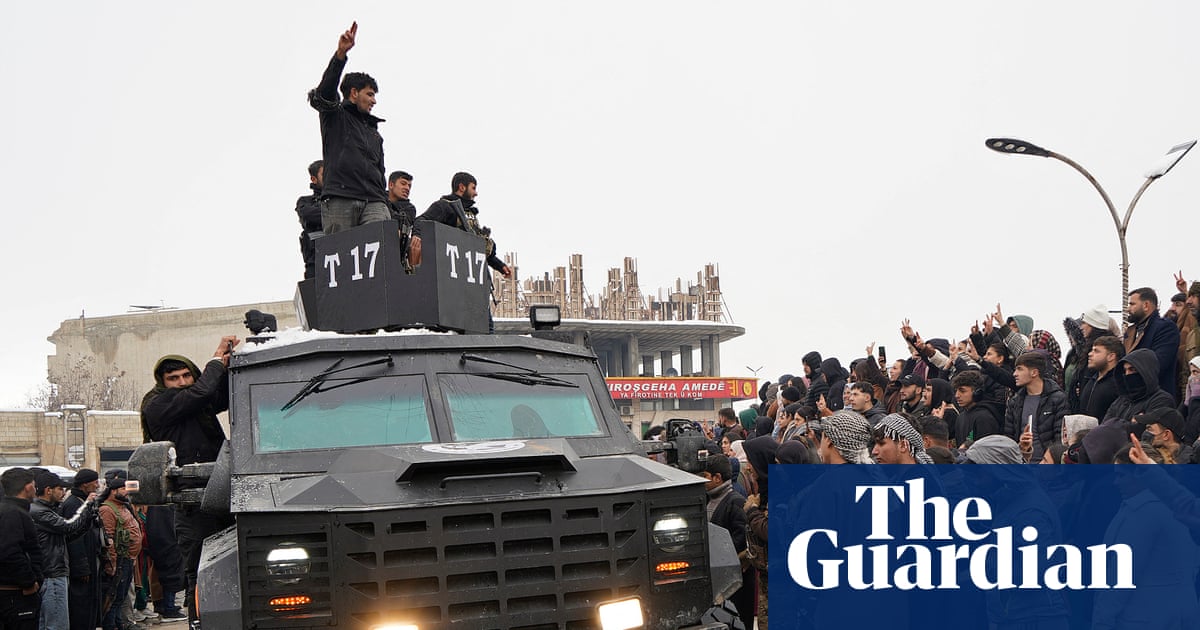
Syrian government forces and Kurdish-led forces in northeastern Syria have recently observed a short, localized ceasefire aimed at halting clashes and addressing urgent security concerns in the region. Liberal-aligned outlets report that Damascus and Kurdish forces agreed to extend a ceasefire to allow the transfer of suspected Islamic State members, largely to Iraq, and describe this as temporarily averting a wider war in the northeast. Conservative-aligned outlets describe the same period as a four-day truce that expired on a Saturday evening with no official confirmation of renewal, emphasizing that the main Kurdish-led force publicly appealed to the international community to prevent further fighting. Both sides acknowledge that while there has been at least one limited pause in hostilities between the Syrian government and Kurdish fighters, the overall situation remains fragile and unresolved.
Across the spectrum, reports situate the ceasefire within the broader context of the long-running Syrian conflict, Kurdish autonomy in the northeast, and the ongoing challenge of managing detained Islamic State suspects and their families. Outlets generally agree that the Kurdish-led Syrian Democratic Forces have been key local partners in the fight against ISIS and that Damascus, backed by external allies, is trying to reassert control over territory previously outside its direct authority. There is consensus that international actors, including the United States and regional governments, remain deeply involved in security calculations around ISIS detainees and border stability, and that internal political divisions among Kurdish factions complicate negotiations with the Syrian state. All accounts portray a tenuous balance in which short-term security deals intersect with longer-term questions about governance, territorial control, and the future of Kurdish self-rule in Syria.
Areas of disagreement
Status and framing of the ceasefire. Liberal coverage portrays the agreement as an active, extended ceasefire that has temporarily headed off a looming war and created a defined window for transferring ISIS detainees, suggesting an ongoing if fragile understanding between Damascus and Kurdish forces. Conservative coverage, by contrast, stresses that the truce was explicitly four days long, has already ended, and lacks any clear renewal, casting the situation as one of uncertainty rather than a confirmed extension. Liberal outlets frame the arrangement as a deliberate diplomatic step with specific operational goals, while conservative outlets depict it more as an expired tactical pause whose future is in doubt.
International role and U.S. policy. Liberal-aligned sources highlight what they describe as a notable shift in U.S. posture from strong backing of the Kurdish-led SDF toward a more accommodating stance toward the Syrian government in counter-ISIS operations, treating this as part of a broader realignment in regional dynamics. Conservative sources focus instead on the Kurds’ appeal to the international community, implying that outside powers, including Western governments, have not provided sufficient guarantees or clarity, and they refrain from emphasizing any U.S. tilt toward Damascus. As a result, liberal accounts stress evolving great-power strategy and coordination with the Syrian state, whereas conservative accounts underscore Kurdish vulnerability and the absence of firm international security assurances.
Political stakes and Kurdish autonomy. Liberal coverage brings internal Kurdish politics to the foreground, noting struggles within the SDF to agree on a 14-point plan that would end formal Kurdish autonomy, thus presenting the ceasefire as intertwined with deep structural negotiations over governance and self-rule. Conservative coverage largely omits such detailed discussion of autonomy frameworks and intra-Kurdish debates, instead describing the truce mainly as a military and humanitarian pause without delving into constitutional questions. Consequently, liberal outlets emphasize how any ceasefire extension could reshape the political status of Kurdish-held areas, while conservative outlets focus on the immediate cessation of violence and the risks of renewed combat.
Characterization of risks and urgency. Liberal-leaning reports tend to stress that both sides are preparing for a possible full-scale conflict even as diplomacy proceeds, portraying the ceasefire as a narrow but critical opportunity to manage ISIS detainees before a potentially larger war. Conservative-leaning reports emphasize the lack of clarity after the truce’s expiration and the Kurdish plea to avert conflict, framing the situation as precarious because no firm extension has been secured. Thus, liberal coverage underscores the ceasefire’s function within ongoing war-preparation and security planning, while conservative coverage focuses on the vacuum and instability that follow the end of a time-limited truce.
In summary, liberal coverage tends to depict the ceasefire as an extended, diplomatically significant pause linked to shifting U.S. policy and high-stakes questions about Kurdish autonomy, while conservative coverage tends to frame it as a short truce that has already lapsed, highlighting uncertainty, Kurdish appeals for help, and the absence of clear long-term guarantees.
