
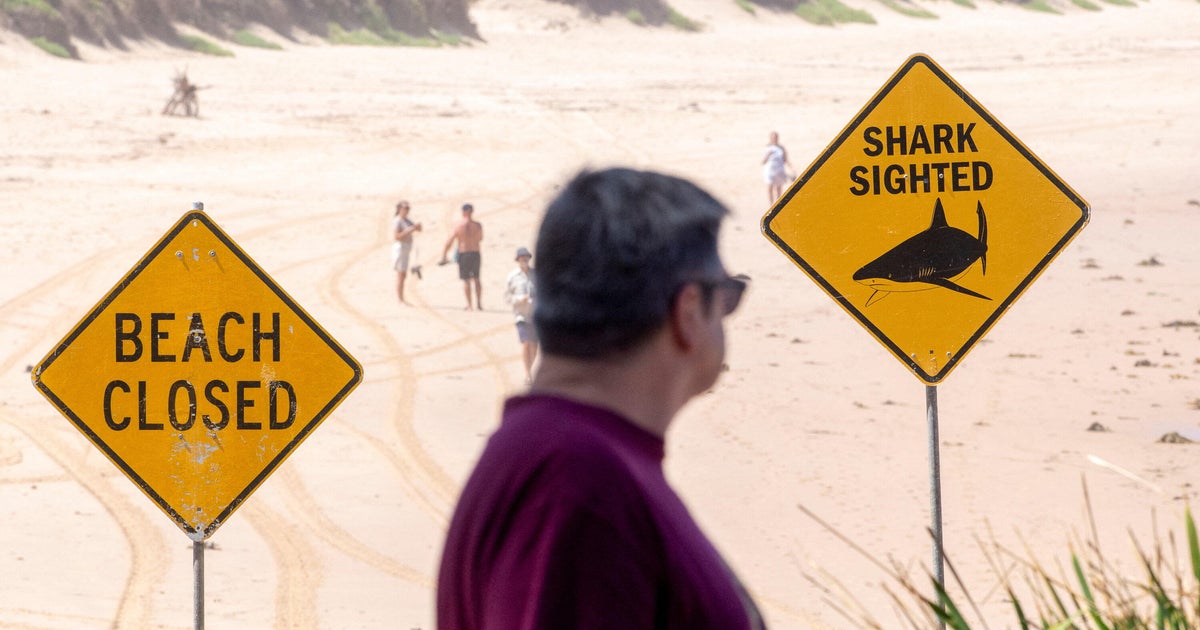
A 12-year-old boy, identified as Nico Antic, has died in hospital after being bitten by a shark while swimming in Sydney Harbour on January 18. Reports across the spectrum agree he was attacked in the water and sustained severe bites to both legs, was rushed to hospital in critical condition, and died days later despite medical intervention. Coverage notes that the incident occurred within Sydney Harbour rather than on an open-ocean beach, making it more unusual, and that it was one of four shark bite incidents reported along the New South Wales coast within roughly 48 hours. Authorities responded by closing multiple beaches around Sydney as a precaution while search and monitoring operations were conducted.
Both liberal- and conservative-leaning summaries frame the event within a broader pattern of shark encounters on the New South Wales coast and recent environmental conditions. Outlets describe officials and marine experts pointing to recent heavy rainfall and associated runoff as factors that may have affected water quality, prey movement, and shark behaviour in inshore waters. They also agree that surf lifesaving institutions and local clubs, including the North Bondi Surf Life Saving Club with which Nico was involved through its Nippers program, play a central role in both emergency response and public education. Across the board, the coverage situates the tragedy within ongoing efforts to manage human–shark interactions through beach closures, public warnings, and monitoring, rather than presenting it as an isolated freak occurrence.
Areas of disagreement
Cause and environmental framing. Liberal-aligned coverage places strong emphasis on environmental drivers such as heavy rainfall, degraded water quality, and altered prey patterns to explain the cluster of shark incidents, often quoting scientists and marine agencies at length. Conservative-oriented summaries are more likely to frame the event as a rare but inherent risk of coastal recreation, mentioning environmental factors briefly but not treating them as the central narrative. Where liberal accounts lean into climate- and pollution-related context, conservative ones tend to highlight unpredictability and personal risk acceptance instead.
Policy responses and regulation. Liberal coverage tends to discuss government and local authority responsibilities in detail, including beach closures, monitoring protocols, and calls for improved coastal management or stronger adherence to water-quality advisories. Conservative summaries, while acknowledging closures and safety measures, are more cautious about implying the need for new regulations or substantial policy shifts, presenting the response as a targeted, time-limited safety action rather than a mandate for broader regulatory change. As a result, liberals more often portray the tragedy as a signal for systemic review, whereas conservatives describe it as a case for better communication of existing warnings.
Language around risk and public safety. Liberal-aligned reporting often uses language that stresses systemic risk mitigation, portraying the incident within a pattern of multiple bites that may require rethinking when and where people swim, especially after storms or in poor water conditions. Conservative coverage, by contrast, tends to keep the focus on the exceptional nature of fatal shark attacks, reassuring readers that such events remain extremely rare and warning against overreaction that might unduly restrict public access to the water. Liberals thus frame public safety as a shared institutional responsibility conditioned by environmental changes, while conservatives more strongly underscore personal choice and proportional risk assessment.
Focus on the victim and community. Liberal reporting devotes more space to Nico’s identity as a member of the North Bondi Surf Life Saving Club’s Nippers program, highlighting community grief, youth surf lifesaving culture, and support networks rallying around the family. Conservative summaries acknowledge the boy’s age and the tragedy but are more concise about his personal background, moving more quickly to broader points about shark incidents and coastal safety. This leads liberal coverage to emphasize communal mourning and the social fabric around surf lifesaving, while conservative coverage more readily pivots to general lessons or risk context.
In summary, liberal coverage tends to foreground environmental conditions, institutional responsibility, and community impact as central lenses for understanding the tragedy, while conservative coverage tends to stress the rarity and inherent risks of coastal recreation and to frame the response in terms of proportionate, time-limited safety measures rather than broader systemic change.