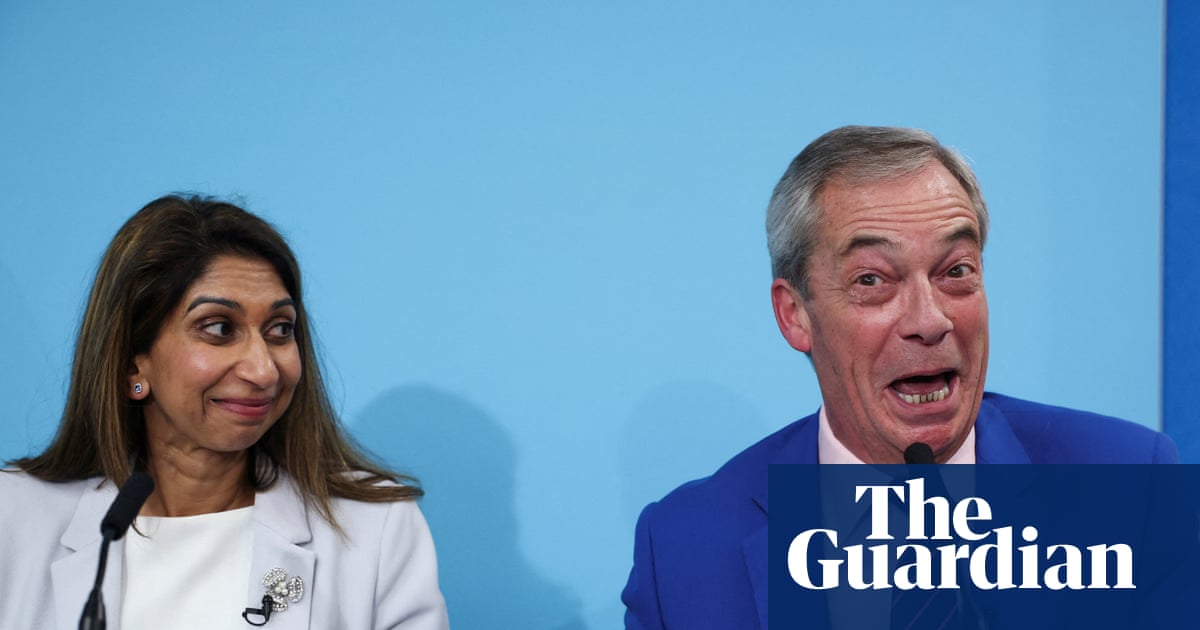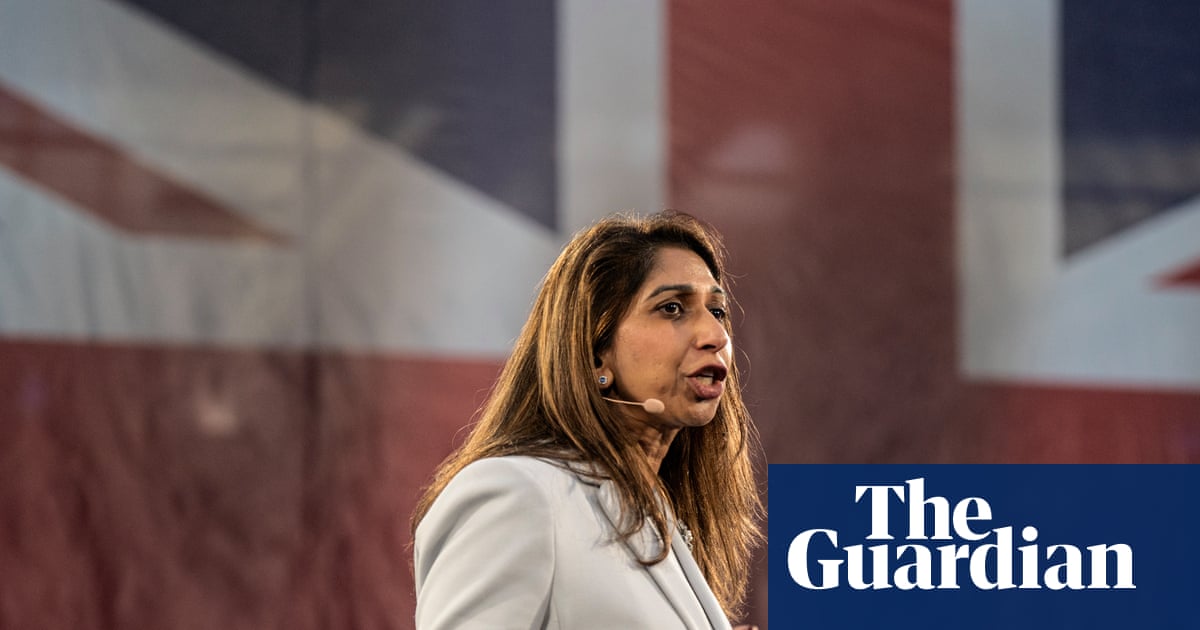
Suella Braverman, former UK home secretary and Conservative MP, has defected from the Conservative Party to join Reform UK alongside Nigel Farage, a move widely described as high-profile but not unexpected. Across the spectrum, coverage agrees she framed the switch as "coming home," arguing that Britain is "broken" due to uncontrolled immigration, overstretched public services, and diminished international standing, and that the Conservatives have broken their promises and left her "politically homeless." Reports concur that her move follows earlier Tory defections to Reform UK and that she appeared at a Reform rally soon after Farage’s speech, where her cabinet-level experience was presented as a political asset for the insurgent party.
Liberal and conservative-leaning narratives agree that Reform UK is attempting to consolidate the right-of-centre vote and that Braverman’s defection represents both a symbolic and strategic moment in that project. Both sides acknowledge her prior prominence as home secretary, her twice being sacked from cabinet roles, and her longstanding association with hardline positions on immigration and law and order, which make her ideologically compatible with Reform UK’s platform. There is also shared recognition that her shift highlights internal tensions within the Conservative Party over its direction, particularly on culture-war issues, migration policy, and how to respond to voter disillusionment with the political establishment.
Areas of disagreement
Motives and significance. Liberal-aligned coverage tends to cast Braverman’s move as a predictable ideological realignment and a calculated bid for relevance within a harder-right project that may fracture the broader right, often highlighting the risks and personal ambition involved. In contrast, conservative-leaning outlets more often frame it as a principled stand against a Conservative Party that has drifted from its promises on immigration, sovereignty, and public services, presenting her defection as an authentic response to grassroots frustration. Liberals stress the theatrical nature of her rally appearance and the gamble Nigel Farage is taking by embracing such a polarizing figure, while conservatives emphasize the boost of gaining a former cabinet minister who can lend Reform UK additional credibility and experience.
Character and controversy. Liberal sources foreground Braverman’s history of inflammatory rhetoric, her two sackings from cabinet, and allegations of internal clashes, portraying her as a divisive figure whose presence might alienate moderate voters. Conservative narratives, where available, tend to downplay past controversies, focusing instead on her consistency on immigration and security, suggestive of someone punished for saying what grassroots conservatives believe but party elites avoid. Liberals interpret her accusations of a "witch-hunt against rightwingers" as part of a broader grievance strategy, while conservatives are more likely to echo or at least entertain those claims as evidence of a hostile environment for the party’s right flank.
Impact on the Conservative Party and right-wing politics. Liberal-aligned coverage generally highlights the potential for Braverman’s defection to deepen Conservative Party chaos and accelerate vote-splitting on the right, possibly aiding Labour or other opponents. Conservative voices tend instead to present the move as a wake-up call for the party leadership, suggesting that if the Conservatives do not recalibrate toward Reform UK’s positions, they risk losing both members and voters permanently. Liberals frequently describe Reform’s strategy as a high-stakes gamble that could marginalize the far right if it fails, while conservatives are more inclined to depict it as the emergence of a necessary, more authentic vehicle for conservative policies.
Narrative around the ‘mental health’ row. Liberal coverage gives notable weight to the controversy over a Conservative statement that appeared to link Braverman’s defection to "mental health" issues, emphasizing how it was quickly retracted as a draft error and framed by Braverman as part of a smear and "witch-hunt" against right-wingers. Conservative-leaning accounts (where acknowledged) are more likely to treat the incident as an unfortunate but minor communications misstep, stressing the retraction and implying it should not overshadow broader political disagreements. Liberal outlets use the episode to illustrate internal party nastiness and stigmatizing tactics, while conservatives focus on damage control and the need to move the debate back to policy.
In summary, liberal coverage tends to portray Braverman’s defection as a predictable, polarizing gambit that risks splintering the right and amplifying hardline rhetoric, while conservative coverage tends to frame it as a principled response to a drifting Conservative Party and a potential catalyst for a more robust, voter-aligned right-wing alternative.
Story coverage