


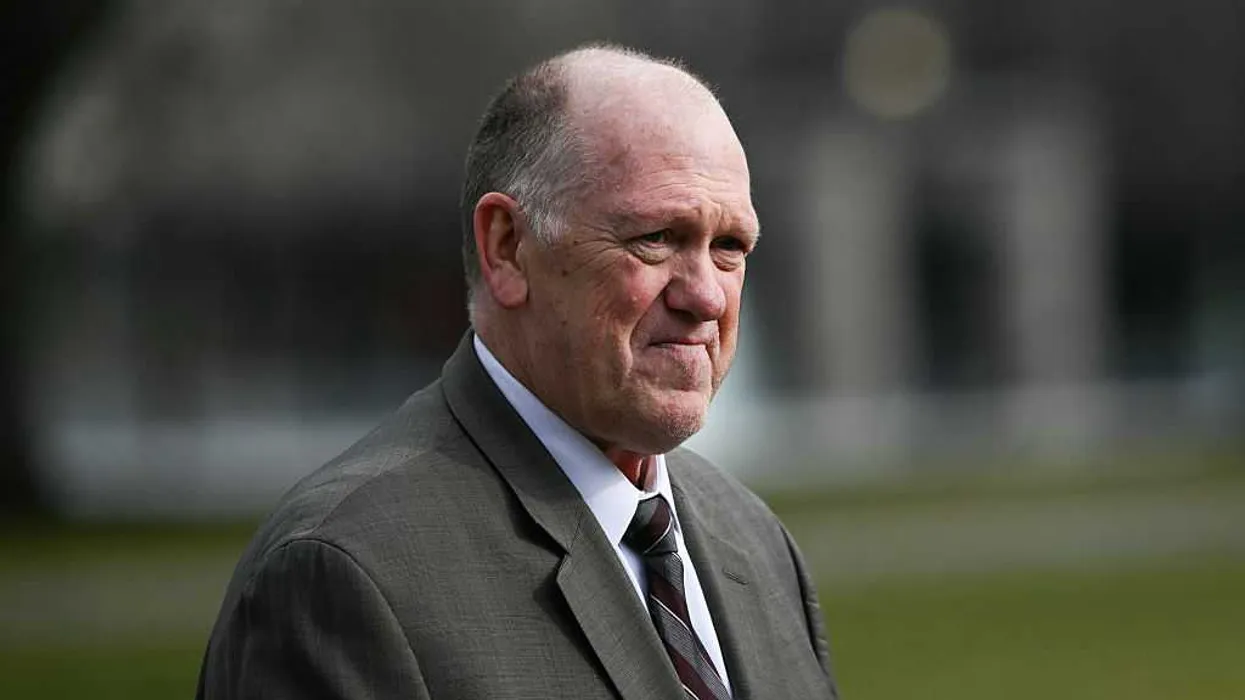
President Donald Trump has announced that his border czar and former ICE director Tom Homan will be sent to Minnesota, with a particular focus on Minneapolis and St. Paul, to oversee and intensify Immigration and Customs Enforcement operations. Coverage across the spectrum agrees that this move comes after a series of ICE-related shootings in Minneapolis, including a fatal shooting of a man by federal agents and a separate incident in which an ICU nurse was shot and killed near an ICE protest. Both liberal and conservative outlets note that protests against ICE operations in the state have grown, some turning tense or confrontational, and that Trump has framed the situation as a serious law-enforcement and public-safety issue, describing Minnesota as a potential "powder keg" of unrest. Reports also converge on the point that Homan will report directly to Trump, and that his remit includes addressing alleged large-scale welfare fraud in Minnesota linked to immigration issues.
Across outlets, there is shared acknowledgment that Minnesota—especially Minneapolis—has become a symbolic flashpoint in the broader national fight over immigration enforcement and federal authority. Minnesota’s protests are widely situated within a longer arc of public backlash to Trump’s immigration agenda, especially aggressive ICE tactics and high-profile deportation operations. Both sides reference ongoing federal investigations, including probes into alleged multi-billion-dollar fraud involving public benefits and scrutiny of Representative Ilhan Omar, as part of the broader institutional and political backdrop. There is also common framing that Homan’s deployment is not a routine visit but an escalation that reflects the administration’s willingness to centralize control over on-the-ground immigration enforcement in response to unrest, perceived security threats, and political pressure.
Areas of disagreement
Causation and framing of violence. Liberal-aligned outlets tend to frame the unrest and tragic shootings in Minneapolis as consequences of aggressive federal immigration enforcement and militarized tactics that have inflamed tensions with local communities. They often treat the protests as largely reactive and rooted in civil-rights and immigrant-justice concerns, emphasizing the fear and anger generated by ICE operations. Conservative outlets, by contrast, stress what they describe as "violent organized protests" and portray the shootings and street clashes as proof that anti-ICE activism has spiraled into lawlessness, justifying a more forceful federal response.
Portrayal of Tom Homan and ICE. Liberal sources generally depict Homan as a hardline immigration enforcer whose record includes family separations and expanded deportations, suggesting his arrival signals further crackdowns that may escalate conflict and harm immigrant communities. They question whether sending a prominent ICE figure will resolve tensions or simply deepen mistrust between residents and federal agents. Conservative coverage tends to cast Homan as a seasoned, no-nonsense official uniquely qualified to restore order, protect agents and bystanders, and ensure that criminal noncitizens are arrested despite local resistance.
Alleged welfare fraud and political motives. Liberal outlets either downplay or treat skeptically Trump’s claims of roughly $20 billion in welfare fraud tied to immigrants, often highlighting the lack of publicly available evidence and framing the allegation as a political narrative aimed at demonizing immigrant communities and targeting figures like Representative Ilhan Omar. They are more likely to suggest that focusing on fraud and Omar’s finances serves as a partisan wedge in a state with a large Somali and immigrant population. Conservative reporting foregrounds the fraud figure and presents Homan’s mission as a necessary cleanup operation to protect taxpayers, tying alleged abuses of the system to broader concerns about border security and local political leadership, including Omar and Democratic officials.
Federal-local power and community impact. Liberal-aligned coverage frequently emphasizes tensions between federal authorities and Minnesota’s local institutions, highlighting concerns from city leaders, activists, and civil-rights groups about federal overreach and the chilling effect on immigrant communities. They stress the risk that increased ICE activity will deter residents from reporting crimes or seeking healthcare, and frame the move as undermining local efforts at police reform and community relations. Conservative outlets, in contrast, depict federal intervention as necessary partly because local governments and activists are seen as obstructing enforcement and enabling lawlessness, arguing that public safety and the rule of law must take precedence over local political resistance.
In summary, liberal coverage tends to stress civil-rights concerns, skepticism about Trump’s fraud claims, and fears that Homan’s deployment will deepen mistrust and violence, while conservative coverage tends to frame the move as a justified law-and-order response to violent protests, large-scale fraud, and local political failure.
Story coverage


