

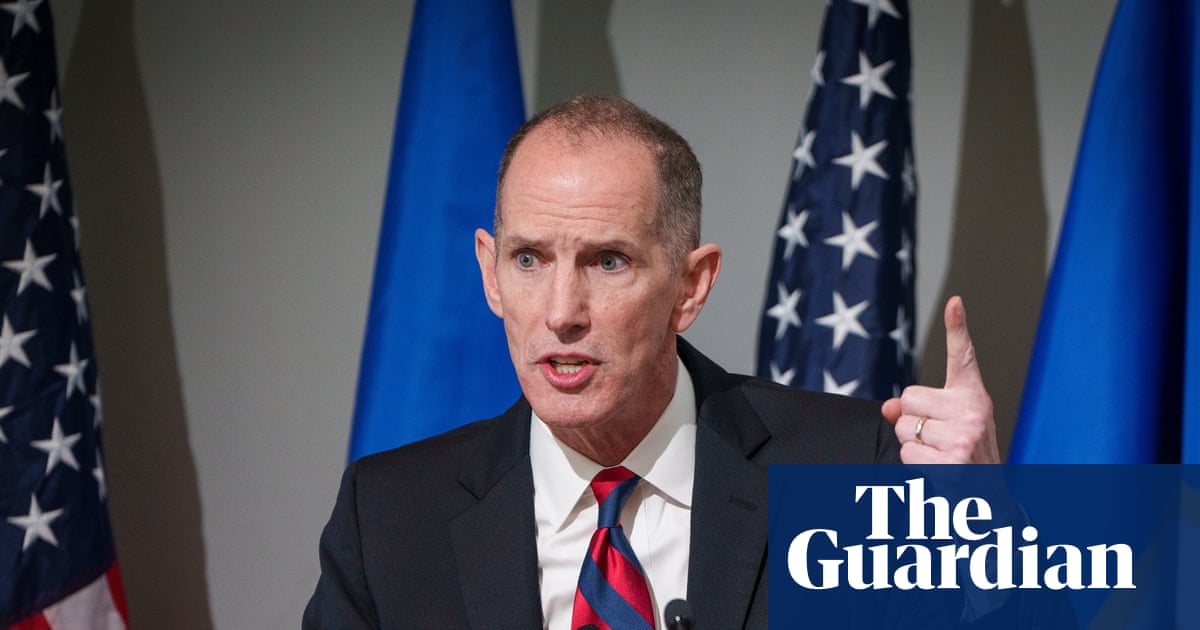
Republican attorney Chris Madel has ended his long-shot campaign for Minnesota governor, with both liberal- and conservative-leaning outlets agreeing that he withdrew because of his objections to recent federal immigration enforcement actions tied to Operation Metro Surge. Coverage across the spectrum notes that he explicitly cited what he called “federal retribution on the citizens of our state” and said that the national Republican Party’s backing of those enforcement tactics made it untenable for him to continue running as a GOP candidate in a statewide race.
Across outlets, reports agree that Operation Metro Surge was billed as a targeted immigration enforcement effort but has raised wider civil liberties and public safety concerns, especially around the treatment of U.S. citizens and communities of color. Both sides describe Madel as breaking with his party over the scope and implementation of the operation rather than over core Republican principles on border security, and they present his exit as a notable example of internal Republican tensions on immigration strategy in a politically competitive state like Minnesota.
Areas of disagreement
Characterization of Madel’s stance. Liberal-aligned coverage tends to frame Madel as a principled Republican dissenter alarmed by what he views as unconstitutional overreach and discriminatory impacts of Operation Metro Surge. Conservative outlets are more likely to cast his campaign as already marginal and emphasize that his withdrawal reflects a personal break with the national party’s strategy rather than a broader shift within Republican ranks, subtly downplaying the significance of his critique.
Framing of Operation Metro Surge. Liberal sources highlight the operation’s expansion beyond its stated targets and stress the fear and potential rights violations experienced by U.S. citizens, especially people of color, treating Madel’s comments as evidence of serious systemic problems. Conservative coverage more often describes the crackdown in generic terms as an immigration enforcement effort and focuses on Madel’s description of it as an “unmitigated disaster” primarily in political and strategic terms, giving less attention to civil rights implications.
Electoral implications. Liberal reporting underscores Madel’s assertion that the current enforcement posture makes it nearly impossible for a Republican to win statewide in Minnesota, using his withdrawal to illustrate how hardline immigration tactics may alienate moderate voters. Conservative sources tend to treat the electoral angle more narrowly, portraying his campaign as a long shot whose end has limited impact on the broader 2026 governor’s race and suggesting that party alignment with tougher immigration enforcement remains popular with much of the GOP base.
Responsibility and party dynamics. Liberal outlets often imply that national Republican leaders bear responsibility for fostering a punitive approach that forces candidates like Madel to choose between conscience and party loyalty, presenting his exit as symptomatic of deeper intra-party conflict. Conservative coverage, while acknowledging his disagreement with the national party, tends to individualize the decision as Madel’s own calculation and avoids framing it as indicative of a growing factional split within Republican ranks.
In summary, liberal coverage tends to treat Madel’s withdrawal as a meaningful, principled rebuke of Republican-backed immigration enforcement that exposes electoral and moral risks for the GOP in Minnesota, while conservative coverage tends to portray it as the end of a peripheral candidacy driven by personal disagreement over strategy rather than a broader challenge to the party’s immigration stance.
