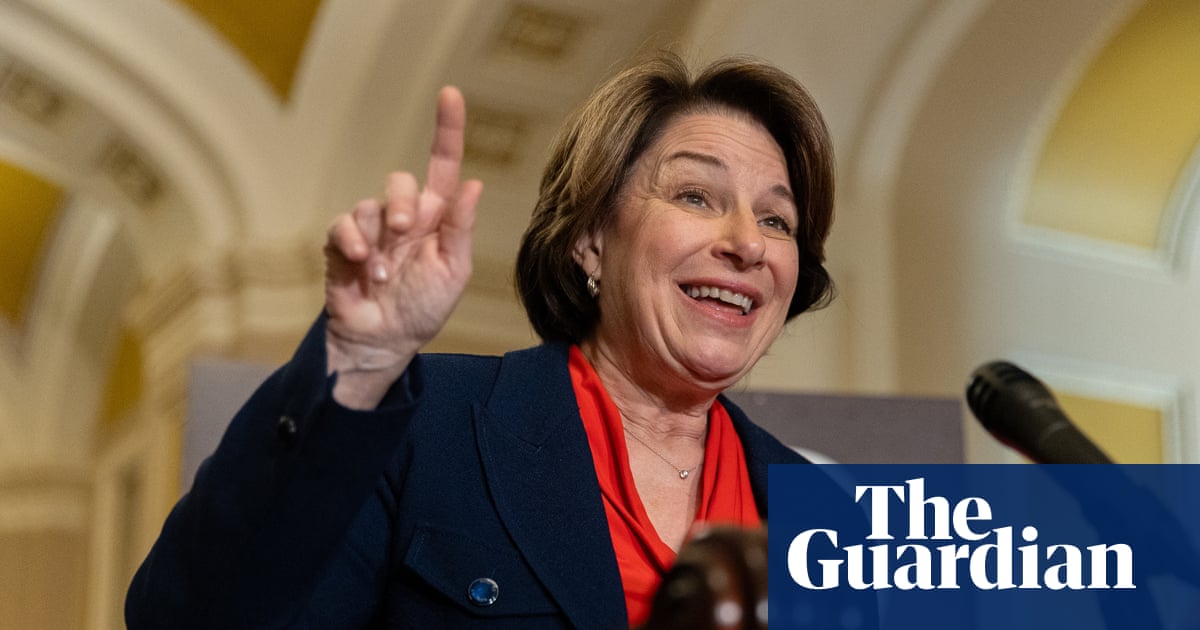
Senator Amy Klobuchar, a Democratic U.S. senator from Minnesota, has formally announced that she is running for governor of Minnesota following Governor Tim Walz’s decision not to seek another term. Both liberal and conservative outlets agree that the announcement came on a Thursday and that the race will be open because of Walz’s withdrawal. Coverage from both sides notes that Klobuchar framed her bid around restoring order and trust in state government, with particular emphasis on confronting fraud that has affected Minnesota and positioning herself as a unifying figure in a politically divided state.
Liberal and conservative reports concur that the state’s recent public fraud scandal will be a central issue in the gubernatorial race and that Klobuchar is pledging to address it directly. Both sets of outlets describe her portraying Minnesota as having endured a series of challenges, including polarization and controversies around immigration enforcement, and they highlight her promise to be productive and to seek bipartisan cooperation in St. Paul. They also agree that the Republican field is competitive, with multiple GOP contenders vying for the nomination, and that Klobuchar’s entry instantly makes her the leading Democratic figure in what is expected to be a high-profile and closely watched contest.
Areas of disagreement
Framing of Klobuchar’s candidacy. Liberal-aligned coverage emphasizes Klobuchar as a stabilizing, pragmatic leader stepping in after Walz to protect democratic norms, combat political violence, and check what they portray as heavy-handed immigration enforcement tactics. Conservative outlets, while acknowledging her experience, frame her more as a national Democrat trying to leverage her profile to challenge Trump and extend Democratic control in the state, hinting that her run is as much about cementing partisan power as about governance.
Emphasis on immigration and law enforcement. Liberal sources stress Klobuchar’s opposition to certain ICE tactics in Minnesota and link this stance to broader concerns about civil liberties and the impact of federal enforcement on vulnerable communities. Conservative coverage, by contrast, downplays detailed criticisms of ICE and instead notes her general promise to unite the state and stand up to Trump, implicitly casting her immigration positioning as part of a broader partisan narrative rather than a specific reform agenda.
Portrayal of the fraud scandal and governance record. Liberal reporting tends to present the public fraud scandal as a systemic problem that Klobuchar vows to “root out,” positioning her as a reformer who will clean up state institutions while working across the aisle. Conservative outlets acknowledge her anti-fraud pledge but more often imply that the scandal reflects failures under Democratic leadership, suggesting skepticism that a long-serving Democratic senator is the right figure to fix issues that arose on her party’s watch.
Degree of bipartisanship and unity. Liberal coverage foregrounds her calls for combating political violence and healing divisions, portraying her bipartisan rhetoric as consistent with her Senate brand of pragmatism and moderation. Conservative sources do cite her vows of productivity and cooperation but tend to frame them against her record as a national Democrat, questioning how genuinely bipartisan she can be in practice and hinting that her unity message may mask reliably liberal policy priorities.
In summary, liberal coverage tends to cast Klobuchar as a pragmatic reformer and unifier confronting fraud, political violence, and aggressive immigration enforcement in order to steady Minnesota’s institutions, while conservative coverage tends to depict her as a partisan Democratic figure leveraging anti-Trump and pro-unity rhetoric to maintain her party’s grip on a troubled state while offering limited concrete departure from existing Democratic governance.
Story coverage