

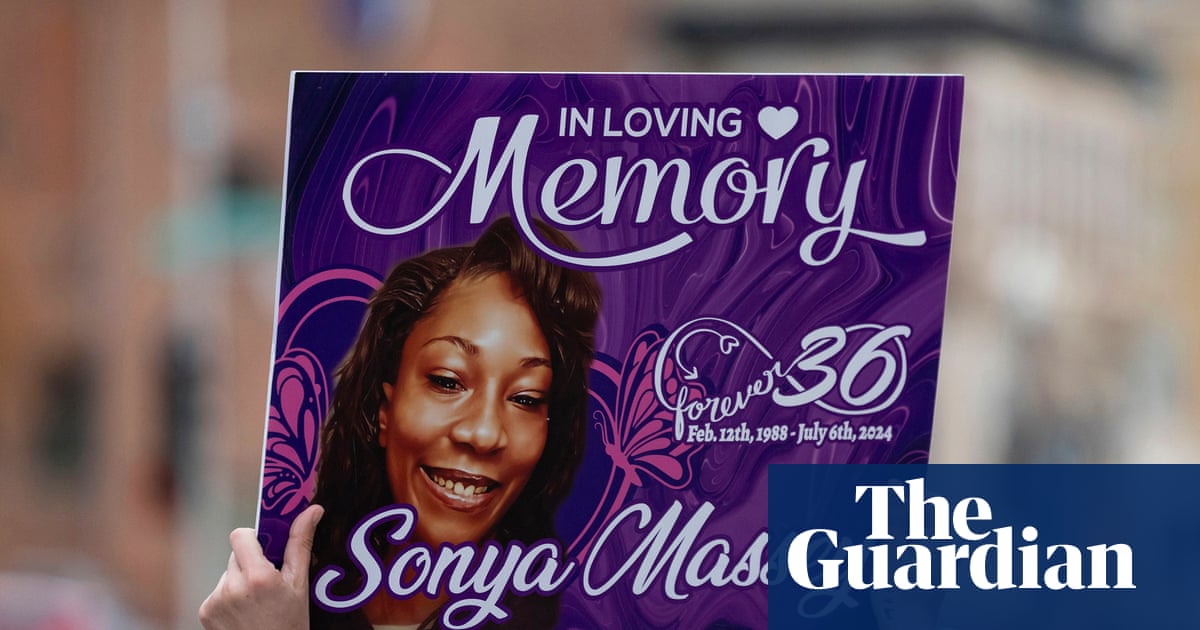
Former Sangamon County sheriff’s deputy Sean Grayson has been sentenced to 20 years in prison for the killing of 36-year-old Sonya Massey in Springfield, Illinois, after she called 911 to report a possible prowler near her home. Both liberal and conservative outlets agree that Grayson was convicted of second-degree murder, that the shooting took place outside Massey’s residence following her emergency call, and that he addressed the court expressing remorse at sentencing. Coverage on both sides also notes that Massey’s family members spoke in court about the devastating impact of her killing and that the incident has drawn significant public attention as another example of a fatal police encounter stemming from a request for help.
Across the spectrum, reporting acknowledges that the case resulted in a $10 million civil settlement connected to Massey’s death and has spurred institutional responses in Illinois, including mandated de-escalation training for law enforcement and changes to state law to increase transparency about law enforcement candidates’ prior histories. Outlets from both perspectives frame the incident within a broader pattern of scrutiny of police use of force, especially in situations involving 911 calls from people seeking protection. There is also shared emphasis that the reforms aim to reduce the likelihood of similar tragedies by improving officer decision-making and accountability mechanisms without disputing that Grayson’s actions were found criminal under Illinois law.
Areas of disagreement
Adequacy of the sentence. Liberal-aligned coverage emphasizes the family’s view that 20 years is an insufficient punishment for killing someone who called 911 for help, often implying that the sentence reflects ongoing leniency toward police who commit violent acts. Conservative outlets generally present the sentence more neutrally, describing it as substantial and within the legal framework for second-degree murder without dwelling on whether it is too light. While liberal sources frame the term as another instance of systemic under-penalizing of law enforcement, conservative sources tend to treat it as the resolution of an individual criminal case.
Systemic versus individual framing. Liberal outlets situate the killing within a larger pattern of police violence and structural racism, explicitly linking Massey’s death to broader debates over policing reforms and accountability in minority communities. Conservative coverage typically treats the incident as an isolated tragedy caused by one former deputy’s fatal misjudgment, focusing on the facts of the encounter and the outcome in court rather than systemic analysis. As a result, liberal narratives stress institutional failure across policing culture, whereas conservative narratives concentrate on Grayson’s personal culpability and the justice system’s response.
Emphasis on reforms and liability. Liberal reporting gives significant attention to the $10 million settlement, mandated de-escalation training, and the new Illinois law on transparency for law enforcement candidates as key outcomes that demonstrate institutional responsibility and a need for ongoing reform. Conservative coverage tends to mention these measures, if at all, briefly and without extended discussion, focusing instead on the conviction and sentence as the primary accountability mechanisms. Thus, liberal sources use the case to highlight policy changes and argue for further reforms, while conservative sources foreground criminal punishment and minimize wider policy implications.
Portrayal of victims and police. Liberal-aligned stories often center Massey’s perspective, portraying her clearly as a victim who followed the rules by calling 911 and was killed by the very institution meant to protect her, with extended space for her family’s grief and anger. Conservative outlets are more likely to balance mention of Massey’s victimhood with references to Grayson’s courtroom remorse and the legal definitions of second-degree murder, at times using language that underscores the tragedy for both families. Consequently, liberal coverage largely foregrounds community harm and mistrust of police, while conservative coverage blends sympathy for Massey with a greater emphasis on due process and the idea that this was a catastrophic failure by one officer rather than emblematic of policing as a whole.
In summary, liberal coverage tends to depict the case as a stark example of systemic failures in policing, an inadequate sentence, and a catalyst for broader reforms and reckoning, while conservative coverage tends to frame it as a tragic but individualized criminal act appropriately addressed through conviction and sentencing, with less focus on structural explanations or far-reaching policy critiques.
