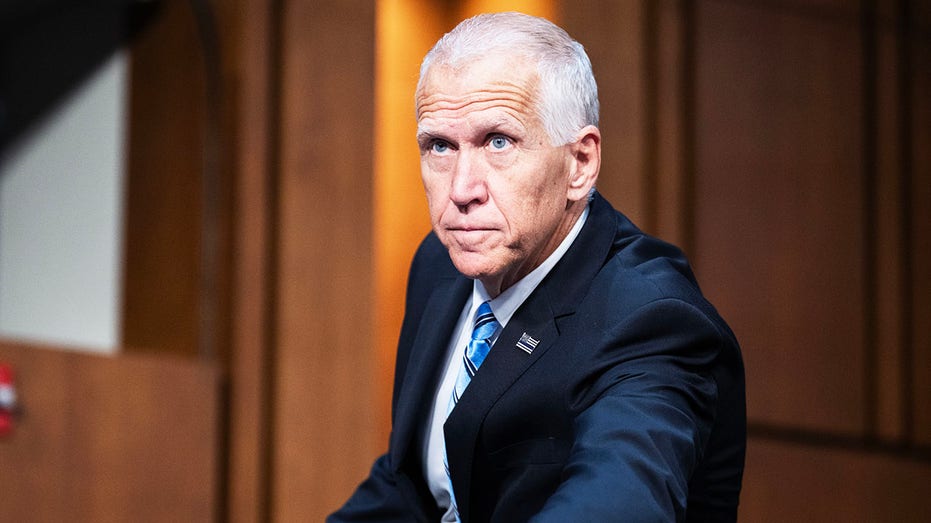

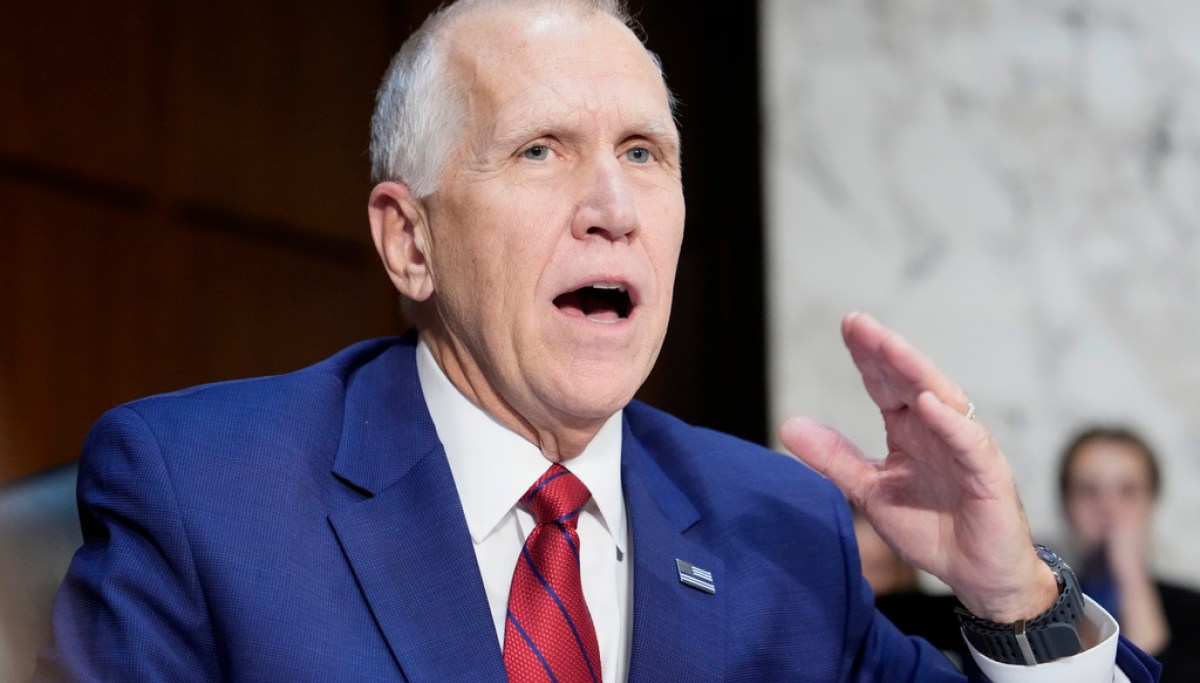
Senator Thom Tillis of North Carolina, a Republican member of the Senate Banking Committee, has publicly tied his support for President Donald Trump’s Federal Reserve chair nominee, Kevin Warsh, to the outcome of a Department of Justice criminal investigation into current Fed Chair Jerome Powell. Across outlets, reports agree that Tillis is currently blocking or threatening to block Warsh’s advancement through the Banking Committee, stressing that the Fed’s institutional independence must be protected while the DOJ probe—centered on Powell’s handling of a multibillion‑dollar renovation project and related statements to Congress—remains unresolved. Both liberal and conservative coverage note that without Tillis’s backing on the narrowly divided committee, Warsh’s confirmation process is unlikely to move forward, and that Tillis has floated the possibility of a compromise that would at least allow hearings to begin under certain conditions.
Coverage from both sides also agrees that Tillis has rejected proposals to shift or dilute the DOJ’s role by having the Senate Banking Committee effectively take over the probe, emphasizing that the committee’s mandate is oversight, not prosecution, and that any investigation must be completed through established legal channels. Liberal and conservative outlets alike frame the episode within longstanding concerns about political interference in the Federal Reserve, with a shared recognition that Trump’s public pressure on monetary policy and ongoing DOJ scrutiny of Powell have heightened fears about threats to central bank independence. They similarly portray Tillis’s stance as a consequential institutional maneuver: using his position on the Banking Committee to influence not only the fate of Warsh’s nomination, but also the broader balance between the executive branch, the central bank, and congressional oversight in the handling of the Powell investigation.
Areas of disagreement
Motives and framing of Tillis’s stance. Liberal-aligned coverage casts Tillis primarily as a defender of institutional norms who is insisting that the DOJ probe into Powell run its proper course before the Senate elevates a new Fed chair, suggesting he is placing rule-of-law and Fed independence above party loyalty and Trump’s preferences. Conservative outlets more often frame Tillis as a cautious but ultimately pragmatic Republican who is still open to compromise, stressing his willingness to consider moving ahead with hearings for Warsh if certain concerns are addressed rather than portraying him as a hard-line resistor. While liberal pieces highlight the unusual nature of a GOP senator obstructing a Republican president’s key nominee, conservative coverage tends to emphasize process, negotiation, and the possibility that Tillis’s conditions could be satisfied.
Characterization of the Powell investigation. Liberal sources describe the DOJ’s criminal probe into Powell with a heavy dose of skepticism, underscoring that some lawmakers see it as a politically motivated effort by Trump or his allies to pressure the Fed on interest-rate policy and punish Powell for perceived disloyalty. Conservative coverage, while acknowledging concerns about politicization, more often treats the investigation as a serious, if contentious, legal process focusing on management of a $2.5 billion renovation and Powell’s congressional testimony, and is less likely to spotlight accusations of it being a Trump-driven vendetta. As a result, liberal narratives tend to portray Tillis’s blockade as a pushback against an abusive investigation, whereas conservative narratives more neutrally describe it as a demand for clarity before reshaping the Fed’s leadership.
Implications for Trump and the Fed. Liberal-aligned reporting leans into the notion that Tillis’s move is a significant setback and public embarrassment for Trump, reinforcing a storyline of fraying Republican unity and escalating intra-party resistance to the president’s attempts to influence the Fed. Conservative outlets, by contrast, often minimize the drama and present the conflict as part of the normal tug-of-war over major appointments, suggesting that with the right assurances about the Powell probe and Fed independence, Trump and Senate Republicans can still converge on Warsh or another acceptable nominee. Liberal coverage thus stresses the episode as evidence of deepening institutional and partisan strain around monetary policy, while conservative coverage tends to suggest that the controversy is a navigable obstacle rather than a fundamental rupture.
Role of congressional oversight. Liberal sources underscore Tillis’s refusal to let the Senate Banking Committee substitute for the DOJ as a signal that Congress should not be weaponized to clean up or legitimize a possibly politicized investigation, reinforcing a broader defense of separation of powers and independent law enforcement. Conservative sources, while noting his rejection of taking over the probe, more often frame the committee’s role in terms of proper procedural oversight of both the Fed and the nomination process, emphasizing that hearings and negotiations are the appropriate way to address any concerns raised by the investigation. Thus, liberal accounts portray Tillis as resisting an attempted congressional off-ramp for an improper probe, whereas conservative accounts focus on his insistence that the committee stay in its lane while still advancing its routine vetting responsibilities.
In summary, liberal coverage tends to present Tillis as an institutionalist placing checks on Trump and a potentially politicized DOJ probe by leveraging his power over the Fed nomination, while conservative coverage tends to depict him as a cautious negotiator seeking assurances on Fed independence and legal clarity without fundamentally breaking with the president or the normal confirmation process.
Story coverage