

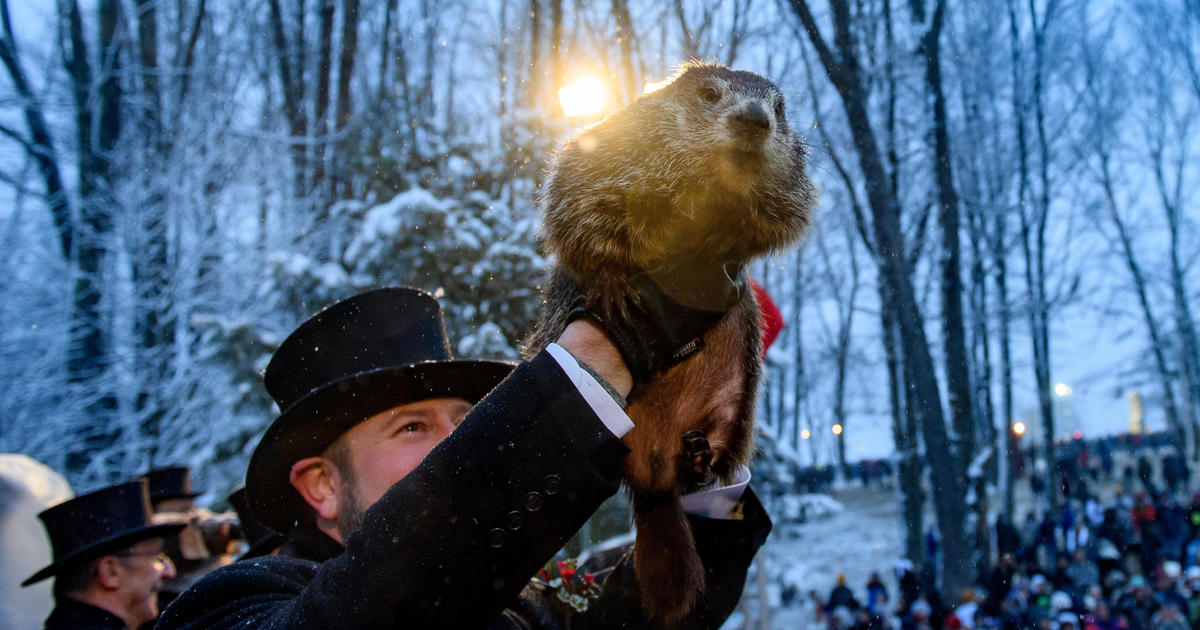
Punxsutawney Phil emerged at sunrise on Groundhog Day at Gobbler's Knob in Punxsutawney, Pennsylvania, where organizers announced that he had seen his shadow and therefore predicted six more weeks of winter. Coverage from both liberal- and conservative-leaning outlets agrees on the basic details: a crowd gathered for the traditional Monday ceremony, Phil’s handlers interpreted the groundhog’s behavior as a sign of extended winter, and this event continues to draw national and even international attention as a lighthearted weather-related spectacle.
Across the spectrum, outlets situate the event within the long history of Groundhog Day as a folk-weather ritual brought by German settlers to Pennsylvania and rooted in older pagan and Christian midwinter observances. Both sides describe the core rule that a visible shadow signals six more weeks of winter while the absence of a shadow points to an early spring, and they present the Punxsutawney Groundhog Club and the Gobbler’s Knob ceremony as the central institutions managing Phil’s forecast. Coverage also notes that, whatever its predictive power, the event has become an enduring cultural tradition and seasonal milestone in the American calendar.
Areas of disagreement
Accuracy and seriousness. Liberal-aligned coverage emphasizes that Phil’s long-term track record is poor, citing historical analyses that put his overall accuracy near 39 percent and closer to about 30 percent over the past decade, framing the forecast as more myth than meteorology. Conservative-leaning outlets, by contrast, largely avoid numerical scrutiny of his success rate, treating the prediction as a fun, symbolic forecast rather than something to be debunked. As a result, liberal reports lean into skepticism and data-driven caveats, while conservative reports preserve the whimsical, almost ceremonial tone of a community tradition.
Cultural framing and tone. Liberal sources tend to contextualize the ceremony with explanations of its European roots and religious and folkloric origins, presenting the day as a cultural artifact that reveals how societies historically tried to make sense of the seasons. Conservative sources more often highlight the spectacle itself—Phil as an "internationally recognized" groundhog, the sunrise pageantry, and the local pride—using a celebratory, Americana-infused tone. This leads liberals to treat the story as an opportunity for cultural and historical reflection, while conservatives frame it as a feel-good slice of small-town American life.
Role of science and expertise. Liberal coverage more frequently juxtaposes Phil’s prediction with modern meteorology, implicitly or explicitly contrasting a 39 percent success rate with professional weather forecasts and climate data. Conservative coverage generally does not bring scientific comparisons to the foreground, instead allowing the folk tradition to stand on its own without challenging it against expert models. Thus liberals underscore the gap between folklore and evidence-based forecasting, while conservatives keep the focus on tradition without problematizing its scientific validity.
Broader significance. Liberal-leaning outlets sometimes use Phil’s mixed record to comment on how people interpret weather and seasonal change, occasionally hinting at broader discussions of climate trends and public understanding of science. Conservative-leaning outlets, on the other hand, tend to confine the story to its entertainment value and economic or community benefits, such as tourism and annual media attention, and are less likely to pivot to environmental or scientific policy themes. This makes liberal coverage more likely to treat the event as a lens on modern attitudes toward evidence and nature, while conservative coverage presents it as a welcome, apolitical respite from heavier news.
In summary, liberal coverage tends to treat Punxsutawney Phil’s prediction as a charming but unreliable folk tradition, foregrounding historical context and empirical accuracy, while conservative coverage tends to present it as a celebratory slice of Americana, emphasizing pageantry, continuity, and communal fun over critical analysis.
Story coverage

