

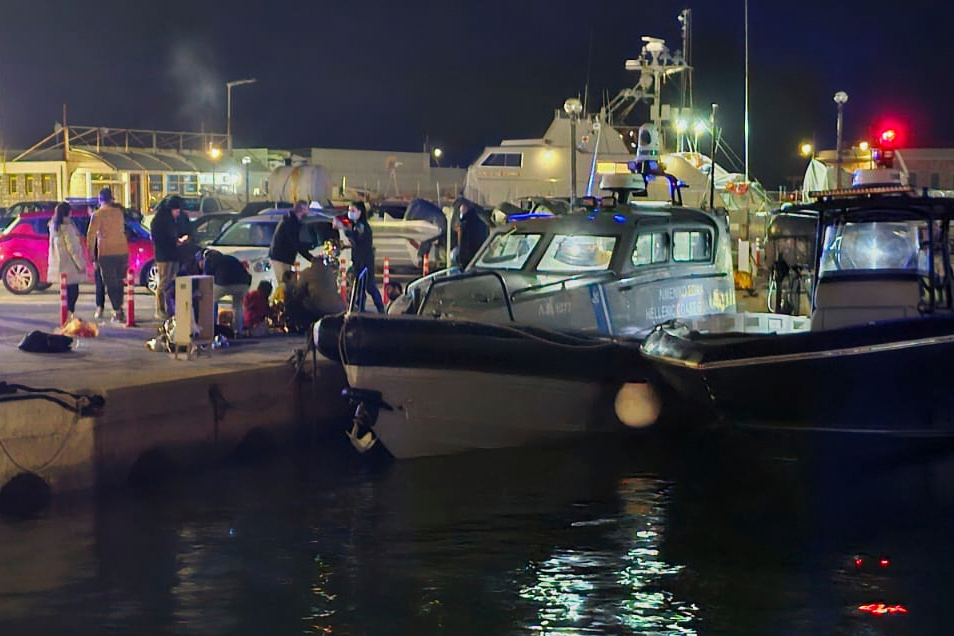
At least 14–15 migrants were killed and more than two dozen injured when a speedboat carrying migrants collided with a Hellenic Coast Guard patrol vessel off the eastern Aegean island of Chios during the night of February 3. Across the spectrum, outlets agree that the boat was carrying men, women, and children, that the coast guard vessel was on patrol when the collision occurred, and that Greek authorities mounted a large-scale search and rescue operation that recovered bodies and pulled survivors from the water. Reports concur that many of the injured, including unaccompanied or separated children, were taken to hospitals on Chios, where doctors are working to treat trauma and identify relatives, while maritime and judicial authorities opened investigations into the circumstances of the crash.
Liberal and conservative sources converge on a broader context of dangerous irregular migration routes across the Aegean, with this incident framed as another deadly episode in a long-running pattern of perilous crossings from the Turkish coast toward Greek islands. Both perspectives highlight that overloaded or high‑speed vessels, often run by smugglers, routinely attempt nocturnal journeys to evade detection, increasing the risk of accidents and mass casualties. There is shared acknowledgment that Greece, as an external border state of the European Union, sits at the heart of broader EU migration and asylum tensions, that past tragedies have spurred calls for better search-and-rescue coordination and safer legal pathways, and that this latest collision is likely to intensify scrutiny of both smuggling networks and official border-control practices.
Areas of disagreement
Responsibility and blame. Liberal-aligned outlets tend to scrutinize the actions and rules of engagement of the Greek coast guard, raising questions about whether pursuit tactics, interception maneuvers, or broader EU deterrence policies contributed to the deadly collision. Conservative outlets, by contrast, more often emphasize the culpability of migrant smugglers and the inherent risks of illegal crossings, portraying the collision primarily as the tragic consequence of criminal trafficking operations rather than possible misconduct by authorities.
Framing of migration policy. Liberal coverage generally situates the crash within critiques of restrictive border regimes and EU migration policy, arguing that the lack of safe and legal routes pushes families into high‑risk journeys across the Aegean. Conservative coverage typically uses the incident to underscore the need for stronger border enforcement and deterrence, warning that easing restrictions could incentivize more crossings and thereby more deaths, rather than reducing them.
** portrayal of institutions.** Liberal sources often cast the Greek coast guard and EU border structures as institutions that require greater transparency, independent monitoring, and accountability, referencing earlier allegations of pushbacks or heavy‑handed tactics as relevant background to this case. Conservative sources, on the other hand, more frequently depict the coast guard, local hospitals, and security services as overburdened front‑line defenders performing difficult humanitarian and security tasks, stressing their rescue efforts and downplaying systemic criticism.
Language and emphasis. Liberal-leaning reports tend to use language that foregrounds the human stories of the victims, highlighting children separated from parents, asylum claims, and the broader humanitarian crisis, and they sometimes link the crash to larger moral debates about Europe’s responsibility. Conservative outlets more often stress operational details such as the number of patrols, the role of traffickers, and the pressures on Greek communities, framing the event as part of a security and sovereignty challenge rather than primarily as a failure of compassion.
In summary, liberal coverage tends to frame the collision as a tragic symptom of harsh border and migration policies that may have shaped how the encounter unfolded, while conservative coverage tends to treat it as a heartbreaking but largely unavoidable consequence of illegal smuggling operations that reinforces arguments for stricter border control.
Story coverage

