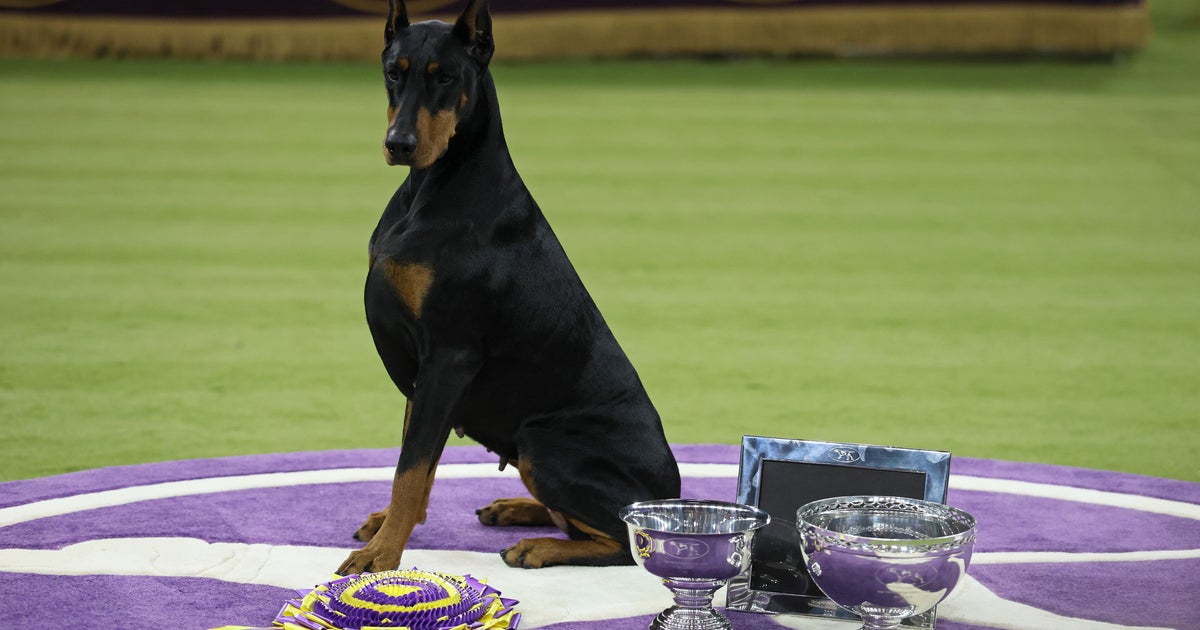


Penny, a Doberman Pinscher, won Best in Show at the 150th Westminster Kennel Club Dog Show, held at Madison Square Garden in New York City. Both liberal- and conservative-leaning outlets agree that she triumphed over six other finalists, with judges assessing each competitor against its breed standard, and that the overall event drew more than 2,500 dogs from over 200 breeds, underscoring the show’s scale and prestige.
Coverage from across the spectrum emphasizes Westminster’s stature as one of the world’s premier and oldest dog shows, highlighting its long-running traditions and exacting judging criteria. Outlets on both sides situate Penny’s victory within the broader context of breed standards, dedicated training, and the competitive culture of conformation shows, presenting the win as a landmark moment within an institution that celebrates purebred dog breeding and handling expertise.
Areas of disagreement
Emphasis of achievement. Liberal-aligned outlets frame Penny’s win primarily as the standout moment of a large, historic canine competition, spotlighting the breadth of breeds and the scale of the event. Conservative outlets, while noting the prestige of Westminster, more strongly foreground the personal achievement of handler Andy Linton, emphasizing the narrative of his return to the top nearly four decades after a prior Doberman victory.
Human-interest framing. Liberal coverage tends to treat Penny and the broader field of competitors as the main characters, focusing on the spectacle of the show, the diversity of breeds, and the institutional significance of the 150th anniversary. Conservative coverage leans more into the human-interest arc around Linton, portraying the story as a testament to persistence, long-term dedication, and the continuity of excellence in a particular working breed.
Historical continuity. Liberal sources highlight Westminster’s 150th running and the large entry numbers to underscore the show’s enduring popularity and cultural resonance. Conservative sources more sharply stress the historical echo of Linton’s earlier Best in Show win with another Doberman, framing Penny’s victory as a full-circle moment that ties individual legacy to the show’s tradition.
In summary, liberal coverage tends to cast Penny’s victory as a centerpiece of a large, institution-focused celebration of purebred dogs and competitive standards, while conservative coverage tends to spotlight the personal, decades-spanning success story of handler Andy Linton and the Doberman breed’s legacy at Westminster.