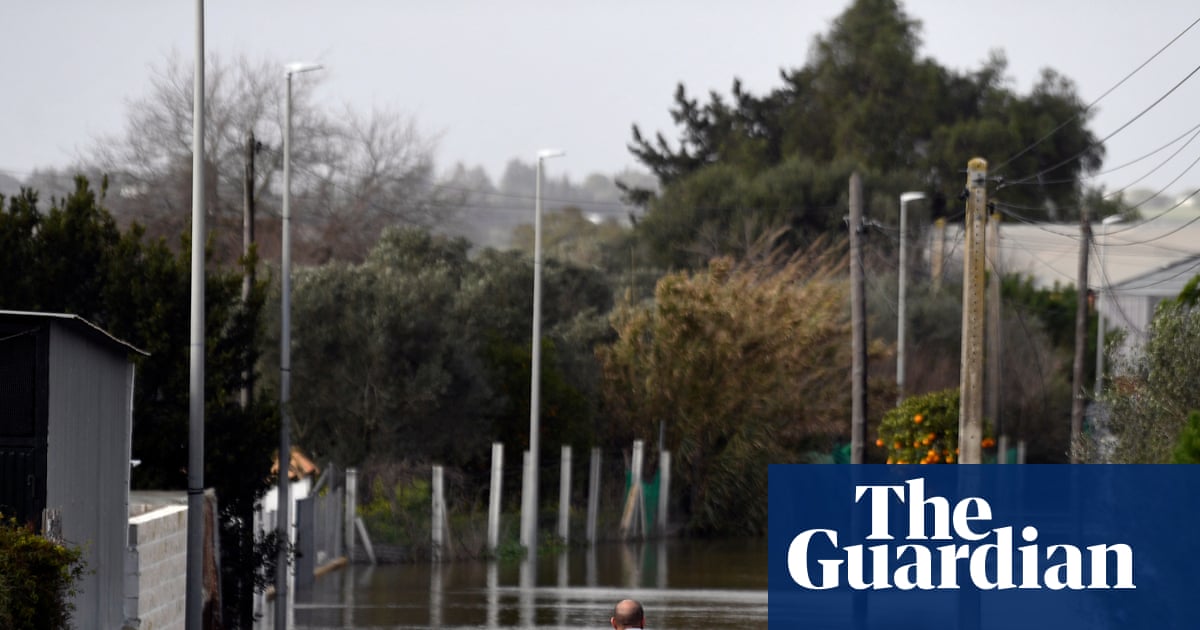
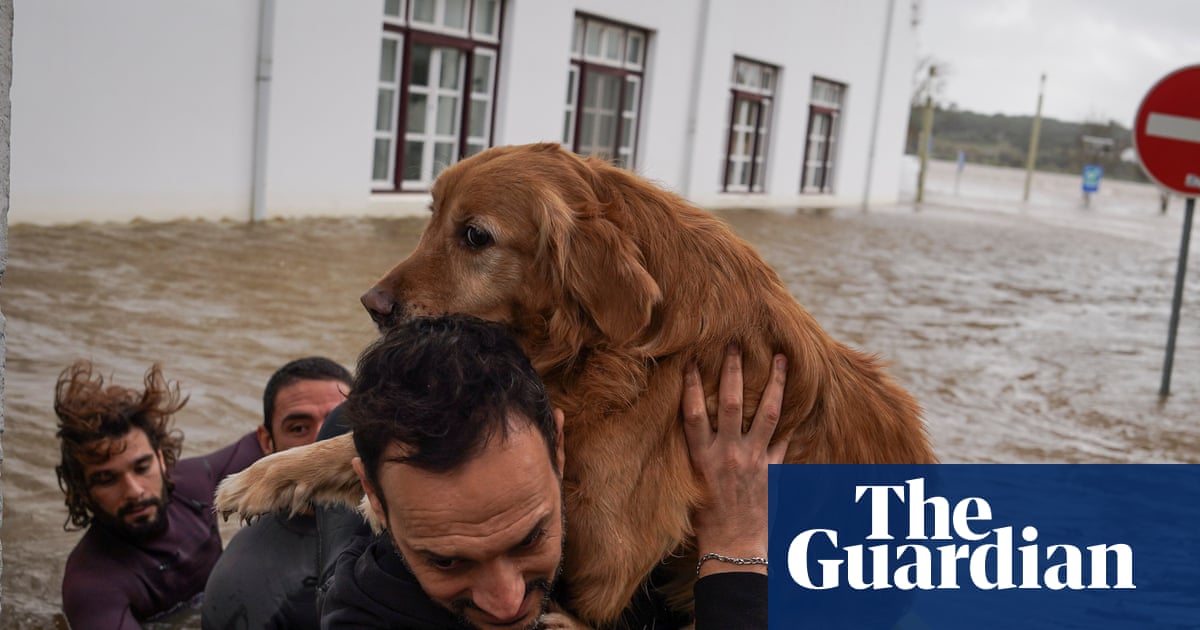
Storm Leonardo has brought torrential rain, powerful winds, and severe flooding to Spain and Portugal, killing at least two people and forcing the evacuation of thousands of residents across the Iberian Peninsula. Both liberal- and conservative-aligned outlets describe major disruptions to transport and infrastructure, with rivers nearing or exceeding flood stage and authorities carrying out large-scale rescue and evacuation operations in multiple regions. Coverage notes that Leonardo has persisted over several days, with Portuguese and Spanish emergency services on high alert as the storm system continues to move across the peninsula and adjacent parts of Europe and North Africa.
Across outlets, coverage situates Storm Leonardo within a broader pattern of intense weather in the region, referring to a southward-shifted jet stream and an associated atmospheric river that have funneled moisture toward the Iberian Peninsula. Reports agree that the storm has inflicted economic damage, including harm to agriculture such as the olive harvest, and has tested civil protection mechanisms, from local emergency services to national electoral authorities weighing logistical challenges. Liberal and conservative sources alike emphasize that this event comes amid a series of recent extreme weather episodes in Europe, creating growing pressure on governments and institutions to improve flood defenses, infrastructure resilience, and early-warning systems.
Areas of disagreement
Climate change and causes. Liberal-aligned sources explicitly link Storm Leonardo’s intensity to climate change, highlighting scientific commentary on how a warmer atmosphere and altered jet stream patterns are making extreme rainfall events more likely and more damaging. Conservative-aligned coverage largely avoids or downplays climate attribution, framing the storm as a severe but episodic weather event in a historically storm-prone region. While liberals stress Leonardo as part of a climate-driven trend demanding policy change, conservatives tend to treat it as an urgent but essentially short-term crisis that primarily calls for effective emergency management.
Political implications and elections. Liberal-aligned coverage highlights how the storm has triggered debate over postponing Portugal’s presidential election, giving attention to arguments that widespread flooding, displacement, and infrastructure damage could undermine voters’ ability to participate fairly. Conservative-aligned outlets, where they mention politics at all, focus more narrowly on the immediate administrative response and national coordination, rather than on reshaping electoral timetables. Liberals thus foreground questions about democratic access and institutional flexibility during climate-related disasters, while conservatives frame the episode as primarily a logistical and security challenge for existing political schedules.
Economic and social framing. Liberal-aligned reports go into detail on social and economic vulnerabilities, such as rural communities, low-income neighborhoods, and farmers suffering from damaged crops like olives, and they often present these losses as evidence of the need for structural adaptation investments. Conservative-aligned coverage concentrates on aggregate impacts—"thousands" evacuated, major flooding in towns and cities—without as much emphasis on inequality or long-term social resilience. As a result, liberals more frequently cast Leonardo as exposing systemic weaknesses in social safety nets, while conservatives stress the capacity of current emergency and economic systems to absorb the shock.
Severity and regional outlook. Liberal-aligned sources integrate Leonardo into a broader regional weather narrative, mentioning ongoing storms across Europe and North Africa and the scientific explanation involving atmospheric rivers and jet stream shifts, painting a picture of a prolonged, multi-country threat. Conservative-aligned coverage zeroes in on Spain and Portugal’s immediate "critical" situation and the approach of another storm, emphasizing ongoing danger but in a more localized, event-by-event frame. Both agree conditions are serious, but liberals present a more continuous chain of extreme events connected by climate and meteorological trends, whereas conservatives emphasize discrete crises requiring repeated short-term responses.
In summary, liberal coverage tends to frame Storm Leonardo as both a human tragedy and a symptom of escalating climate and structural vulnerabilities requiring policy and institutional reform, while conservative coverage tends to treat it primarily as a grave but contained weather emergency that tests existing emergency-response and governance systems.