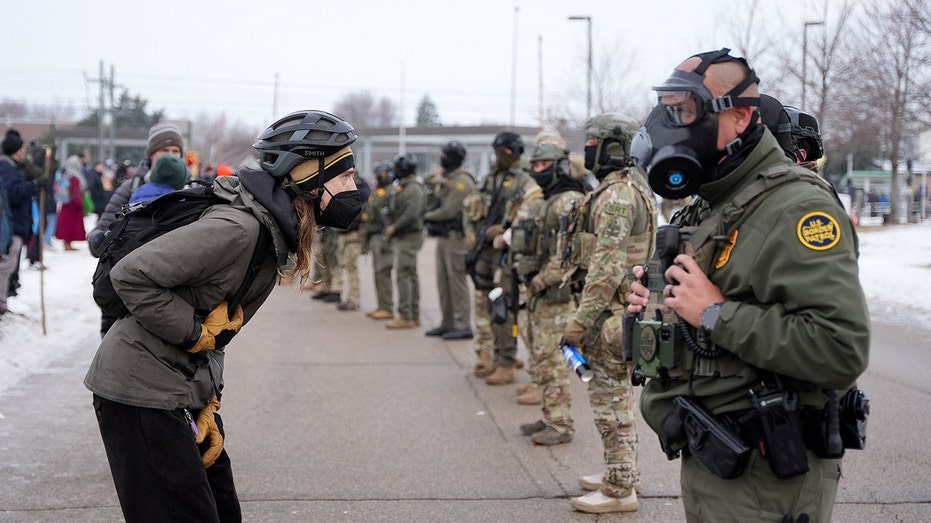

News coverage from both liberal- and conservative-aligned outlets agrees that the Department of Homeland Security dismissed a senior Customs and Border Protection official for allegedly leaking sensitive information to the news media. Both sides report that the leaked material included personal details of CBP personnel and information related to border wall negotiations, and that the official was escorted or marched out of the office after being terminated. They also concur that DHS characterized the conduct as extremely or "abhorrently" dangerous and linked the seriousness of the leak to a documented spike—described as an 8000% increase—in death threats against law enforcement officers.
Both perspectives further agree that the firing occurred within a broader environment in which ICE and CBP personnel have increasingly been targeted through doxxing efforts and underground networks sharing agents’ personal data. The outlets reference similar background elements: the use of database systems or networks by anti-ICE and anti-CBP activists to expose officers, growing concerns inside DHS about officer safety, and public debate over border wall policy. They also concur that DHS is now emphasizing, at least in its public messaging, a firm commitment to pursuing and potentially prosecuting internal leakers regardless of seniority, framing the case as part of a wider institutional effort to protect frontline personnel and secure sensitive operational information.
Areas of disagreement
Framing of the leak and leaker. Liberal-aligned coverage tends to depict the official’s conduct as an indisputable and reckless leak of sensitive and personal data, stressing the danger to CBP employees and echoing DHS’s condemnation without much qualification. Conservative outlets, while also acknowledging the sensitivity of the information, are more likely to foreground the term "allegedly" and to raise the question of due process or internal investigation standards. They often frame the individual less as the central villain and more as a symptom of broader institutional problems within DHS and CBP leadership.
Emphasis on victimization versus institutional failure. Liberal outlets focus primarily on the vulnerability of CBP and ICE agents, highlighting the explosion in death threats and doxxing as evidence that hostile external actors and irresponsible leakers are putting officers’ lives at risk. Conservative sources similarly stress the risks to agents but more pointedly criticize DHS and the broader political climate, arguing that insufficient support from federal leadership and media hostility have created an atmosphere in which such leaks and doxxing thrive. In this framing, the leak is part of a larger pattern of perceived institutional neglect or politicization of border enforcement.
Role of the media and activists. Liberal-leaning coverage tends to refer to the recipients of the leaked information as the media, sometimes with a neutral or mildly critical tone but focusing on the wrongfulness of sharing the data rather than the news organizations themselves. Conservative outlets more explicitly cast “corporate media” and anti-ICE agitators as complicit or central players, tying the leak to an underground doxxing network and portraying activists as deliberately endangering law enforcement. They are more inclined to suggest that parts of the press and activist networks benefit from or encourage such leaks to undermine border enforcement policies.
Implications for border and security policy. Liberal coverage generally connects the incident to the need for stronger internal safeguards, better data security practices, and protections for individual agents without significantly revisiting broader border policy debates. Conservative reporting more often uses the episode to reinforce arguments for tougher border enforcement, stronger backing for ICE and CBP, and a crackdown on internal dissent and leaks that are seen as aligned with anti-enforcement politics. In this view, the firing is not only a personnel action but also a warning shot in an ongoing struggle over the direction of U.S. immigration and border security policy.
In summary, liberal coverage tends to treat the firing as a necessary and straightforward response to a dangerous breach that endangered law enforcement officers, while conservative coverage tends to frame it within a broader narrative of media hostility, activist doxxing networks, and insufficient institutional support for aggressive border enforcement.