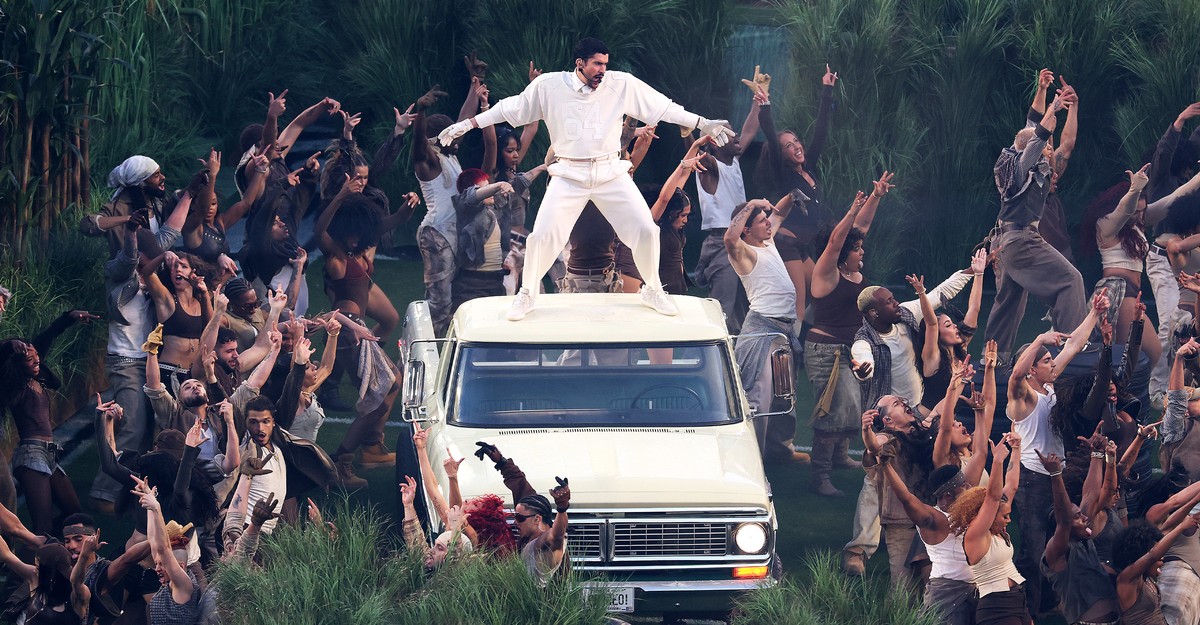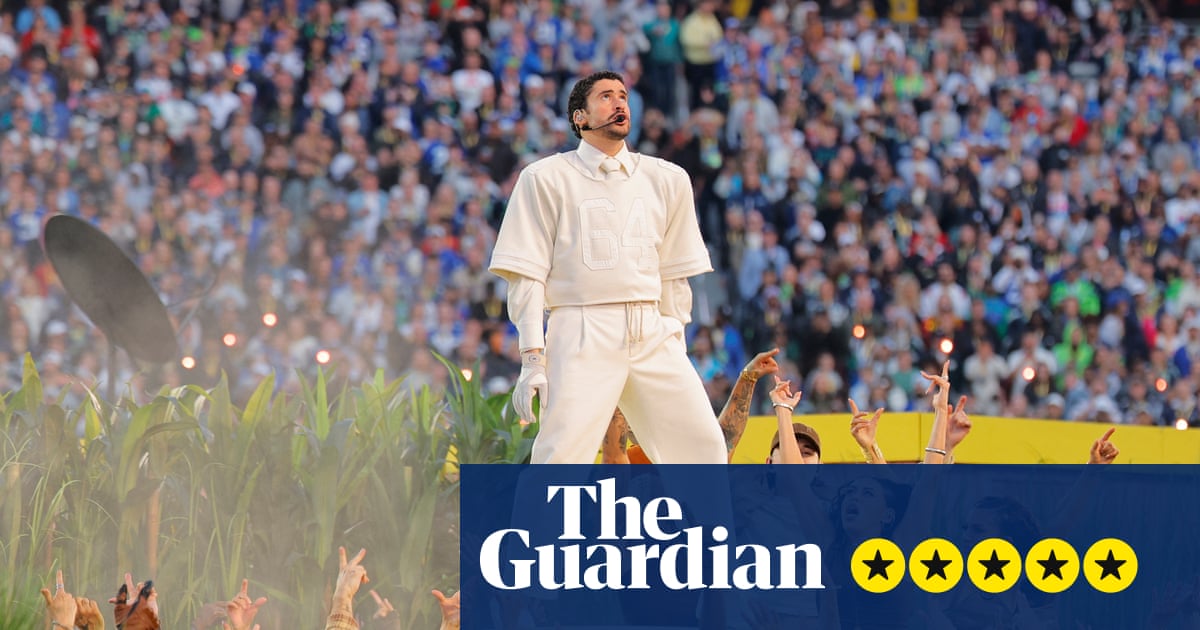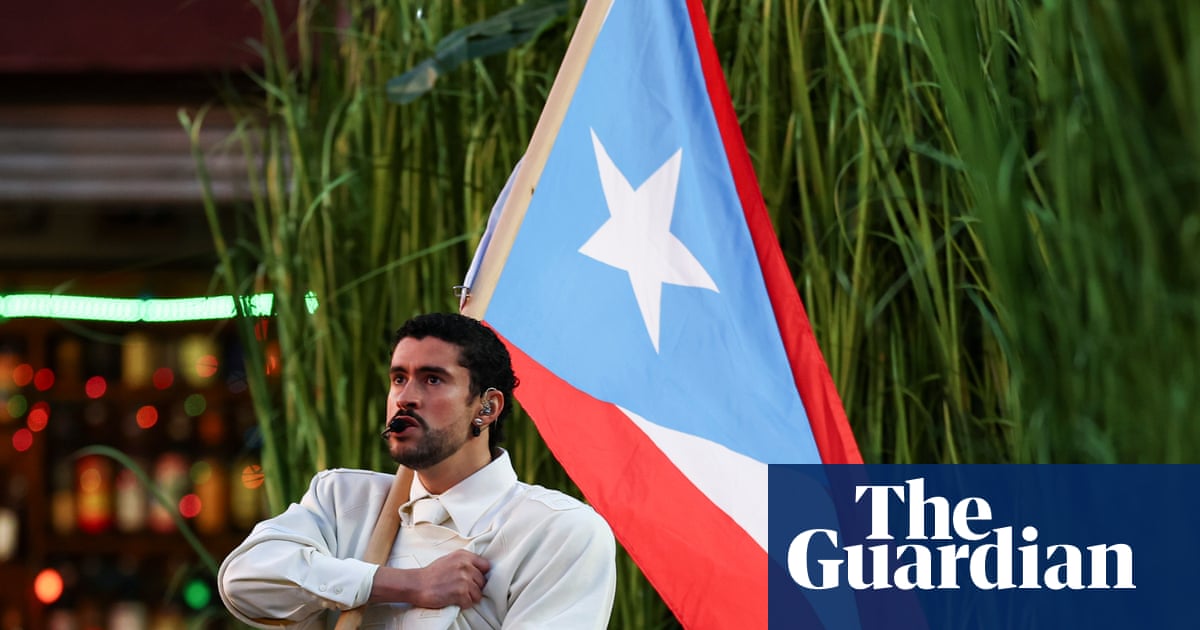


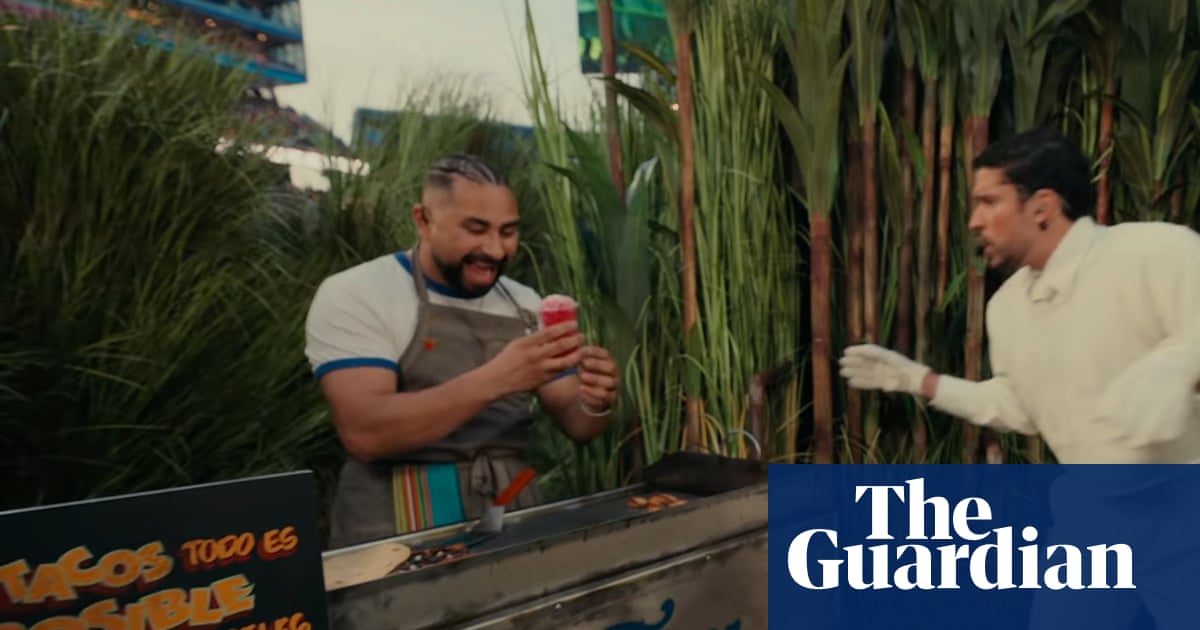
Bad Bunny headlined the Super Bowl LX halftime show with a 13-minute performance that prominently highlighted Puerto Rican and broader Latino culture through music, staging, and guest appearances. Both liberal- and conservative-leaning coverage agree that the show drew massive attention, including near-complete viewership in Puerto Rico that effectively "stopped" to watch, and that it featured a real wedding ceremony in which Bad Bunny served as a witness and signed the marriage certificate. They concur that the production mixed high-energy hits with symbolic visuals, incorporated community elements such as a beloved Los Angeles taco shop, and used the enormous Super Bowl platform to showcase Puerto Rico’s cultural contributions on one of America’s biggest televised stages.
Across the spectrum, outlets describe the performance as a milestone moment for Puerto Rican representation in mainstream U.S. pop culture and as a unifying shared experience, especially for viewers on the island. They generally acknowledge that the show blended entertainment with cultural and historical references, including nods to Puerto Rico’s struggles and resilience, and that Bad Bunny’s artistic choices—from guest performers to wardrobe—were designed to be legible both as spectacle and as statements about identity. Despite differences in emphasis, coverage agrees that the halftime show sparked widespread conversation about who and what is considered "American" on the Super Bowl stage, and that Bad Bunny intentionally leveraged his set to center Puerto Rican pride and visibility.
Areas of disagreement
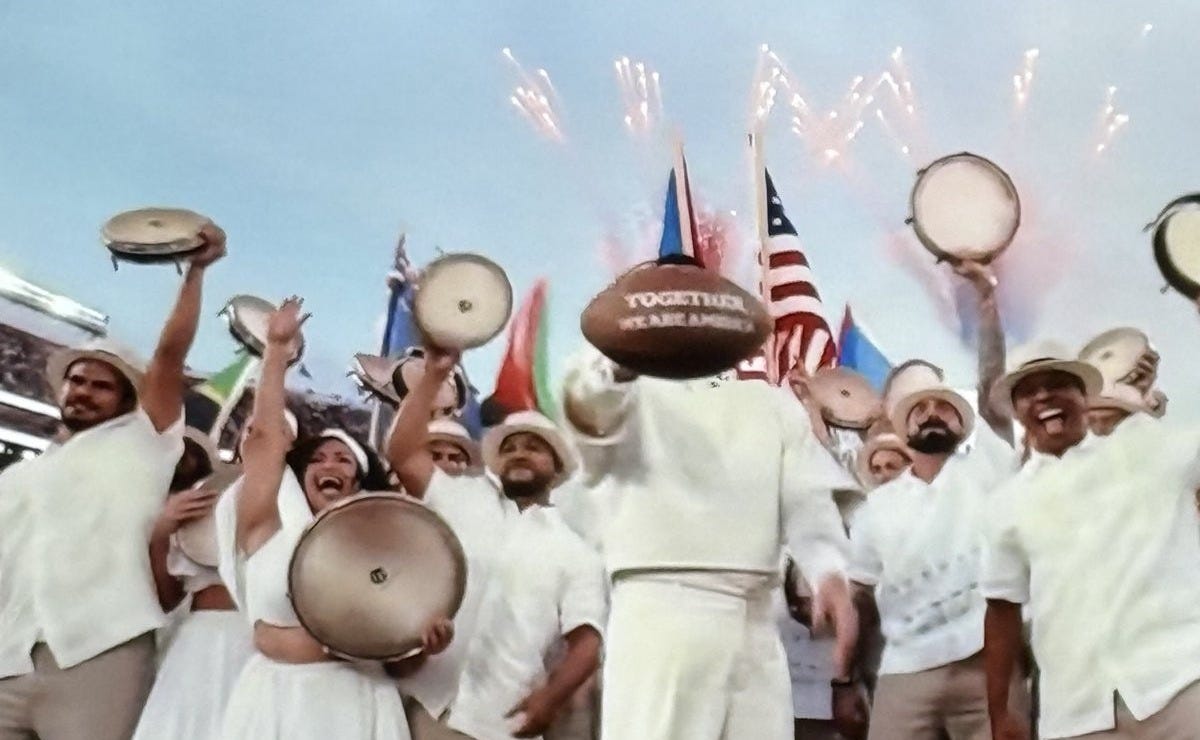
Cultural meaning and patriotism. Liberal-aligned sources frame the show as not just culturally rich but as a more authentically American display than many past halftime acts, arguing that centering Puerto Rican and Latino pride expands the definition of American identity. They emphasize the message that "together, we are America," presenting the performance as a patriotic affirmation of a multicultural nation. Conservative-leaning discussion, where it appears, is more restrained and tends to focus on the spectacle and unity among Puerto Ricans themselves rather than recasting the show as a new standard of American patriotism, sidestepping bolder claims about redefining national identity.
Political messaging. Liberal coverage openly celebrates the performance as an artistic rebuke to what it describes as an assimilationist or MAGA agenda, stressing its references to colonialism, Puerto Rico’s political status, and love as stronger than hate. These outlets highlight historian-informed symbolism and explicitly connect the show to ongoing debates about racism, empire, and U.S. policy toward Puerto Rico. Conservative-leaning treatment, by contrast, largely de-emphasizes or omits these political dimensions, characterizing the event more as a historic entertainment moment for Puerto Ricans and a shared cultural celebration without foregrounding adversarial partisan themes.
Tone toward conservatives and the right. Liberal outlets often juxtapose Bad Bunny’s joyful, inclusive spectacle with what they describe as the negativity or cultural barrenness of MAGA-aligned conservatives, explicitly contrasting the halftime show with a smaller conservative "alternative" event. They portray the performance as a symbol of cultural power shifting away from the right, sometimes using mocking or dismissive language about conservative critics. Conservative-aligned coverage, where present, avoids such direct ideological confrontation, neither engaging deeply with those critiques nor positioning the show as a cultural defeat for the right, instead keeping the focus on Puerto Rican pride and the historic nature of the moment.
Consumerism and fashion symbolism. Liberal sources dwell on Bad Bunny’s choice to wear Zara as a deliberate statement about democratizing fashion and shifting cultural power away from elite couture houses, linking this to broader themes of accessibility and international, multilingual pop culture. They interpret wardrobe and brand decisions as part of an anti-elitist, subtly political narrative aligned with youth and working-class sensibilities. Conservative-leaning outlets, in the limited coverage available, do not significantly engage with these fashion-as-politics arguments, treating attire as a secondary aesthetic detail rather than a key element of cultural or ideological commentary.
In summary, liberal coverage tends to interpret Bad Bunny’s halftime show as an overtly political, proudly multicultural redefinition of American identity and a pointed counter to right-wing narratives, while conservative coverage tends to describe it more narrowly as a historic, unifying entertainment event for Puerto Ricans and football viewers without heavily foregrounding ideological conflict.
Story coverage