

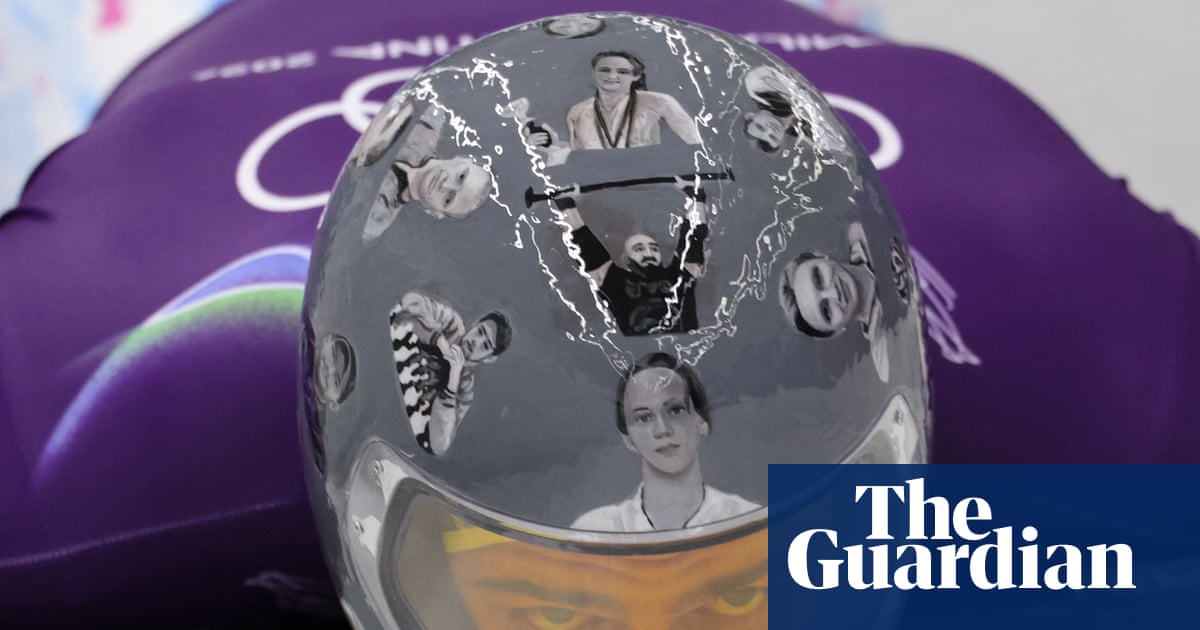
Ukrainian skeleton racer Vladyslav Heraskevych has arrived at the Winter Olympics with a specially designed helmet featuring images of Ukrainian athletes and coaches killed in the war, with both liberal and conservative outlets agreeing on these core facts. Coverage across the spectrum notes that he had previously drawn attention during an earlier Olympics by displaying a "No War in Ukraine" sign, and that this new helmet is described as a tribute meant to honor the fallen while navigating International Olympic Committee rules.
Reports from both liberal and conservative sources concur that the International Olympic Committee has been in contact with the Ukrainian Olympic committee about the helmet, and that there are rules restricting political or protest messaging at the Games. Both sides frame Heraskevych’s effort as part of an ongoing attempt to keep global attention on the war’s impact on Ukrainian sport and to memorialize athletes killed since the full‑scale invasion, situating his tribute within broader debates about how far Olympic athletes can go in making political or war-related statements.
Areas of disagreement
Framing of the helmet dispute. Liberal-aligned outlets emphasize that Heraskevych designed the helmet specifically to stay within Olympic regulations by avoiding explicit slogans, suggesting a good‑faith attempt to honor the dead without breaking rules, while conservative outlets highlight that the tribute helmet "will not be allowed," stressing the IOC’s restrictive stance. Liberal coverage tends to present the IOC contact with Ukraine’s Olympic committee as procedural and in dialogue, whereas conservative stories stress the anticipated prohibition as a fait accompli. As a result, liberals frame the issue as a nuanced rules interpretation, while conservatives describe it more as a clear instance of rule enforcement.
Tone toward the IOC and rule enforcement. Liberal sources largely maintain a neutral or mildly critical tone toward the IOC, presenting its rule‑enforcement dilemma as part of a broader tension between political neutrality and human rights concerns. Conservative coverage, by foregrounding that the helmet "won’t be allowed," more sharply underscores the IOC’s power to police expression and can read as either support for consistent rule enforcement or skepticism about overreach, depending on outlet. Thus, liberals describe the IOC as cautiously managing symbolism, while conservatives portray it as decisively drawing a line.
Characterization of Heraskevych’s activism. Liberal coverage highlights Heraskevych’s prior "No War in Ukraine" gesture and presents him as a principled, persistent advocate for awareness of the war’s human cost within the Olympic framework. Conservative coverage acknowledges his advocacy but gives more weight to the controversy over the helmet’s permissibility than to his broader anti‑war messaging. Consequently, liberals cast him primarily as a moral witness working within constraints, while conservatives focus more on the friction his symbolism creates with Olympic rules.
Political versus commemorative symbolism. Liberal-aligned outlets lean into the commemorative nature of the helmet, underlining the personal and national grief over athletes killed in the conflict and framing the design as remembrance rather than overt politics. Conservative sources, by stressing that the helmet may violate rules against political statements, more readily blur the line between memorial and protest, treating the tribute as potentially political speech. This leads liberals to argue it is mainly a human story of loss, while conservatives treat it as a test case for where the Olympics draws boundaries on political imagery.
In summary, liberal coverage tends to stress the commemorative intent of Heraskevych’s helmet and portray the IOC as cautiously negotiating complex symbolism, while conservative coverage tends to foreground the enforcement of Olympic rules and treat the helmet more as a contested political gesture than a purely memorial tribute.
