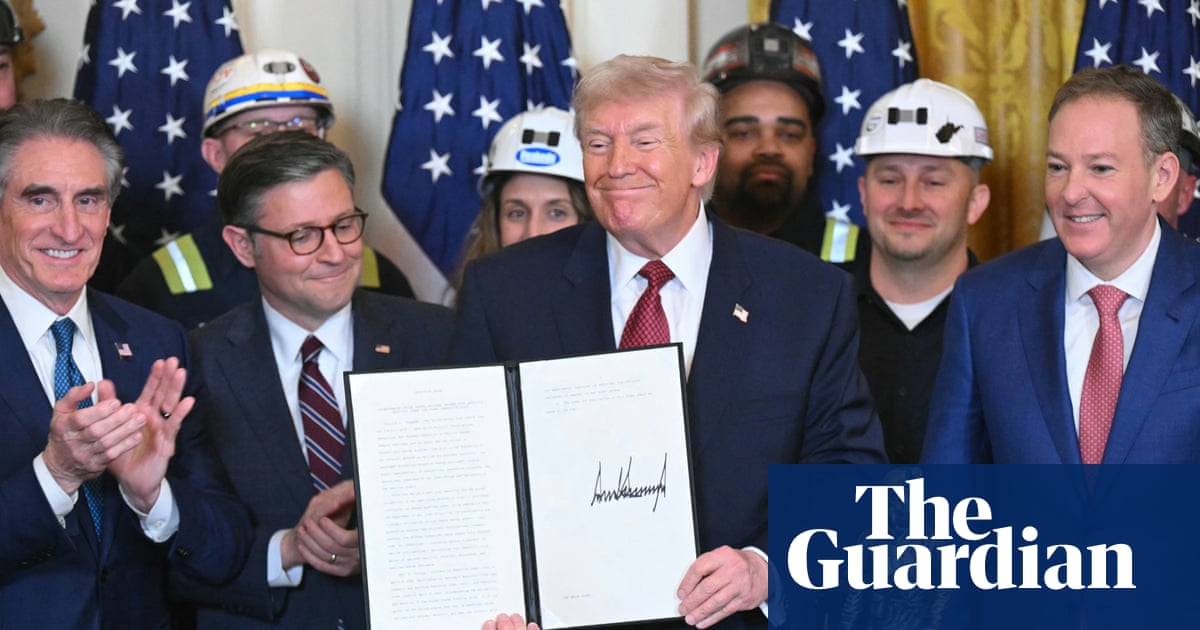
The Trump administration, through the Environmental Protection Agency, is moving to repeal or has just officially revoked the 2009 Obama-era greenhouse gas endangerment finding, the scientific and legal determination that carbon dioxide and several other greenhouse gases endanger public health and welfare and therefore can be regulated under the Clean Air Act. Both liberal and conservative-aligned reports agree that this finding has been the core legal basis for federal climate rules affecting major sectors such as power plants, vehicles, and other industrial sources, and that the administration is framing the repeal as the “largest act of deregulation in U.S. history,” with White House and EPA officials touting projected cost savings in the trillions and citing figures like roughly $1.3 trillion in avoided compliance costs. Coverage on both sides also notes that the repeal is expected to trigger immediate legal challenges from environmental groups, states, and other stakeholders, and that the White House and EPA acknowledge the move will substantially weaken or dismantle existing and planned federal greenhouse gas regulations, especially in the transportation sector.
Across outlets, there is shared acknowledgment that the endangerment finding originated under the Obama administration in 2009, itself grounded in earlier Supreme Court decisions that compelled EPA to consider greenhouse gases as pollutants under the Clean Air Act if they were found to endanger health and welfare. Both liberal and conservative reporting describe this finding as the legal “linchpin,” “foundation,” or “holy grail” for U.S. climate policy, and agree that its repeal represents a fundamental reorientation of national climate strategy away from federally driven emissions limits and toward deregulation in the name of promoting domestic energy production. Both sides also recognize that scientists and public health experts have repeatedly documented links between climate change and health harms, that international markets and policies are trending toward lower-carbon technologies such as electric vehicles, and that the U.S. decision will reverberate through industries like autos and energy, even if specific downstream rules (like power-plant standards or fuel-efficiency targets) are not all immediately rewritten.
Areas of disagreement
Scientific legitimacy and evidence. Liberal-aligned coverage presents the original endangerment finding as firmly rooted in mainstream climate science and repeatedly upheld in court, emphasizing that extensive peer-reviewed research links greenhouse gas emissions to worsening health impacts and climate damages. Conservative-aligned coverage, while acknowledging the existence of those scientific studies, gives more prominence to Trump’s characterization of climate risks as exaggerated or a “scam” and to administration claims that prior findings overstated harms and justified overreach. Liberal outlets frame the repeal as an outright rejection or distortion of established science, whereas conservative outlets more often describe it as a policy correction that questions how the science has been interpreted and used in regulation.
Economic and consumer impacts. Liberal sources stress that any near-term savings from weaker emissions rules are outweighed by long-term costs from climate damages, such as higher insurance premiums, infrastructure repairs, health-care burdens, and potential loss of global competitiveness for U.S. automakers in an EV-focused world. Conservative sources highlight administration estimates of trillions in savings from reduced regulatory burdens, lower compliance costs for industry, and potentially cheaper energy and vehicles for consumers, giving less space to quantified long-run climate costs. Liberal coverage frames the move as a transfer of costs from corporations to the public and future generations, while conservative coverage portrays it as relief for businesses and households from what they call expensive and unnecessary mandates.
Motives and beneficiaries. Liberal-aligned outlets frequently describe the repeal as a “gift” or “giveaway” to fossil fuel interests and “billionaire polluters,” invoking terms like corruption and regulatory capture and emphasizing the close alignment between industry lobbying goals and the administration’s actions. Conservative-aligned reports, though they acknowledge industry support, more often frame the decision as consistent with Trump’s broader deregulatory agenda and a promise to boost domestic energy production and jobs, without centering accusations of corruption. From the liberal perspective, the primary beneficiaries are polluting industries escaping accountability, whereas conservative coverage emphasizes economic growth, energy independence, and reduced government interference as the driving motives.
Climate policy significance and risk. Liberal coverage characterizes the repeal as a huge blow to U.S. climate efforts that “guts” national policy, dismantles the main legal tool for cutting emissions, and will intensify climate impacts at home and abroad, often warning of substantial health and environmental harms. Conservative coverage also calls it a major shift—sometimes echoing language about the “largest deregulation” and conceding it dramatically scales back federal climate policy—but tends to frame that as removing an overcentralized regulatory architecture rather than as a catastrophe. Liberal outlets emphasize the likelihood that courts will overturn the repeal because of the strength of the scientific record, while conservative outlets focus more on the political significance, legal uncertainty, and the administration’s argument that climate rules should be narrowed or reconsidered rather than treated as settled.
In summary, liberal coverage tends to frame the repeal of the endangerment finding as an anti-science, industry-driven rollback that shifts massive long-term climate and health costs onto the public, while conservative coverage tends to depict it as a justified and economically beneficial correction to what they view as overreaching, costly climate regulation.