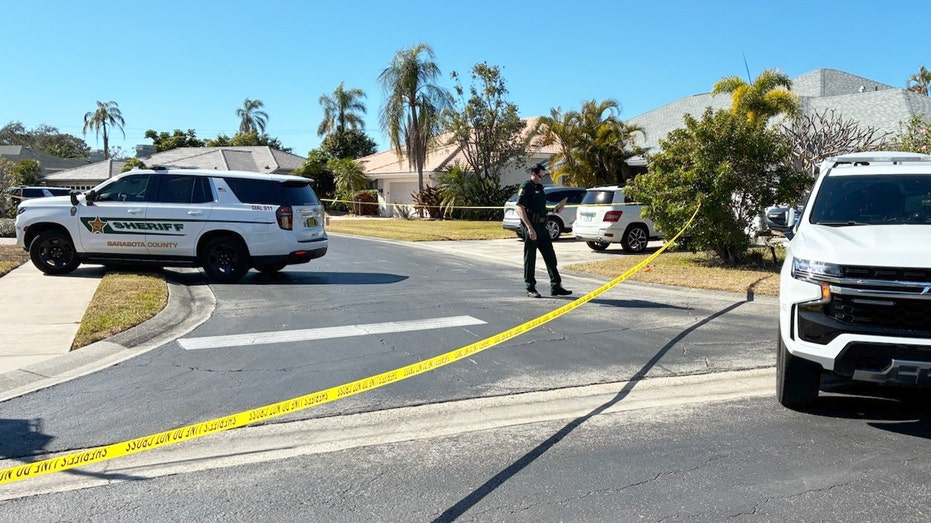


Six people were killed and the suspected gunman also died after a linked shooting spree at two Florida residences hours apart, one on the Gulf Coast in the Sarasota area and the other on the Atlantic Coast in the Fort Lauderdale area. Authorities have identified the suspect as 51-year-old Russell Kot, who is believed to have carried out a double homicide at one residence and then traveled across the state before opening fire at a second home in a gated community, where multiple additional victims were found and he died of what officials describe as a self-inflicted gunshot wound. Police say Kot had a prior romantic relationship with at least one victim in the Fort Lauderdale home, which appears to connect the two crime scenes, and investigators are working off a timeline that shows the Sarasota killings happening first, followed by the Fort Lauderdale shootings, with no evidence of additional suspects.
Across the spectrum, outlets agree that the investigation is in its early stages, with law enforcement still probing motive and combing digital and physical evidence from both residences, while medical examiners confirm identities and notify families. Coverage on both sides notes the involvement of local sheriff’s offices and city police departments coordinating across jurisdictions, the use of well-being checks and welfare calls as key triggers for discovering the crime scenes, and the reliance on standard tools like search warrants, ballistics analysis, and interviews with neighbors and relatives. Both liberal and conservative reports reference the broader pattern of high-fatality shootings in residential settings and describe community shock, grief, and trauma, while emphasizing that officials have not yet identified a clear ideological, political, or organized-crime link to the shootings and are treating this primarily as a domestic or interpersonal violence case pending further evidence.
Areas of disagreement
Framing of the threat. Liberal-aligned outlets tend to place the incident within a broader pattern of recurring gun violence in American communities, emphasizing the frequency of multi-victim shootings and the risks posed by easy access to firearms. Conservative outlets are more likely to frame it as an aberrant act by a single disturbed individual whose personal history and relationships, rather than broader societal trends, are the primary focus. While both sides acknowledge the severity of the event, liberal coverage more often treats it as symptomatic of systemic failures, whereas conservative coverage stresses the uniqueness and personal pathology of the suspect.
Policy and gun laws. Liberal sources frequently connect the killings to debates over gun control, raising questions about how the suspect obtained his firearms, whether red flag laws or stricter background checks could have intervened, and what reforms might prevent similar tragedies. Conservative sources generally minimize or omit calls for new gun restrictions, focusing instead on enforcing existing laws, the criminal nature of the act, and potential failures in monitoring or responding to warning signs short of changing gun policy. When policy is mentioned on the right, it is often framed around criminal accountability and mental health rather than firearm regulation.
Role of domestic and relational violence. Liberal coverage tends to highlight the prior romantic connection between the suspect and one victim as part of a larger pattern of intimate partner and domestic violence escalating into lethal events, sometimes referencing statistics or expert commentary on such dynamics. Conservative coverage notes the relationship link but focuses more on the suspect’s individual motives and sequence of actions, often treating the romantic tie as a factual connector between scenes rather than a lens on systemic domestic-violence issues. As a result, liberals more often embed the case in discussions of protective orders, early intervention, and support services, while conservatives stress the particularities of this perpetrator and his choices.
Law enforcement and institutional performance. Liberal-aligned outlets generally describe law enforcement’s response factually but may raise questions about whether earlier interventions, threat assessments, or cross-jurisdiction communication could have made a difference, tying this to broader debates about prevention versus reaction. Conservative outlets tend to emphasize the professionalism, speed, and coordination of the sheriff’s offices and police departments, portraying them as effective in containing the situation once it was detected and honoring them as front-line defenders. Where liberals are more inclined to ask what systems failed before the shooting, conservatives more often underscore that institutions functioned as intended in the aftermath of a lone violent actor’s rampage.
In summary, liberal coverage tends to treat the shootings as part of wider patterns of gun violence, domestic abuse, and systemic shortcomings that merit policy debate and preventive reform, while conservative coverage tends to center the event on the suspect’s individual actions, highlight law-enforcement response, and resist using the case to argue for new gun restrictions or expansive institutional blame.