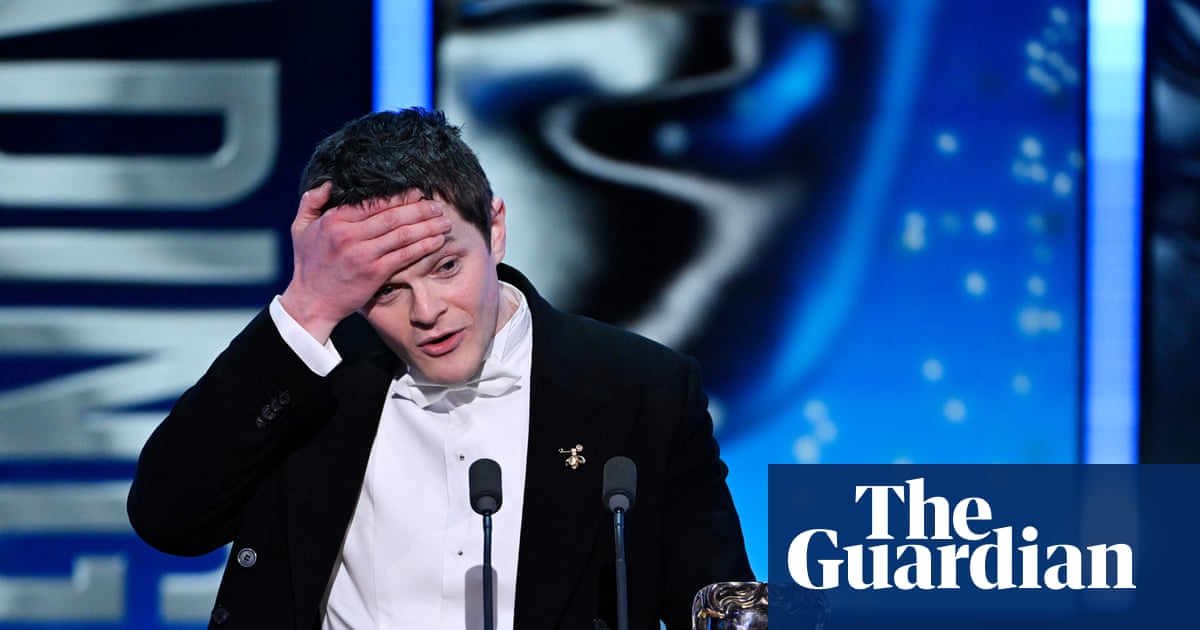
Paul Thomas Anderson’s film "One Battle After Another" emerged as the dominant winner at the 2026 Bafta Film Awards at London’s Royal Festival Hall, taking six prizes including best film and best director, a tally noted by both liberal and conservative outlets. Across coverage, outlets agree it is a politically charged film and a major awards-season contender, with wins that also include writing and craft categories such as adapted screenplay and cinematography, plus acting recognition through a supporting actor award for Sean Penn. Liberal-leaning sources additionally highlight headline acting wins elsewhere in the ceremony—Robert Aramayo’s best actor win for "I Swear" and Jessie Buckley’s historic leading actress award for "Hamnet"—while conservative outlets concur that "Sinners" and other titles were significant contenders, even if they secured fewer marquee trophies. Both sides also report that the ceremony was star-studded and heavily attended by Hollywood talent and British public figures, with Paddington Bear’s appearance and the presence of royals, such as the Princess of Wales, adding to the spectacle.
Liberal and conservative reports share contextual framing that Bafta remains a key bellwether for the Oscars, with "One Battle After Another" now seen as a front-runner heading into the rest of awards season. There is agreement that this year’s Baftas showcased a broad slate of films—ranging from the countercultural comedy of "One Battle After Another" (as some liberal pieces describe it) to the blues-inflected drama "Sinners" and the period literary adaptation "Hamnet"—reflecting both the British film industry’s diversity and its tight links to Hollywood. Outlets on both sides characterize Bafta as an institution balancing artistic recognition with increasingly political and socially attuned choices, and they broadly align on the idea that voters rewarded films that blend craft with topical themes. There is also shared acknowledgment that major technical winners like "Frankenstein" underline Bafta’s role in honoring below-the-line work, even when such films do not dominate the headline acting or top-category races.
Areas of disagreement
Tone and characterization of the film. Liberal-aligned outlets tend to describe "One Battle After Another" primarily as a Paul Thomas Anderson counterculture comedy with political undercurrents, emphasizing its auteurist direction and stylistic flair. Conservative outlets instead foreground it as a "politically charged thriller," highlighting its ideological and topical edge and downplaying the comedic label. This difference in framing leads liberal coverage to stress artistic experimentation and genre-bending, while conservative coverage presents the film more as a serious, message-driven drama likely to resonate with current political debates.
Emphasis within the awards slate. Liberal coverage devotes substantial space to the breadth of winners, spotlighting Aramayo’s best actor win for "I Swear," Jessie Buckley’s milestone for "Hamnet," and craft runs from films like "Frankenstein" as signs of a diverse field. Conservative pieces narrow the focus more tightly on "One Battle After Another" and its rivalry with "Sinners," treating other winners as secondary to the main competition narrative. As a result, liberal outlets portray the night as a mosaic of different stories and firsts, while conservative outlets frame it as a contest dominated by a few high-profile, politically resonant titles.
Portrayal of the ceremony itself. Liberal-leaning reporting is more critical of the show’s execution, noting a poor opening monologue, awkward pacing with long segments reduced to montage, and odd moments such as the Tourette syndrome–Paddington Bear incident as emblematic of a clumsy broadcast. Conservative coverage, by contrast, largely glosses over production missteps and instead stresses glamour and prestige, dwelling on the presence of stars, royals, and red-carpet pageantry. This yields a split where liberal outlets question the event’s polish and coherence, while conservative outlets reinforce Bafta’s ceremonial gravitas and continuity.
Political framing and stakes. Liberal coverage treats the film’s political elements as part of a broader conversation about Bafta’s evolving tastes and diversity of stories, often subsuming the politics into discussions of craft and representation. Conservative coverage is more likely to foreground the "politically charged" label and connect the film’s success to the wider culture-war and awards-season narratives, including expectations for the Oscars. Accordingly, liberal outlets situate the win within institutional and artistic trends, while conservative outlets tie it to contemporary political currents and audience reaction beyond the film industry.
In summary, liberal coverage tends to frame "One Battle After Another" as an auteur-driven, somewhat genre-bending Bafta success amid a wide and diverse slate of winners, while conservative coverage tends to cast it as a politically charged, front-and-center thriller whose triumph underscores the cultural and awards-season stakes of the moment.