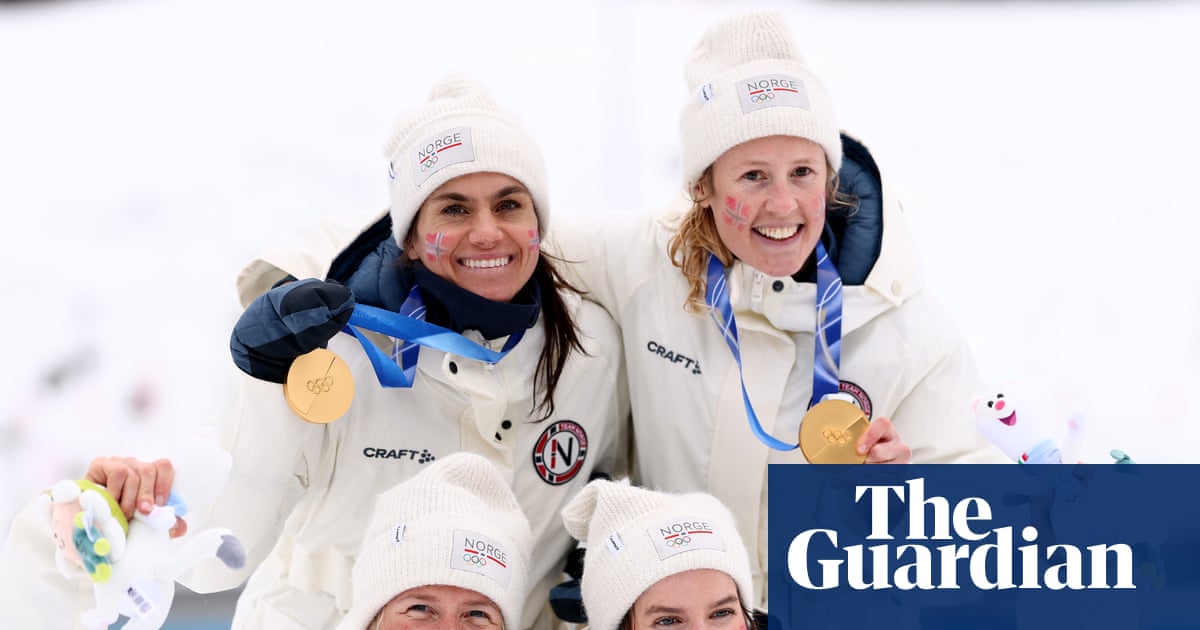
Norway once again topped the Winter Olympics medal table, winning a record 18 golds and 41 total medals, the highest tally of any nation at the Games. Coverage across the spectrum notes that this dominance is particularly striking given Norway’s relatively small population of around 5.7 million, especially in comparison with larger countries like the United States with roughly 342 million people, which finished behind Norway in both gold and overall counts. Reports also agree that Norway’s performance continues a pattern of sustained excellence in winter sports over recent Olympiads and that other smaller nations, such as the Netherlands, Great Britain, and Australia, posted strong results relative to their populations.
Liberal and hypothetical conservative-leaning reports converge on contextual factors such as Norway’s cold climate, widespread participation in outdoor winter activities, and long tradition in skiing and related sports as foundational elements of its success. Both sides highlight institutional underpinnings including well-funded sports infrastructure, strong national sports federations, and systematic talent development that emphasizes broad participation before elite specialization. There is shared recognition that Norway’s approach blends cultural enthusiasm for winter sports with organized support structures, and that the country’s model—combining accessibility, community-based clubs, and national coordination—has produced a deep talent pool that can reliably convert participation into medals.
Areas of disagreement
Explanations for success. Liberal-aligned coverage foregrounds Norway’s egalitarian, publicly funded sports system, portraying its “socialist” or social-democratic model as a key driver of broad access, enjoyment-focused youth programs, and ultimately elite performance. Conservative-aligned coverage would be more likely to stress factors such as national character, personal discipline, and a longstanding cultural affinity for winter sports, while downplaying ideological descriptions of funding structures. Where liberal sources frame Norway as proof that collective investment and universal access can outperform market-driven models, conservative outlets tend to attribute success more to tradition, family-level engagement, and local initiative than to the size or ideology of the state.
Role of wealth and the state. Liberal sources emphasize Norway’s wealth and robust welfare state as enabling low-cost participation, generous public facilities, and reduced economic barriers to sport, arguing that these conditions widen the talent pipeline. Conservative sources would more often treat wealth as necessary but not sufficient, warning that affluent states can also produce complacency and bureaucracy, and that success depends on channeling resources efficiently rather than simply spending more. Thus liberal coverage tends to celebrate Norway’s high-tax, high-service system as a feature, whereas conservative coverage is likelier to credit targeted investment and community clubs over centralized state planning.
Comparisons with the United States and larger countries. Liberal outlets highlight the contrast between Norway’s small population and its dominance over much larger nations like the United States, often implying that the American sports model is distorted by commercialization, narrow early specialization, and inequity in access to quality facilities. Conservative commentators would be more inclined to point out that the United States must spread its athletic focus across both summer and winter sports, faces greater geographic and climatic diversity, and operates a more decentralized sports ecosystem that cannot be directly compared to a small, homogeneous Nordic country. As a result, liberal narratives use the medal table as a critique of big-population, market-oriented systems, while conservative narratives frame population size and diversity as complicating factors rather than excuses.
Lessons and policy implications. Liberal coverage tends to present Norway as a template for broader social-democratic reforms, suggesting that policies which prioritize fun, inclusion, and public funding in youth sports could narrow performance gaps and improve public health. Conservative-leaning analysis would be more likely to cherry-pick elements such as community clubs, volunteerism, and outdoor culture while rejecting the idea that replicating Norway’s tax or welfare model is either practical or desirable elsewhere. In this telling, Norway’s success becomes a case study in cultural continuity and smart, locally rooted programs, not an argument for expanding government or adopting Nordic-style social policy wholesale.
In summary, liberal coverage tends to interpret Norway’s dominance as evidence that egalitarian, publicly funded, and fun-first sport systems can outperform larger, more commercial models, while conservative coverage tends to attribute the success to culture, tradition, and targeted investment, cautioning against drawing broad ideological lessons from a small, wealthy Nordic country.