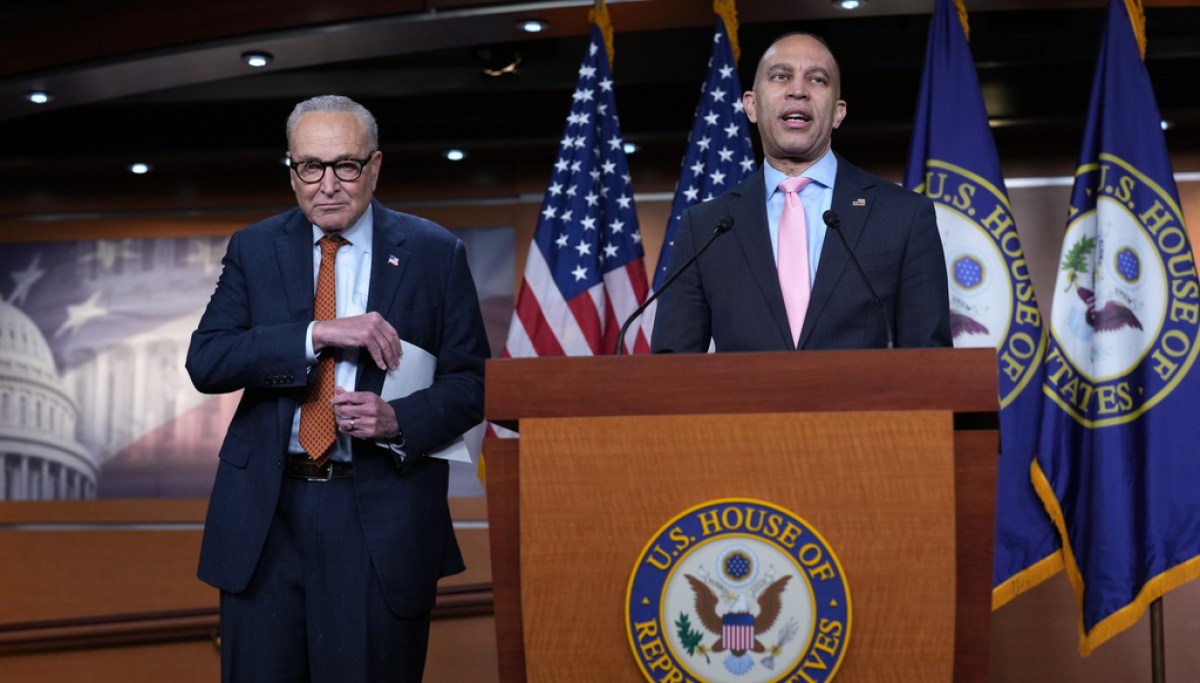
The Democratic Congressional Campaign Committee has announced the first slate of 12 Republican-held House seats targeted under its Red to Blue program for the upcoming 2026 midterm elections. Coverage across the spectrum agrees that these districts span multiple states, including key battlegrounds such as Arizona, Iowa, and Pennsylvania, and that the goal is to help Democrats flip enough seats to retake control of the House. Both liberal- and conservative-leaning reporting concur that candidates chosen for the program receive elevated national support, that the GOP currently holds a majority, and that these initial selections are part of a broader, multi-cycle strategy ahead of November 2026.
Across outlets, there is agreement that the Red to Blue program functions as an institutional support mechanism rather than a formal party endorsement, bundling fundraising help, strategic guidance, and organizational infrastructure for candidates who meet certain viability benchmarks. Both sides describe the initiative as a signal to donors and activists about which races are likely to be competitive, and as one of the DCCC’s central tools for concentrating resources in swing or potentially flippable districts. Coverage also aligns on the broader context that control of the House is narrowly divided, that recent cycles have featured volatile swings in suburban and swing districts, and that national issues such as inflation, healthcare costs, and constituent services are expected to feature prominently in these targeted campaigns.
Areas of disagreement
Framing of the stakes. Liberal-aligned sources tend to frame the Red to Blue rollout as an early sign that Democrats are well-positioned to compete for control of the House, emphasizing opportunity and momentum in districts they portray as trending away from Republicans. Conservative sources, by contrast, often cast it as an aggressive partisan power play, highlighting that Democrats are targeting seats that were recently won by clear GOP margins and suggesting the map reveals Democratic overreach. While liberals stress the competitiveness of these areas, conservatives underscore that Republicans remain favored in many of the targeted districts.
Portrayal of candidates and issues. Liberal coverage usually presents the DCCC-backed challengers as pragmatic problem-solvers focused on lowering costs, expanding healthcare access, and delivering for local communities, with Red to Blue status seen as validation of their strength. Conservative outlets more often underscore the candidates’ alignment with national Democratic priorities, implying they will support policies associated with higher spending, expanded federal reach, or progressive social positions. Both mention kitchen-table issues, but liberals frame these as evidence Democrats are in touch with voters, while conservatives imply such messaging masks a reliably national-party voting record.
Characterization of Republican incumbents. Liberal sources tend to describe the targeted Republican incumbents as out of step with their districts or tethered to an unpopular national GOP agenda, using the list to suggest vulnerability in what had been considered safe or lean-Republican seats. Conservative coverage instead emphasizes the incumbents’ prior electoral strength and local roots, portraying them as proven representatives being singled out mainly because of their party label and the tight House margin. Where liberal outlets stress that recent electoral shifts and demographic changes put these Republicans at risk, conservative pieces emphasize incumbency advantages and argue these races will be harder to flip than Democrats imply.
Interpretation of electoral momentum. Liberal-leaning reporting often situates the announcement within a narrative that Democrats are building early infrastructure and learning from past cycles, suggesting that disciplined targeting and fundraising could overcome GOP structural advantages. Conservative sources are more likely to describe the move as a sign of Democratic vulnerability or desperation after recent losses, implying that the party must concentrate resources heavily just to remain competitive. While liberal outlets read the expansion of the map as a sign of confidence, conservative outlets read the same map as evidence Democrats face an uphill climb in red-leaning territory.
In summary, liberal coverage tends to depict the Red to Blue rollout as a disciplined, issues-focused strategy that capitalizes on Republican vulnerabilities in a narrowly divided House, while conservative coverage tends to frame it as an ambitious but possibly overextended bid to unseat otherwise solid GOP incumbents and reclaim power through nationalized, partisan targeting.