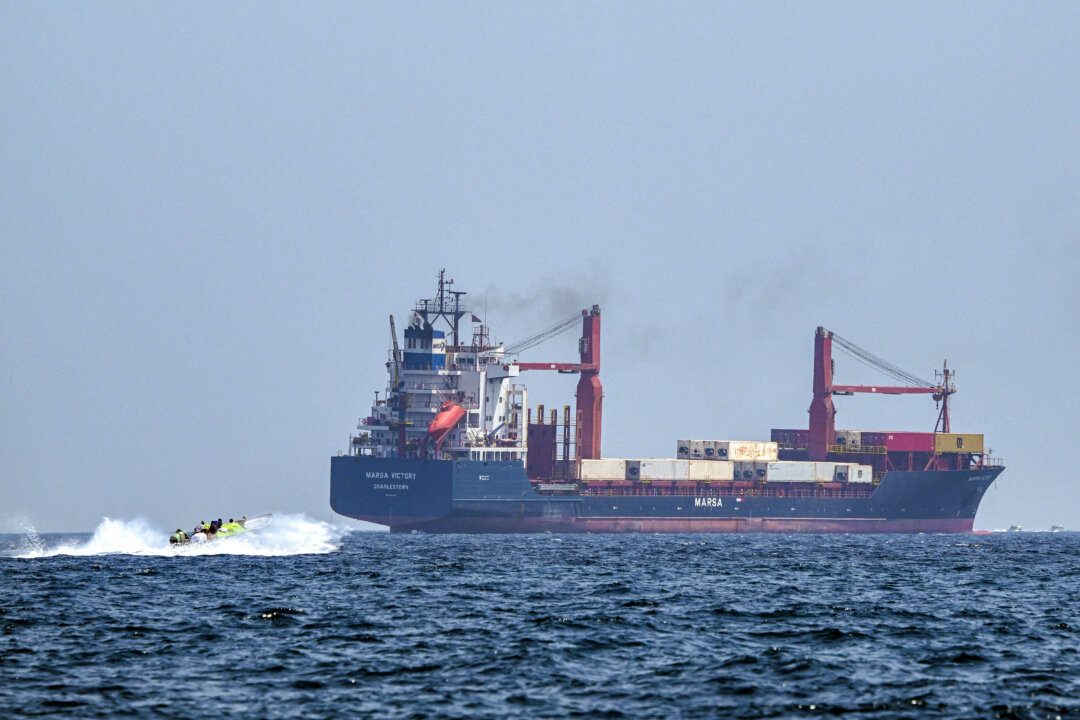

Iran’s Islamic Revolutionary Guard Corps has reportedly been broadcasting radio messages to commercial vessels stating that passage through the Strait of Hormuz is not allowed, leading many shipping firms and oil trading houses to suspend or sharply reduce tanker traffic through the waterway. Both liberal and conservative coverage agree that over 20% of the world’s seaborne oil exports normally pass through this chokepoint, that the warnings have rendered the strait “effectively closed” or close to it, and that tanker flows have already slowed to minimal or significantly reduced levels. They also concur that these developments come amid escalating military confrontations involving Iran, the United States, and Israel, and that markets are reacting quickly with sharp moves in crude prices and growing concern among traders and investors about supply risks.
Across the ideological spectrum, outlets describe the Strait of Hormuz as a vital artery for global energy trade and frame Iran’s threatened closure as a potential catalyst for a broader energy and economic shock. Both sides reference historical analogies to past oil crises, highlight that any prolonged disruption could push oil well above current levels—into the $70 range in the near term and possibly toward or above $100 if the closure persists—and warn that liquefied natural gas shipments and global fuel prices could also spike. There is shared acknowledgment that OPEC+ might try to compensate for lost supply but would struggle to fully offset a long-term shutdown, that financial markets are jittery, and that diplomatic moves or de-escalation between Washington, Tehran, and Jerusalem will be critical to determining whether this becomes a short-lived scare or a sustained global energy shock.
Areas of disagreement
Cause and framing of the crisis. Liberal-aligned outlets tend to stress that the current threat to close the strait is part of a broader cycle of escalation involving U.S. and Israeli strikes on Iran, sometimes describing it as a reaction to Western military actions that have destabilized the region. Conservative outlets more often foreground Iran’s agency and belligerence, emphasizing Tehran’s declarations and IRGC messaging as the immediate source of danger to shipping and global markets. While both acknowledge U.S. and Israeli military operations, conservative coverage frames them primarily as responses to Iranian aggression, whereas liberal coverage is more likely to describe a feedback loop of mutual escalation.
Economic and energy implications. Liberal coverage usually dives deeper into potential global economic fallout, discussing scenarios of a 1970s-style energy shock, multi-fold severity compared with past embargoes, and broad impacts on stock markets, consumers, and climate/energy-transition debates. Conservative coverage focuses more tightly on the immediate effects on oil and gasoline prices, often linking higher fuel costs to domestic political implications and vulnerability in Western economies. Liberal outlets are more inclined to consider how alternative supplies, OPEC+ decisions, and long-term shifts in energy policy might cushion or reshape the shock, while conservative outlets stress the risks of supply shortfalls and the importance of robust fossil-fuel production capacity.
Portrayal of Iran’s intentions and risk of war. Liberal sources frequently highlight uncertainty around whether Iran will fully enforce a closure, referencing diplomatic signals (such as indications of willingness to talk) and the possibility that threats are aimed at leverage rather than total blockade. Conservative sources tend to treat the IRGC warnings as concrete evidence that the strait is already or almost fully closed, casting Iran as willing to weaponize global energy flows and raising alarms about a sharply higher risk of direct U.S.-Iran conflict. Where liberal coverage often underscores the need for de-escalation and negotiated off-ramps, conservative coverage more readily frames the situation as a test of Western resolve and deterrence.
Assessment of policy responses. Liberal-aligned outlets typically scrutinize U.S. and allied military strikes and pressure campaigns, questioning whether they are escalating the risk to global energy security and arguing for stronger diplomatic engagement, multilateral crisis management, and possibly energy diversification or demand-reduction measures. Conservative outlets more often call attention to the need for a firm security posture in the Gulf, including naval protection of shipping lanes and credible threats or actions to counter Iranian interference, while also criticizing Western energy policies they see as leaving markets exposed. Both discuss OPEC+ and regional actors, but liberals frame them within cooperative solutions to stabilize markets, whereas conservatives emphasize the importance of domestic production and strategic signaling to adversaries.
In summary, liberal coverage tends to frame Iran’s threat to close the Strait of Hormuz within a broader cycle of mutual escalation and systemic oil-market vulnerability, while conservative coverage tends to highlight Iran’s aggressive role, the need for strong deterrence, and the immediate political and price implications for Western consumers.
Story coverage