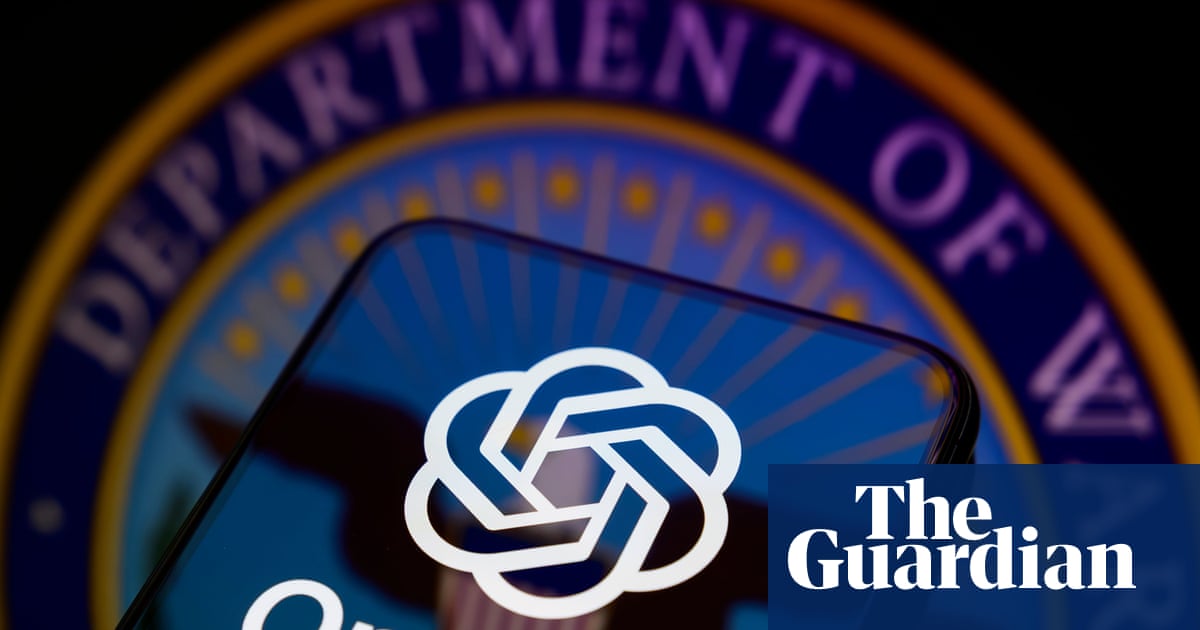
OpenAI and the U.S. Department of Defense have amended a recently announced deal after backlash over how the agreement was rolled out and perceived. Coverage across the spectrum agrees that CEO Sam Altman publicly acknowledged the arrangement "looked opportunistic and sloppy" and that the company "shouldn't have rushed" the announcement. The revisions clarify that OpenAI’s systems are not to be intentionally used for domestic surveillance of U.S. persons or nationals and are not to be used by intelligence agencies such as the NSA. Reports also concur that user backlash, including calls to delete ChatGPT and internal concerns within OpenAI, were significant factors prompting the company to adjust the terms and its messaging around the partnership.
Shared context in the reporting highlights that the Pentagon has been expanding its use of commercial AI tools and had previously worked with Anthropic before that relationship cooled over surveillance-related ethical issues. Outlets describe this OpenAI deal as part of a broader trend in which major AI labs are being courted by defense and security institutions, raising recurring questions about how AI is governed in military and intelligence settings. Both sides note that OpenAI has tried to position the arrangement as focused on non-lethal, defensive, or administrative uses rather than weapons targeting, while reaffirming its public safety commitments. There is also agreement that this episode underscores the tension between rapid commercialization of AI, the demands of national security agencies, and the need for clear guardrails to reassure users and employees.
Areas of disagreement
Framing of the deal. Liberal-aligned sources tend to frame the Pentagon agreement as a mismanaged, rushed rollout that exposed contradictions between OpenAI’s safety rhetoric and its actions, emphasizing Altman’s admission that the deal looked "opportunistic and sloppy." Conservative sources, where they cover it, are more inclined to present the partnership as a pragmatic step in strengthening U.S. defense capabilities with cutting-edge AI, treating the backlash as overblown or driven by activist pressure rather than fundamental ethical failure. Liberals highlight the symbolism of partnering with the "Department of War" and focus on surveillance and civil-liberties risks, while conservatives more often stress the legitimacy and necessity of collaboration with the military in a competitive global environment.
User and employee backlash. Liberal coverage foregrounds the "delete ChatGPT" campaign, internal dissent, and user trust as core drivers of the revised terms, portraying OpenAI as sensitive to a constituency that expects strong ethical boundaries on military use. Conservative outlets, when noting backlash, are more likely to downplay its scale or interpret it as the predictable reaction of tech and activist circles that historically oppose military contracting, rather than as a mass-market revolt. While liberals cast the amendments as a partial victory for watchdogs and critics of militarized AI, conservatives more often see them as political messaging tweaks that do not fundamentally change a justified defense collaboration.
Ethics and surveillance safeguards. Liberal-aligned reporting emphasizes the risk of mission creep from "non-lethal" defense work into surveillance and targeting, and therefore treats OpenAI’s new contractual limits on domestic mass surveillance and intelligence-agency use as necessary but fragile guardrails. Conservative sources are more inclined to argue that existing laws and oversight already constrain abuses, casting the explicit prohibitions as belt-and-suspenders language or a concession to optics. Liberals tend to invoke prior controversies, such as the Pentagon’s shift away from Anthropic, as evidence that ethical lines are regularly tested, while conservatives tend to stress that responsible AI support to the military can coexist with civil-liberties protections.
Interpretation of Altman’s admission. Liberal coverage generally interprets Altman’s acknowledgement that the rollout was "opportunistic and sloppy" as a tacit admission of a deeper misalignment between OpenAI’s public mission and its commercial-defense ambitions, suggesting a pattern of reactive course corrections under pressure. Conservative commentary, by contrast, is more likely to treat his remarks as a routine PR recalibration—an attempt to improve communication and reassure critics without signaling that the underlying defense partnership is inappropriate. For liberals, the mea culpa is further proof that external scrutiny is essential to constrain AI firms, while conservatives depict it as an example of a CEO navigating a noisy political environment while still pursuing what they view as legitimate national-security work.
In summary, liberal coverage tends to cast the OpenAI–Pentagon deal as a troubling example of tech–military entanglement that only improved after public and internal pressure forced stronger safeguards, while conservative coverage tends to view the partnership as a reasonable and necessary use of AI for national defense, treating the amendments and mea culpa mainly as political and public-relations fine-tuning rather than a fundamental course correction.