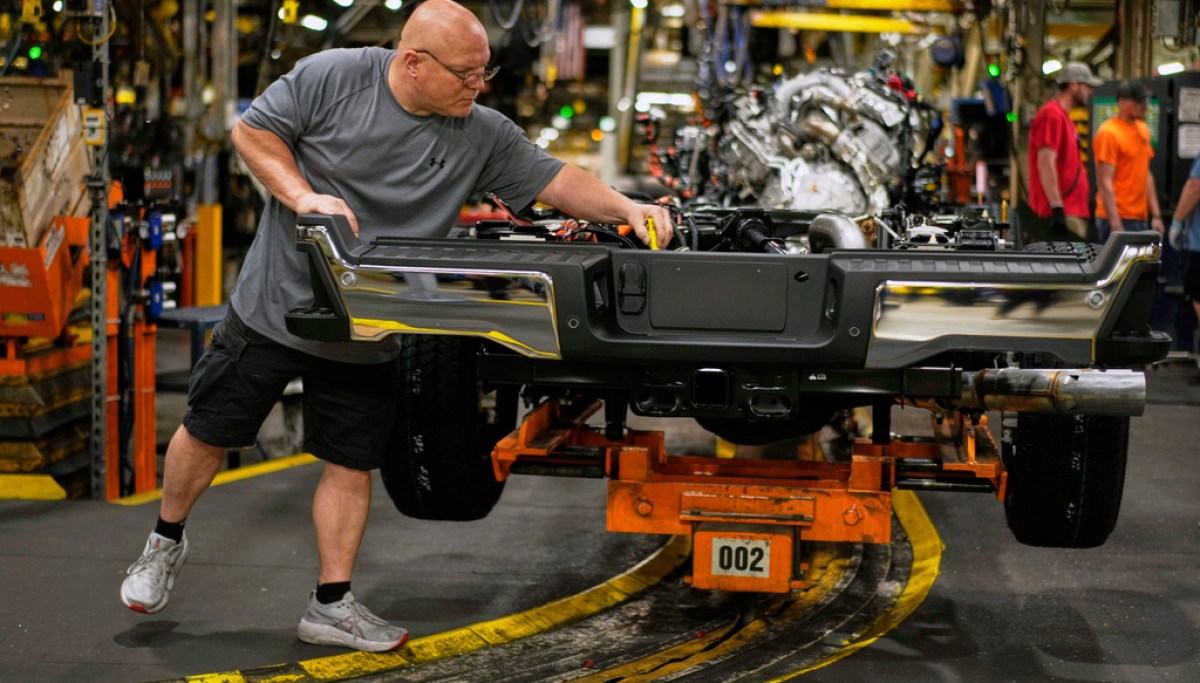


The latest jobs data show that the U.S. economy unexpectedly lost about 92,000 nonfarm payroll jobs in February, with the unemployment rate rising to 4.4%, a clear break from forecasters’ expectations for continued job growth. Both liberal- and conservative-aligned outlets agree that this marks a notable weakening in the labor market after a stronger start to the year, with particular softness in sectors such as health care, information services, transportation, warehousing, and some manufacturing. Coverage across the spectrum notes that the report landed as financial markets were already volatile, contributing to stock declines and heightened concern about the broader economic outlook.
Across outlets, there is agreement that the report complicates the Federal Reserve’s path, because labor-market softness is emerging just as crude oil prices are rising amid tensions and war involving Iran. Both sides highlight that severe winter weather and a major health-care strike likely played some role in February’s payroll decline, and that modest wage gains did little to offset concerns about rising unemployment. Analysts quoted in both liberal and conservative sources stress that the combination of weaker hiring, higher energy prices, and still-sensitive inflation readings creates a challenging environment for monetary policy, and that upcoming Fed decisions on interest rates will be closely tied to whether this jobs disappointment proves temporary or the start of a broader downturn.
Areas of disagreement
Responsibility and blame. Liberal-aligned coverage tends to frame the weak jobs report within structural factors like weather disruptions, sector-specific strikes, and technological change, and often stresses the independent role of the Federal Reserve and global shocks. Conservative outlets, while acknowledging some of those factors, are more inclined to emphasize political accountability, scrutinizing how the Trump administration’s economic stewardship and foreign policy toward Iran may be feeding uncertainty. Liberal sources more often present the downturn as a macroeconomic challenge that any administration would struggle with, whereas conservative sources more readily tie the numbers to questions about current White House management.
Policy implications and the Fed. Liberal sources frequently highlight Fed officials and Wall Street voices arguing that the labor-market weakness strengthens the case for interest rate cuts, with some commentators asserting that inflation is overstated and policy is too tight. Conservative coverage generally mentions rate-cut speculation but places more weight on the risks of policy missteps, portraying the Fed’s dilemma as partly a consequence of earlier decisions and of political and geopolitical choices that have limited its room to maneuver. Where liberal outlets emphasize cushioning workers and preventing a deeper slump through easier policy, conservative outlets more often warn about credibility, inflation, and the limits of monetary fixes.
Role of technology and structural change. Liberal-leaning commentary is more explicit about the role of automation and artificial intelligence, citing information sector job losses and robotics in transportation and warehousing as signs of an emerging "agentic economy" that could displace workers regardless of short-term policy moves. Conservative coverage, in the limited discussion available, tends to treat the February losses more as a cyclical or confidence-related setback than as evidence of a fundamental tech-driven labor realignment. As a result, liberal sources are more likely to connect the report to calls for worker retraining, safety nets, and regulation of tech, while conservative sources focus on business climate, energy policy, and geopolitical stability.
Political stakes and Iran conflict. Liberal reporting connects the jobs decline to the Trump administration’s Iran conflict, suggesting that higher oil prices and war-related uncertainty threaten both employment and household finances, and could test the administration’s broader economic narrative. Conservative outlets acknowledge that the war in Iran and rising energy prices are complicating factors but are more ambivalent about directly blaming the conflict, sometimes stressing that global security priorities and prior economic momentum complicate any simple causal chain. Liberal sources tend to warn that the combination of job losses and war could erode public support for Trump’s agenda, while conservative sources caution that economic softness may hurt Republicans politically but also highlight external shocks and policy constraints beyond the president’s direct control.
In summary, liberal coverage tends to interpret the surprise job losses as a sign of mounting structural and policy challenges that call for more dovish monetary policy and a reassessment of Trump’s Iran strategy, while conservative coverage tends to stress political accountability and confidence effects but frames the downturn more as a cyclical or shock-driven setback within a still-contested broader economic record.