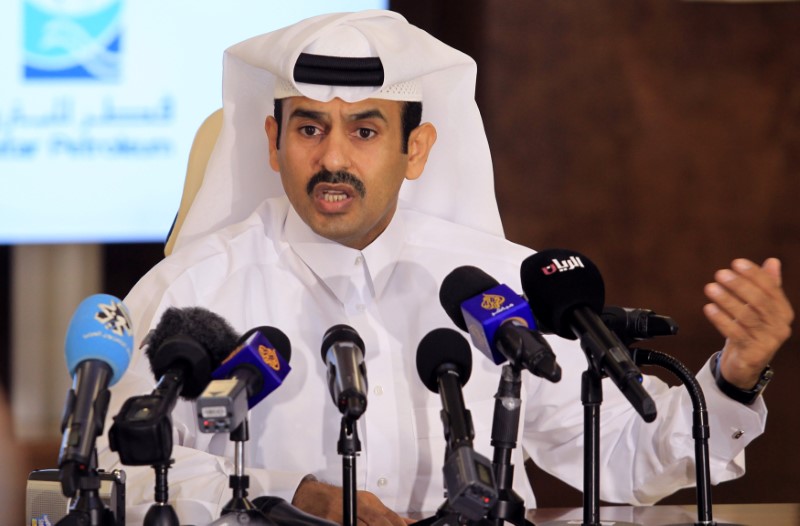

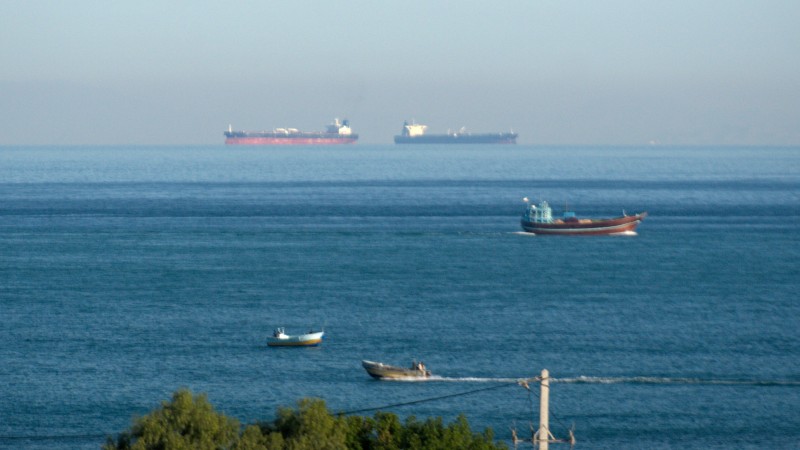
News reports from across the spectrum agree that Qatari Energy Minister Saad Al-Kaabi has warned a widening conflict involving Iran and the Strait of Hormuz could trigger a severe global economic shock. He is quoted as saying that war in the region could “bring down world economies,” with particular concern that continued attacks and military escalation could disrupt or halt tanker traffic through the Strait, a key chokepoint through which a significant share of the world’s seaborne oil and liquefied natural gas flows. Outlets note his prediction that if merchant vessels cannot safely transit Hormuz, Gulf energy exporters may be forced to declare force majeure and suspend exports, potentially pushing Brent crude prices toward or above about $150 per barrel within a matter of weeks. Coverage also highlights that oil prices and futures have already spiked sharply in response to the latest U.S.-Israeli air operations against Iran and related disruptions to commercial shipping and regional energy infrastructure.
Across both liberal and conservative reporting, the shared context is that the Strait of Hormuz has long been recognized as a critical strategic chokepoint for global energy supplies and thus for world economic stability. Both sides emphasize that even short-lived interruptions in Gulf exports would reverberate through global supply chains, driving up fuel and transportation costs, straining manufacturing, and slowing GDP growth worldwide. There is broad agreement that Gulf states, including Qatar, Saudi Arabia, and the UAE, would likely invoke force majeure clauses if safe passage cannot be guaranteed, and that any resolution and restart of flows would take time even after hostilities cease. Outlets on both sides frame Al-Kaabi’s remarks as a warning meant to underscore the interconnectedness of energy security and global economic health, and as a signal that regional producers fear a prolonged conflict could move quickly from a localized security crisis to a worldwide economic emergency.
Areas of disagreement
Severity and framing of the threat. Liberal-aligned sources tend to treat Al-Kaabi’s warning as a serious but contingent risk, emphasizing scenario-based language and noting that price spikes and economic shocks would depend on the duration and intensity of conflict. Conservative outlets are more likely to present the warning in dire terms, foregrounding phrases like “bring down world economies” and highlighting the possibility of Brent crude surging well past $150 per barrel. While liberals often stress uncertainty and the range of possible outcomes, conservatives frequently frame the situation as an imminent economic catastrophe if current military dynamics continue.
Causation and responsibility. Liberal-aligned coverage generally distributes responsibility across multiple actors, pointing to Iranian actions, Israeli military responses, U.S. regional policy, and the structural vulnerability of relying on a single chokepoint for so much energy trade. Conservative sources more often stress Iranian aggression and regional instability as primary causes, sometimes also criticizing U.S. deterrence failures or broader Western policy for not constraining Iran earlier. Where liberals tend to embed Al-Kaabi’s comments in a wider discussion of systemic risk and shared culpability, conservatives spotlight hostile regional actors and security lapses as the key drivers of the crisis.
Policy implications and solutions. Liberal-leaning outlets usually connect the warning to calls for diplomatic de-escalation, multilateral security arrangements, and in some cases faster diversification toward renewable energy to reduce dependence on Gulf oil and gas. Conservative coverage more frequently uses the warning to argue for stronger military postures in the region, enhanced naval protection of shipping lanes, and increased domestic fossil fuel production to shield Western economies from Middle Eastern turmoil. As liberals highlight diplomacy and structural energy transition, conservatives emphasize hard security guarantees and energy independence through expanded drilling and infrastructure at home.
Economic narrative and audience focus. Liberal-aligned reporting often frames the risk in terms of global inequality, warning that poorer import-dependent countries and vulnerable households would be hardest hit by a price shock and slowdown. Conservative outlets typically stress the impact on Western consumers, businesses, and markets, underlining the potential for recession, manufacturing disruptions, and political backlash in the U.S. and Europe. While liberals foreground global social and developmental consequences, conservatives center investor confidence, industrial output, and the burden on middle-class taxpayers and drivers.
In summary, liberal coverage tends to treat the Qatari minister’s comments as a cautionary scenario that underscores the need for diplomacy, systemic risk management, and long-term energy diversification, while conservative coverage tends to amplify the immediacy and severity of the threat to justify tougher security measures and greater reliance on domestic fossil fuel production.