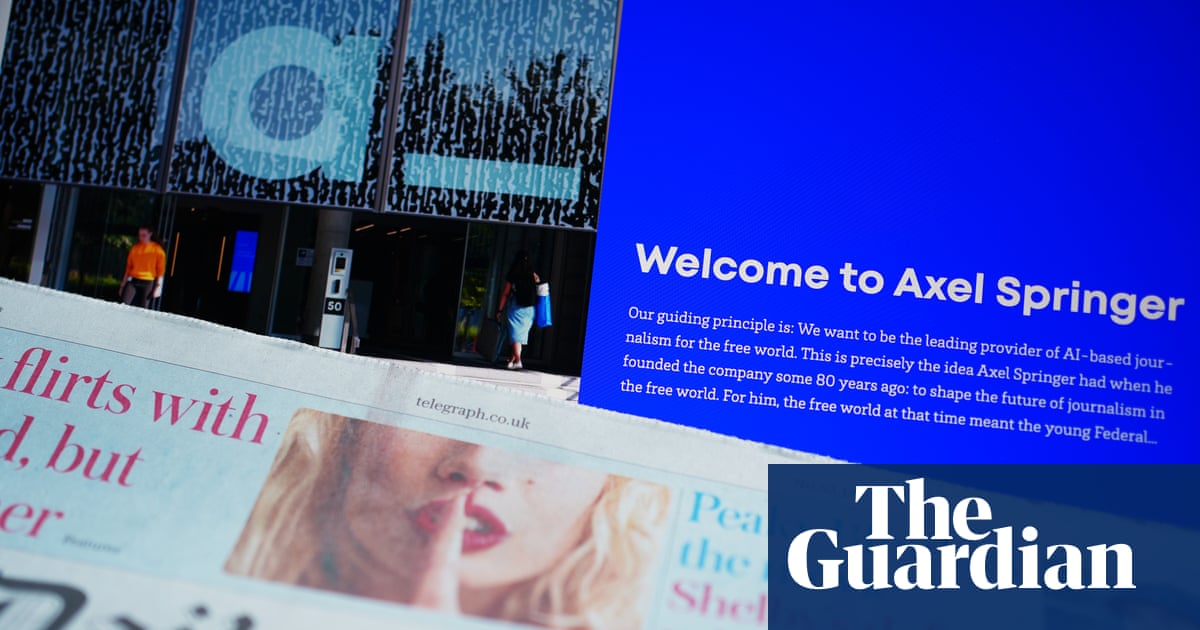
German media group Axel Springer has reached an agreement to acquire the publisher of the UK’s Daily Telegraph in a deal valued at about 575 million pounds, or roughly 766 million dollars, according to both liberal and conservative coverage. Reports agree that the transaction was confirmed by the companies on a Friday announcement, follows a long-running and often turbulent sale process, and effectively ends competing bids from other interested buyers, notably a rival offer associated with Lord Rothermere and the Daily Mail group. Liberal and conservative outlets both note that Axel Springer has pledged to maintain editorial independence at the Telegraph, frame the move as a major cross‑border media consolidation in European and British press markets, and highlight the significance of a German-based group taking control of one of the UK’s leading right‑leaning newspapers.
Across the spectrum, coverage situates the sale within broader trends of consolidation and restructuring in the newspaper industry, especially for legacy print titles facing digital disruption and revenue pressures. Outlets on both sides reference Axel Springer’s existing portfolio of European and global media brands and its strategy of investing in strong national titles while expanding digital reach. They also agree that the Telegraph’s sale comes after years of uncertainty around its ownership, with repeated attempts and negotiations involving domestic and foreign bidders, and that any new owner must balance commercial ambitions with the expectations of a historically conservative and often Eurosceptic readership. Overall, both liberal and conservative sources accept the basic narrative of a financially driven, strategically motivated acquisition that may reshape the UK’s right‑of‑center media landscape.
Areas of disagreement
National identity and symbolism. Liberal-leaning coverage emphasizes the symbolic weight of a prominent British conservative paper coming under German ownership, sometimes framing it as an ironic twist given the Telegraph’s Eurosceptic and occasionally anti-Brussels stance, while suggesting this could unsettle parts of its readership. Conservative outlets, by contrast, tend to downplay the national identity angle, presenting Axel Springer simply as a successful European media company and focusing on the business logic rather than the optics of German control. Where liberals invoke historical and political overtones in cross‑border media ownership, conservatives largely treat it as a normal feature of a globalized media market.
Editorial independence and influence. Liberal coverage scrutinizes Axel Springer’s assurances of editorial independence, highlighting concerns that corporate or ideological priorities of a foreign owner could eventually shape the Telegraph’s political line, particularly on Europe and international issues. Conservative reporting is more inclined to take the independence pledges at face value or treat them as standard in such deals, stressing the company’s stated respect for pluralism and the Telegraph’s entrenched editorial culture. Liberals raise the prospect of subtle influence over time, while conservatives imply that market discipline and the paper’s brand will act as a safeguard.
Business framing and winners/losers. Liberal outlets devote more attention to the competitive bidding drama, portraying the German offer as a decisive move that “shatters” Lord Rothermere’s ambitions and reconfigures power relations among British right‑leaning publishers. Conservative coverage, while acknowledging the sidelined Daily Mail bid, tends to foreground the headline price, deal structure, and strategic fit for Axel Springer rather than personalizing the outcome as a defeat for domestic media barons. Liberals cast the story as a contest among rival elites with broader implications for influence in Tory politics, whereas conservatives describe it more as a straightforward market transaction.
Implications for UK political discourse. Liberal-aligned sources are more likely to speculate about how German ownership could moderate or recalibrate the Telegraph’s stance on Brexit, Europe, and culture‑war issues, hinting that the paper may face a tension between its base and its new proprietor’s outlook. Conservative sources, when they touch on politics at all, tend to assume continuity, stressing that the Telegraph’s core identity as a right‑of‑center outlet will persist because that is what its readers expect and what sustains its commercial value. Liberals therefore frame the sale as potentially altering the ideological ecosystem of the British right, while conservatives largely see it as reinforcing an existing strong brand under better‑resourced ownership.
In summary, liberal coverage tends to treat the Axel Springer–Telegraph deal as a politically symbolic shift in ownership that raises questions about national identity, elite rivalry, and long‑term editorial direction, while conservative coverage tends to frame it as a high‑value but routine media acquisition driven by commercial strategy and likely to leave the Telegraph’s core right‑leaning character intact.