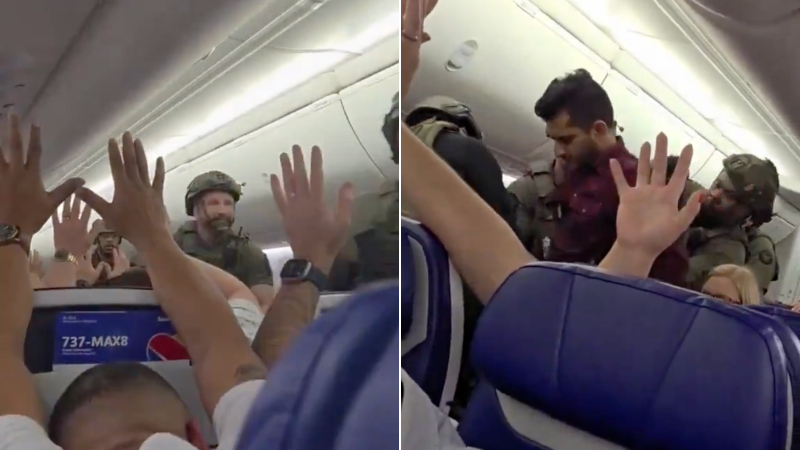

A Southwest Airlines flight from Nashville to Fort Lauderdale was diverted to Atlanta on Friday night after what authorities and media describe as a possible or potential security matter onboard. Across outlets, reports agree that law enforcement and federal investigators, including the FBI, met the aircraft on the ground in Atlanta, removed at least one male passenger, and conducted a security assessment that led to the conclusion there was no credible threat and no actual danger to passengers or crew. Coverage consistently notes that passengers were eventually rebooked or transferred to another aircraft to continue on to Fort Lauderdale and that no injuries or physical harm were reported.
Liberal- and conservative-leaning coverage converges on the broader context that U.S. airlines and airports are operating under heightened sensitivity to possible in-flight threats, with established protocols that prioritize diversion and rapid law-enforcement response at major hubs such as Atlanta. Both sides describe the FBI’s role as the ultimate arbiter of whether a threat exists and reference similar recent incidents in which disruptive behavior or misunderstood speech has triggered security responses that later proved unfounded. There is shared acknowledgment that post-9/11 security culture, combined with public anxiety about aviation safety, underpins these aggressive responses, and that federal and local authorities have wide latitude to intervene first and sort out intent and credibility after landing.
Areas of disagreement
Framing of the incident. Liberal-aligned outlets tend to frame the diversion as a routine but disruptive security precaution, emphasizing that the system ultimately worked as intended when the FBI deemed there was no credible threat. Conservative outlets, by contrast, often foreground the drama of police boarding the plane and an alleged bomb threat, using video and witness accounts to underscore tension and uncertainty before later acknowledging the all-clear.
Portrayal of the suspect passenger. Liberal sources generally stress that the passenger was ultimately found not to have made any real threat, sometimes highlighting that he was speaking in his native language and was misinterpreted, with an implicit concern about profiling and misunderstanding. Conservative sources more frequently describe him first as a suspect who prompted a bomb-scare response and an arrest on the tarmac, then note the lack of charges and credible threat, with less emphasis on language or cultural miscommunication.
Emphasis on law-enforcement response. Liberal coverage typically presents the rapid response by Atlanta police and the FBI as part of a necessary, if occasionally overcautious, security apparatus, raising questions about proportionality but not criticizing individual officers. Conservative coverage is more likely to spotlight the assertive tactics of law enforcement boarding the plane, sometimes praising decisive action and presenting it as appropriate vigilance in an era of ongoing security concerns.
Broader security narrative. Liberal outlets tend to situate the episode within a narrative about balancing safety with civil liberties and avoiding overreaction to ambiguous behavior, particularly involving minority or foreign-language speakers. Conservative outlets more often plug the incident into a broader story of persistent security threats and the need for robust, visible responses, suggesting that false alarms are an acceptable cost of maintaining deterrence and public safety.
In summary, liberal coverage tends to stress the absence of a real threat, the risks of overreaction, and the potential for miscommunication or profiling, while conservative coverage tends to highlight the initial fear, the strong police response, and the legitimacy of aggressive security measures even when a threat proves unfounded.
Story coverage