

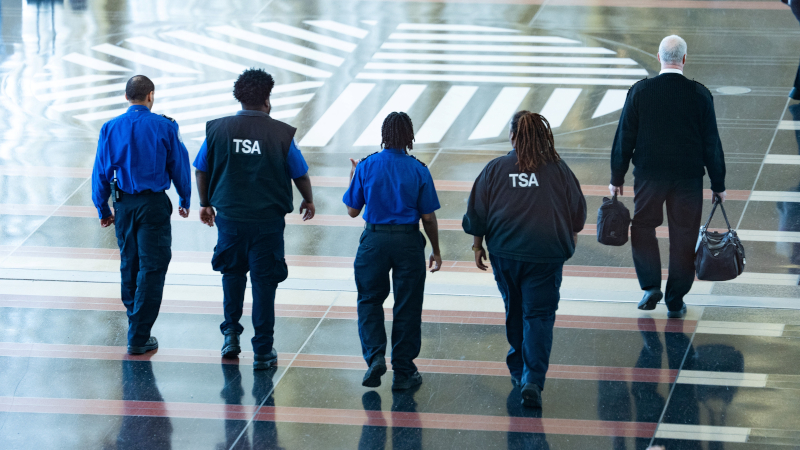
News accounts from both liberal- and conservative-leaning outlets agree that a concourse at Ronald Reagan Washington National Airport was evacuated on Thursday morning after a suspicious package was discovered in or near an employee break room in the D Concourse. Airport police established a safety perimeter, halted access to the affected area, and called in bomb squad or hazardous-device specialists, who examined the item and ultimately deemed it not dangerous, after which normal operations gradually resumed. Reports across the spectrum note that there were temporary disruptions for passengers and staff in that specific concourse, but no injuries, no confirmed explosive device, and no broader shutdown of the entire airport.
Coverage also broadly aligns in situating the incident within ongoing concerns about airport and transportation security, emphasizing standard protocols that require immediate evacuation and investigation when a suspicious item is found. Outlets on both sides reference the role of local law enforcement, airport authorities, and specialized units such as the Arlington County Fire Department in assessing the threat, and they note that such responses are precautionary in nature even when the threat turns out to be unfounded. Some reporting, both liberal and conservative, places this event alongside other recent airport bomb scares or threat investigations to illustrate how frequently transportation hubs must respond to possible security risks and how rarely those incidents result in actual attacks.
Areas of disagreement
Framing of security climate. Liberal-aligned coverage tends to place the Reagan National evacuation within a broader discussion of domestic security and public safety, often tying the scare to general trends in threat assessments and emergency preparedness without emphasizing any specific ideological cause. Conservative outlets are more likely to string this episode together with several other recent airport scares, suggesting a pattern of heightened tension and potential vulnerabilities in aviation security. Where liberal sources may stress that standard procedures ultimately worked as intended and prevented harm, conservative sources sometimes highlight a sense of ongoing insecurity and the need for robust, visible law-enforcement responses.
Emphasis on policy implications. Liberal sources more often connect the incident to institutional issues like TSA funding, training, interagency coordination, and the balance between security and minimizing disruption for travelers. Conservative coverage, by contrast, is more inclined to use the incident as a lens on law-and-order themes, underscoring support for strong policing, rapid evacuation decisions, and tough-on-threats posture, with less attention to bureaucratic reform angles. When policy is mentioned, liberal stories tend to invoke long-term reforms and oversight, while conservative stories focus on empowering front-line responders and avoiding what they portray as complacency.
Political subtext and symbolism. Liberal-aligned outlets, when they note the airport’s association with Ronald Reagan at all, usually treat it as a neutral geographic reference and avoid using the incident to score partisan points. Conservative outlets sometimes allude to the symbolic significance of a security scare at an airport named after a Republican president near the nation’s capital, occasionally framing it within a narrative of national strength under pressure. In this framing, liberal coverage leans technocratic and apolitical in tone, whereas conservative coverage may subtly embed the episode in a broader story about threats facing the country and the need to project resolve.
Public reassurance versus alarm. Liberal sources generally foreground the fact that the package was cleared and that no credible threat was found, using the resolution to reassure readers that procedures worked and that such scares are often false alarms. Conservative sources, while acknowledging the all-clear, give more narrative space to the initial emergency, evacuations, and references to other recent bomb threats at airports, which can heighten the sense of persistent risk. As a result, liberal coverage tends to close on a calm note emphasizing normalcy restored, whereas conservative reporting is more likely to leave readers with lingering concern about future incidents.
In summary, liberal coverage tends to treat the evacuation as a successfully managed security scare illustrating routine protocols and institutional competence, while conservative coverage tends to frame it as part of a pattern of ongoing threats that justifies strong law-enforcement measures and heightened public vigilance.
