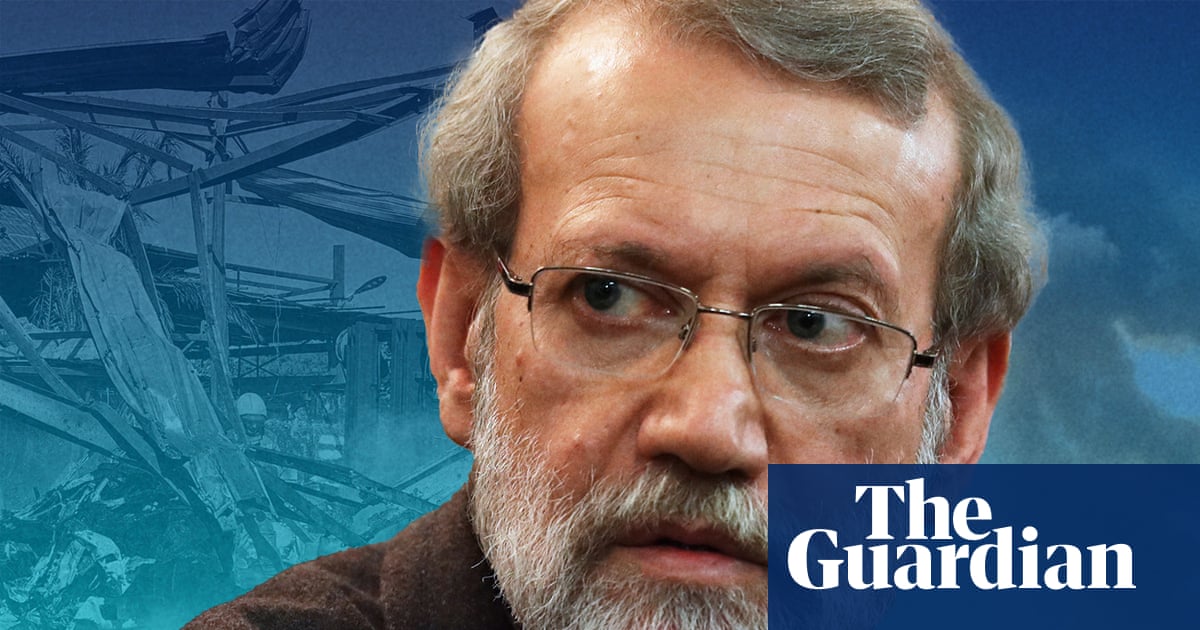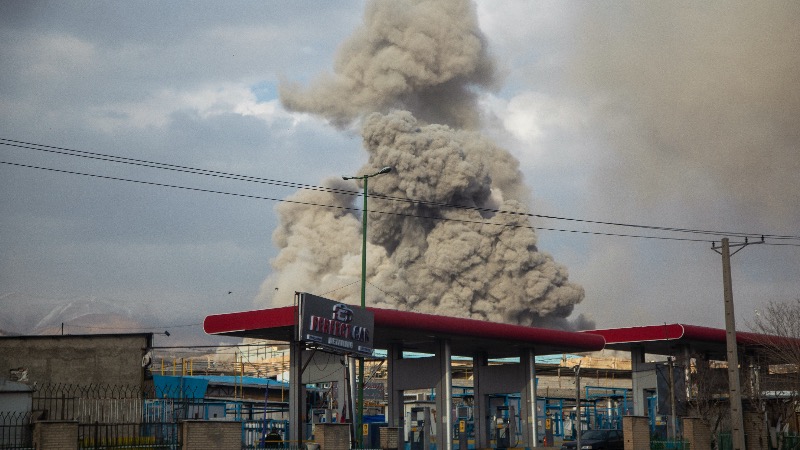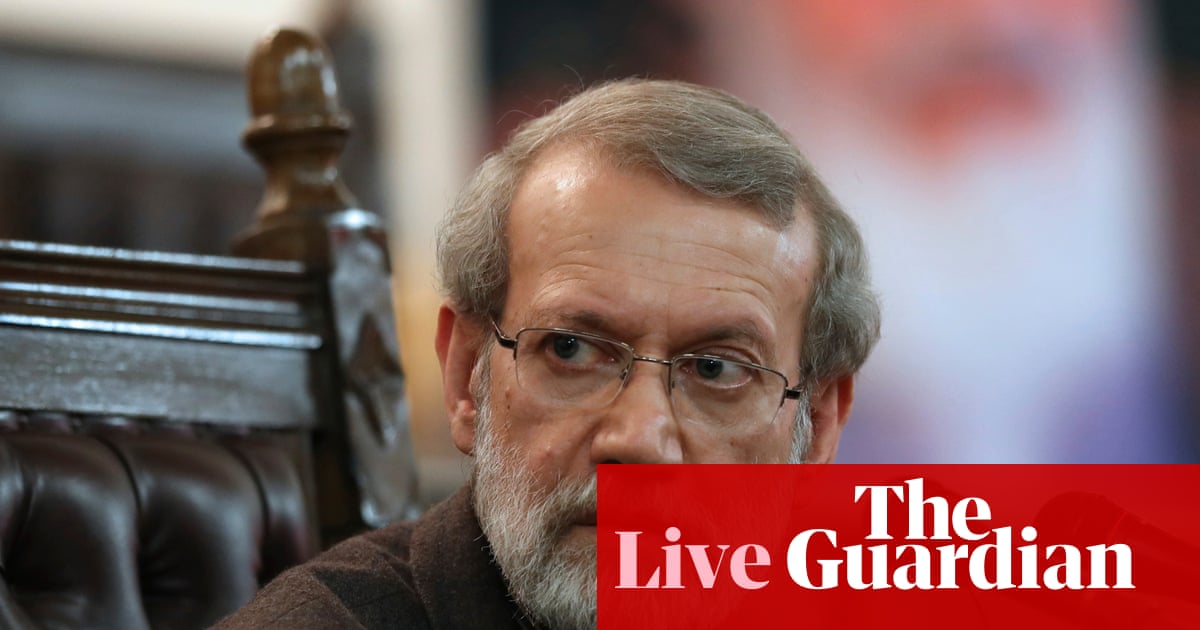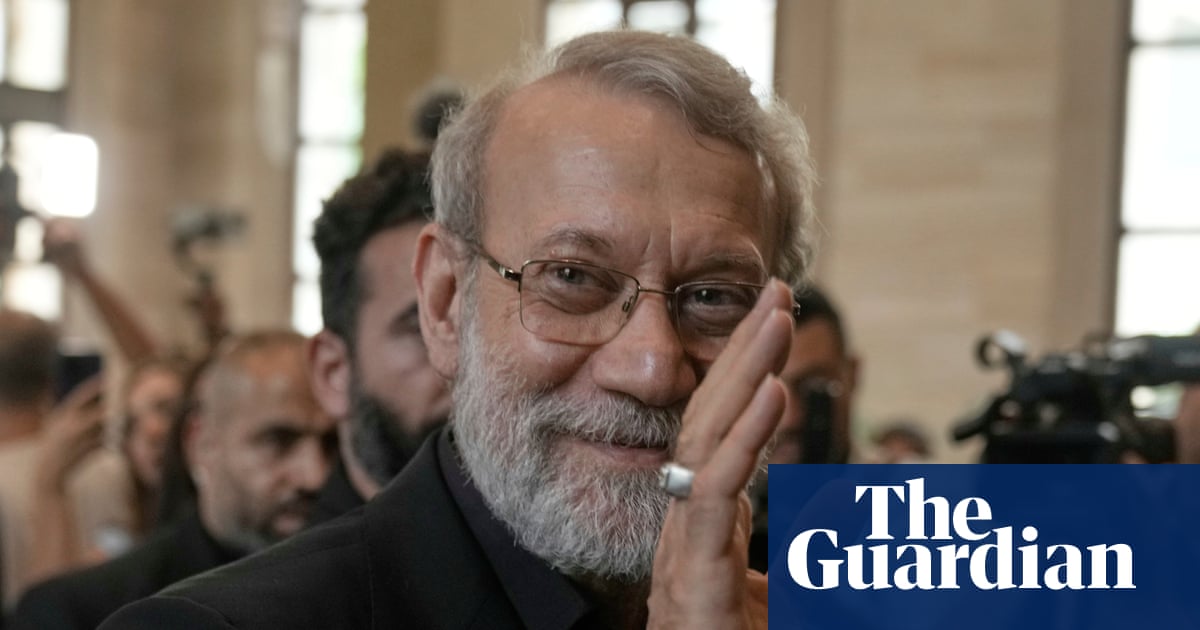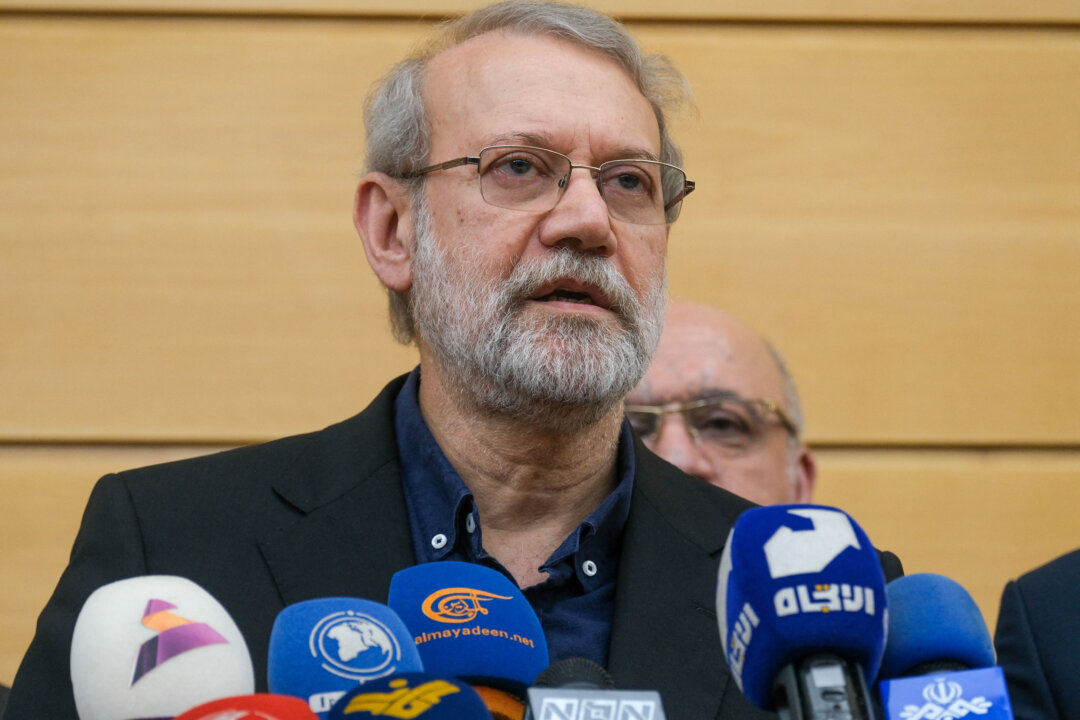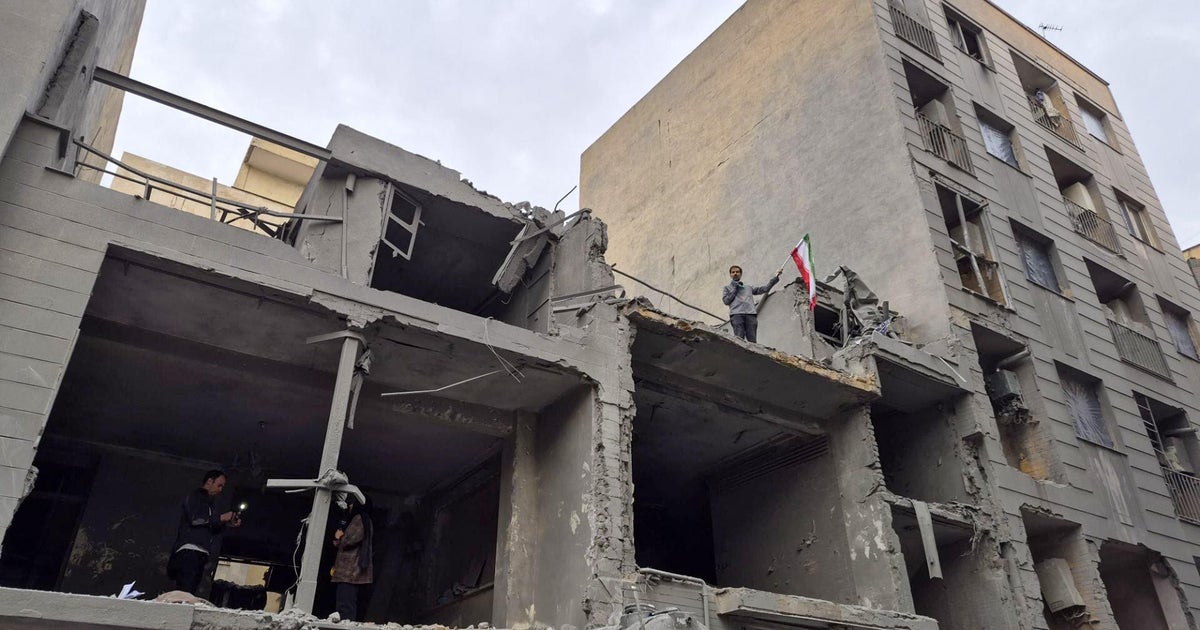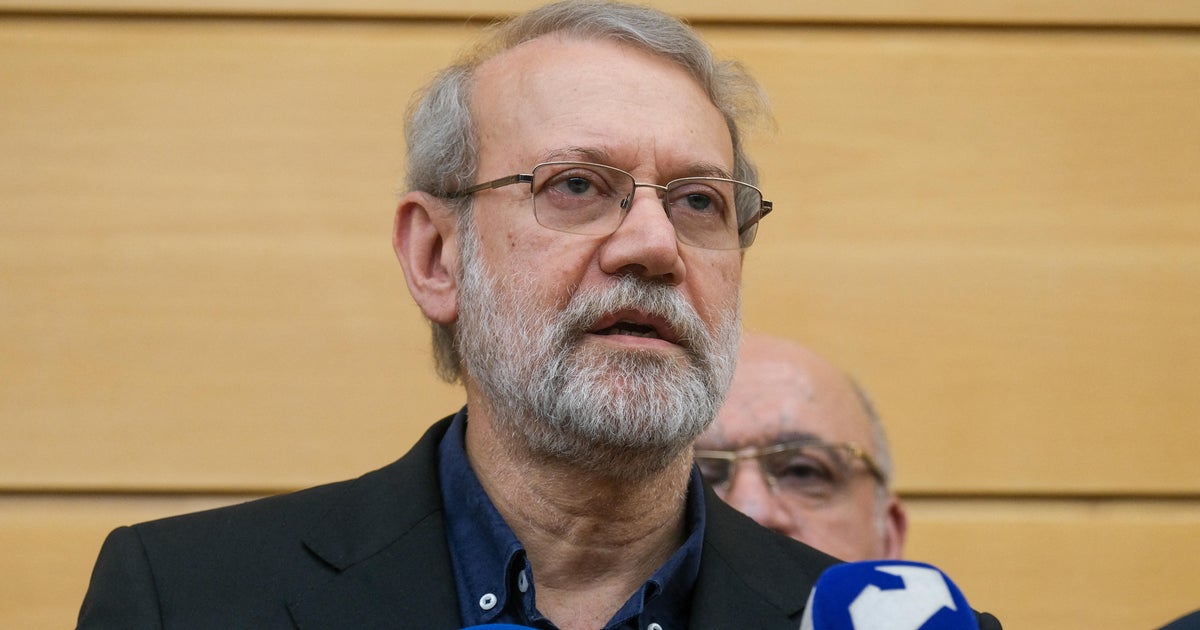




Israel and Iranian state outlets, as cited by both liberal and conservative media, report that Ali Larijani, the powerful secretary of Iran’s Supreme National Security Council and de facto top national security official, was killed in an overnight Israeli airstrike that also reportedly killed his son, bodyguards, and Basij commander Gholamreza (Gholam Reza) Soleimani. Coverage from both sides agrees that Israeli leaders, including the prime minister and defense minister, explicitly ordered strikes targeting senior Iranian regime figures, that Israel has claimed the deaths of at least two to three top Iranian officials in roughly two days, and that Iranian state media subsequently confirmed Larijani’s death after initial Israeli announcements. Reports also concur that the strike came amid a broader exchange of attacks: Iran has launched missiles and drones toward Israel and Gulf Arab neighbors, some of which were intercepted, and at least two people were killed near Tel Aviv in Iranian attacks, while separate incidents include drone attacks on the US embassy in Baghdad.
Liberal and conservative outlets similarly depict Larijani as one of the most senior Iranian figures to be killed in the current war, comparing his importance to, or placing him just below, the late Supreme Leader Ali Khamenei in terms of strategic influence. They agree that Larijani was a veteran insider with deep ties across Iran’s political, security, and clerical establishments, central to formulating war strategy, managing regional proxies, and potentially exploring diplomatic off‑ramps. Both sides broadly describe his killing, alongside Soleimani’s, as a major blow to Iran’s command-and-control and leadership cadre, while noting Iran’s system is built with redundancies to absorb elite losses. Coverage also converges on the idea that this strike marks a serious escalation in the regional conflict, heightening fears of wider war and testing the responses of outside actors such as the United States, NATO allies, and Gulf states.
Areas of disagreement
Strategic significance and impact. Liberal outlets tend to emphasize that Larijani’s death is a profound systemic shock for Iran, sometimes arguing it could be more consequential than losing the supreme leader and highlighting his unique role in bridging factions and shaping possible diplomatic exits from the conflict. Conservative outlets frame the strike as a major but not necessarily system‑breaking wartime achievement, stressing that Iran’s leadership structure is designed to withstand assassinations and presenting the operation as part of a sustained campaign degrading a hostile regime. Liberal pieces are more likely to warn about the loss of a potentially pragmatic interlocutor for the West, whereas conservative ones more often celebrate the removal of a central architect of Iran’s regional aggression.
Escalation and responsibility for regional instability. Liberal-aligned coverage situates the killing within a wider pattern of Israeli strikes and alleged war crimes in Lebanon and Gaza, stressing that Israel’s actions, including high‑level targeted killings in Tehran, risk spiraling escalation and drawing in more regional and global actors. Conservative coverage foregrounds Iran’s missile and drone attacks on Israel and Gulf neighbors, framing them as primary drivers of instability and portraying the killing of Larijani as a defensive or preemptive response to Iranian aggression. Liberals more frequently question whether Israel is widening the conflict beyond necessity, while conservatives suggest that Iranian escalation and proxy warfare make such Israeli actions unavoidable.
Role of the United States and Western allies. Liberal sources highlight US pressure on NATO allies, Germany’s reluctance to endorse regime change, and broader Western fears of being dragged deeper into conflict, casting Washington as struggling to restrain Israel while also protecting regional partners. Conservative sources are more focused on US strategic alignment with Israel against Iran, mentioning allied reluctance largely to underscore perceived Western weakness or inconsistency rather than to critique Israeli policy itself. Liberal reporting tends to stress diplomatic risks and the need for de‑escalation, whereas conservative reporting leans toward validating closer military coordination with Israel to deter Iran.
Future of Iran’s leadership and internal dynamics. Liberal‑leaning outlets dwell on succession questions, the shrinking pool of viable Iranian leaders, and how Larijani’s death may destabilize internal balances of power or remove a comparatively pragmatic voice. Conservative outlets acknowledge the leadership loss but give less space to intra‑Iranian political nuance, instead using the event to underscore what they see as the vulnerability and brittleness of the Iranian regime under sustained pressure. Liberal coverage often frames Iran’s internal politics as complex and factional, while conservative coverage tends to simplify the picture into a hardline regime weakened by successful Israeli targeting.
In summary, liberal coverage tends to present the killing of Ali Larijani as a dangerous escalation that removes a pivotal, sometimes pragmatic power broker and heightens risks of regional war and Western entanglement, while conservative coverage tends to frame it as a justified and strategically successful blow against an aggressive Iranian regime whose own attacks and ambitions are the main source of instability.
Story coverage