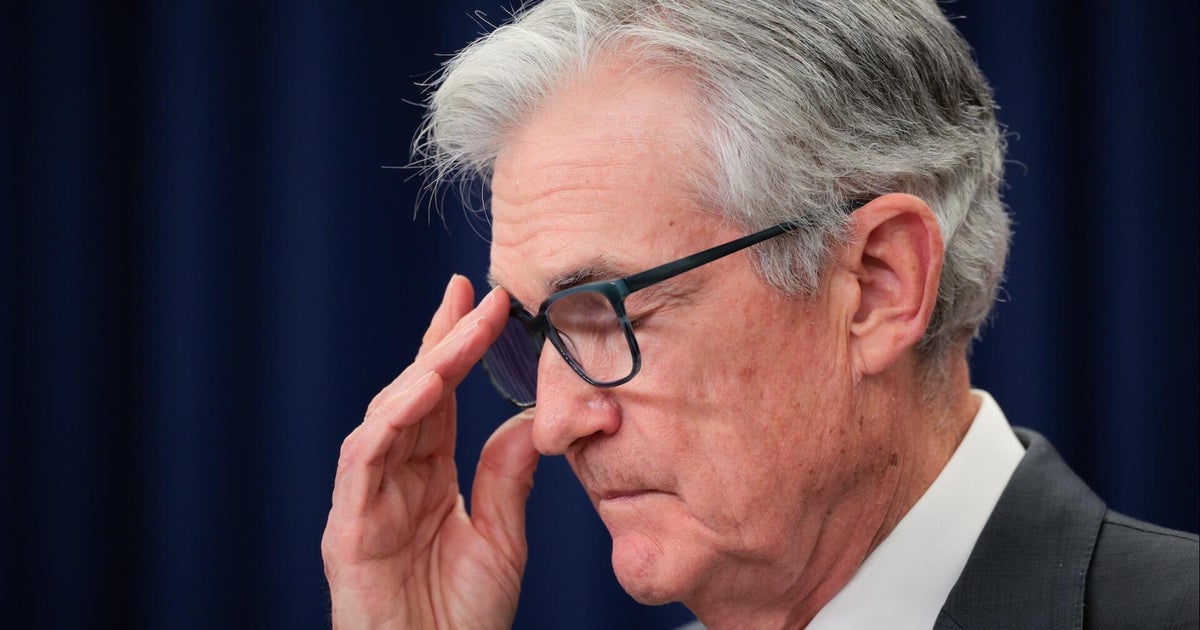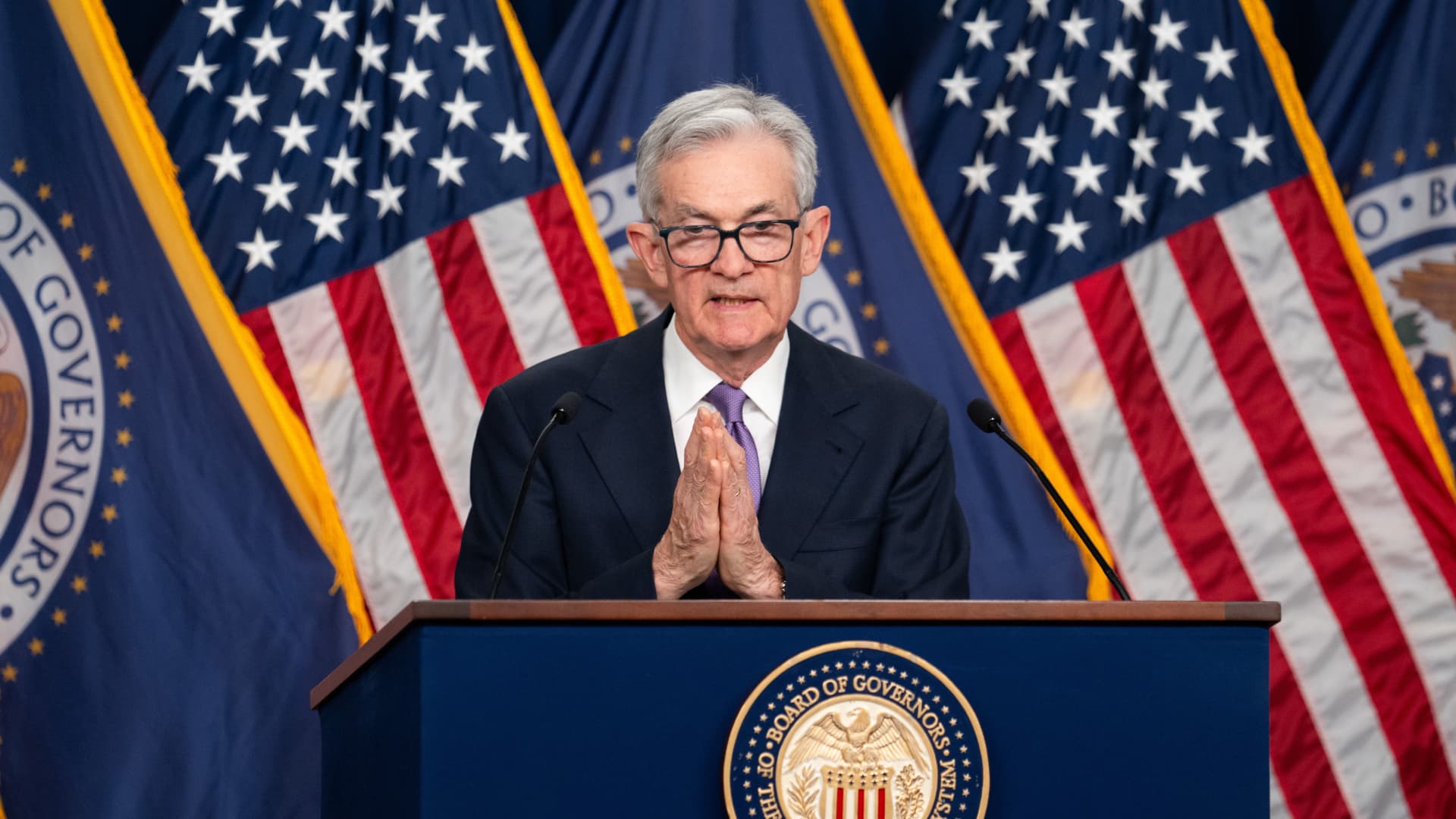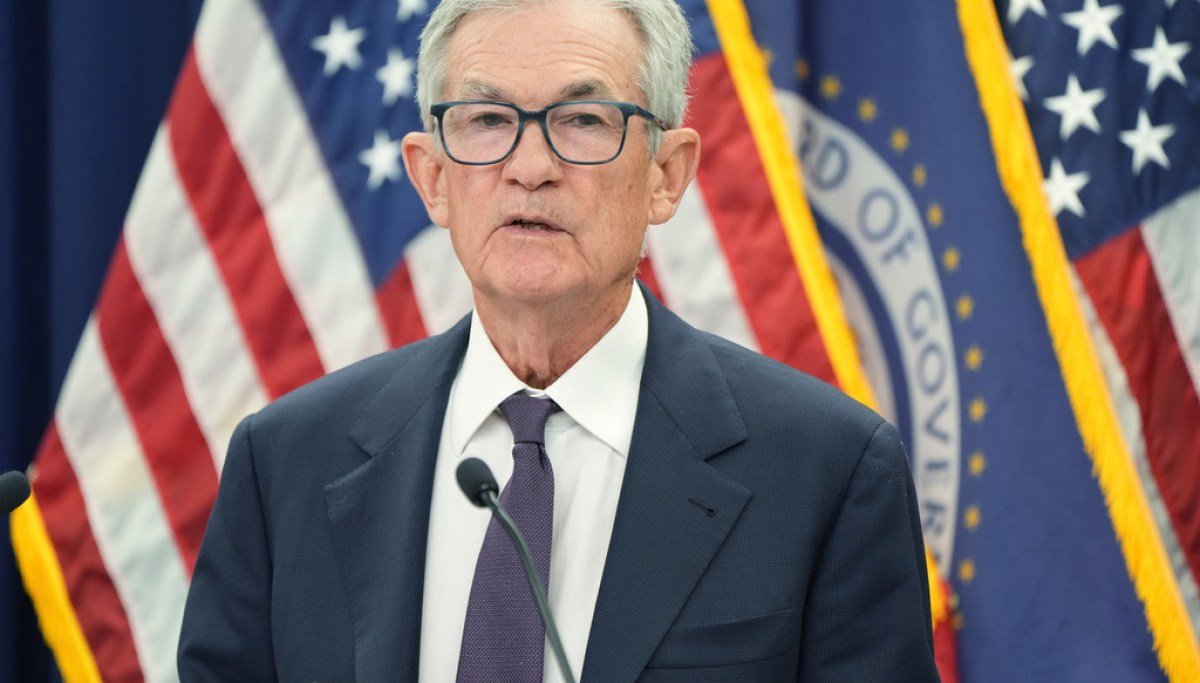





The Federal Reserve kept its benchmark federal funds rate unchanged in a target range of about 3.5% to 3.75% at its latest meeting, with officials voting overwhelmingly to hold steady and only one Trump-appointed governor dissenting in favor of a cut. Both liberal- and conservative-aligned outlets note that the decision followed a run of hotter-than-expected inflation data, including higher producer prices and a recent uptick in overall inflation measures, alongside rising oil prices linked to the ongoing war in the Middle East/Iran conflict. Coverage on both sides agrees that Chair Jerome Powell emphasized that inflation is not falling as quickly as previously hoped, that the Fed still projects roughly one rate cut later this year, and that markets reacted with weaker stock prices and higher short-term Treasury yields after the announcement. Both also report that Powell publicly rejected the idea that the economy is in or near stagflation, while acknowledging mixed labor market signals and a weakening or at least less robust job market.
Across outlets, there is shared context that the Fed is operating under unusually high economic and geopolitical uncertainty, with policymakers explicitly citing the war in the Middle East and its effect on energy prices as a key upside risk to inflation and downside risk to growth. Liberal and conservative sources alike describe the central bank’s dual mandate—maximum employment and stable prices—and portray the current stance as a cautious, data-dependent pause rather than a definitive pivot toward tightening or easing. Both sides report that the Fed’s “dot plot” and forward guidance now point to fewer anticipated cuts than markets once expected, that internal projections have nudged inflation and rate paths slightly higher, and that the outcome complicates borrowing costs for households and businesses, from mortgages and credit cards to corporate debt and short-term savings products.
Areas of disagreement
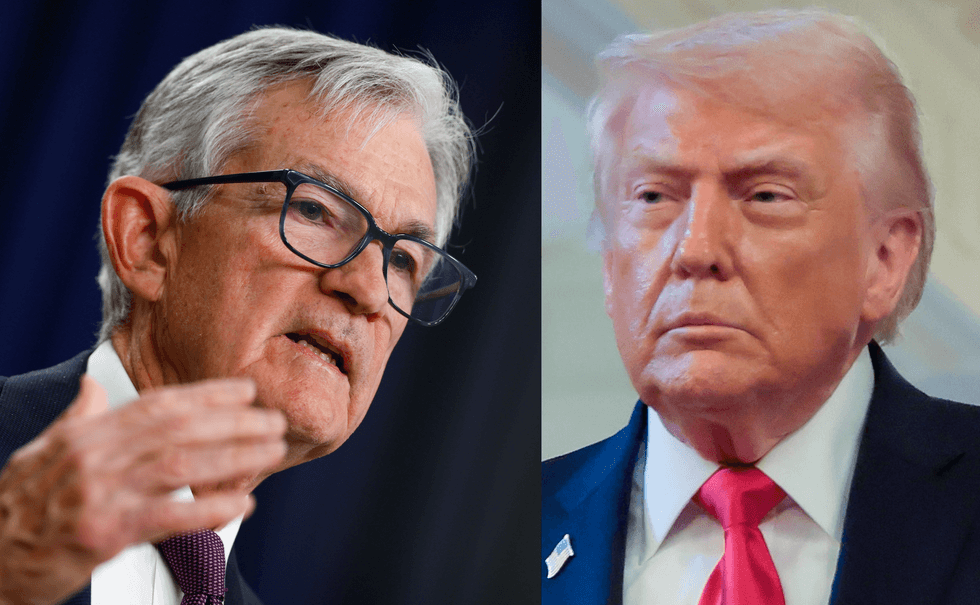
Framing of Powell and Fed independence. Liberal-aligned outlets frequently underscore that the Fed “bucked Trump” by refusing to cut rates, presenting the decision as evidence of central bank independence in the face of political pressure and occasionally casting Trump’s criticism of Powell as reckless or self-interested. Conservative outlets, while also noting Trump’s displeasure, tend to frame Powell more neutrally or skeptically, highlighting his ongoing Justice Department investigation and impending departure, and suggesting that leadership uncertainty may cloud monetary policy. Liberal pieces generally defend Powell’s caution as technocratic and focused on inflation risks, whereas conservative pieces are more apt to question his judgment or hint that a different chair, such as Kevin Warsh, might pursue a more growth-oriented path.
Assessment of economic risks and beneficiaries. Liberal coverage leans into concerns about the risks of persistent inflation for ordinary households but also stresses the danger of overtightening in a weakening labor market, often emphasizing affordability issues in housing, consumer credit, and wages lagging prices. Conservative coverage puts more weight on the growth and market side of the ledger, stressing how high rates and Powell’s messaging have pressured stocks and business investment and, in some cases, aligning more with arguments for quicker rate cuts to support the broader economy. While both sides agree inflation is elevated, liberal sources more often portray the hold as a prudent guardrail against an inflation resurgence, whereas conservative sources more often imply that the Fed may be erring on the side of unnecessary restraint.
Role of war and external shocks. Liberal-leaning outlets prominently and repeatedly tie stubborn inflation and the hawkish shift in the Fed’s rate path to the Iran/Middle East war, especially via spiking oil prices and tariff effects, portraying these as exogenous shocks that complicate policymaking but are not primarily the Fed’s fault. Conservative-leaning coverage mentions wartime and fuel prices but is less likely to dwell on geopolitical causes, instead framing the war as one of several uncertainties in a “wartime economy” without making it the core explanatory factor for inflation or Fed caution. This leads liberal sources to stress that external shocks limit what monetary policy alone can fix, while conservative sources more often treat the Fed’s own choices and communication as central drivers of current market and economic strains.
Policy trajectory and political implications. Liberal coverage tends to highlight that the Fed still expects at least one cut this year but has scaled back the number of future cuts, sometimes framing this as a setback for those—especially Trump allies and Warsh backers—who want swift easing, and noting how revised projections undercut arguments for aggressive rate reductions. Conservative coverage, by contrast, is more likely to foreground the political friction between Trump and Powell, presenting the Fed’s stance as something Trump “won’t like” and casting future cuts as a contested battleground between populist demands for cheaper money and institutional caution. Liberals thus more often present the updated projections as a technocratic recalibration in response to data, while conservatives emphasize the partisan and 2026 election implications of higher-for-longer rates and the coming Powell–Warsh transition.
In summary, liberal coverage tends to portray the Fed’s hold decision as a cautious, technocratic response to stubborn inflation and war-driven energy shocks that appropriately resists political pressure, while conservative coverage tends to cast the same move in a more politicized light, emphasizing leadership controversies, tensions with Trump, and the risk that prolonged high rates needlessly sap growth and markets.
Story coverage