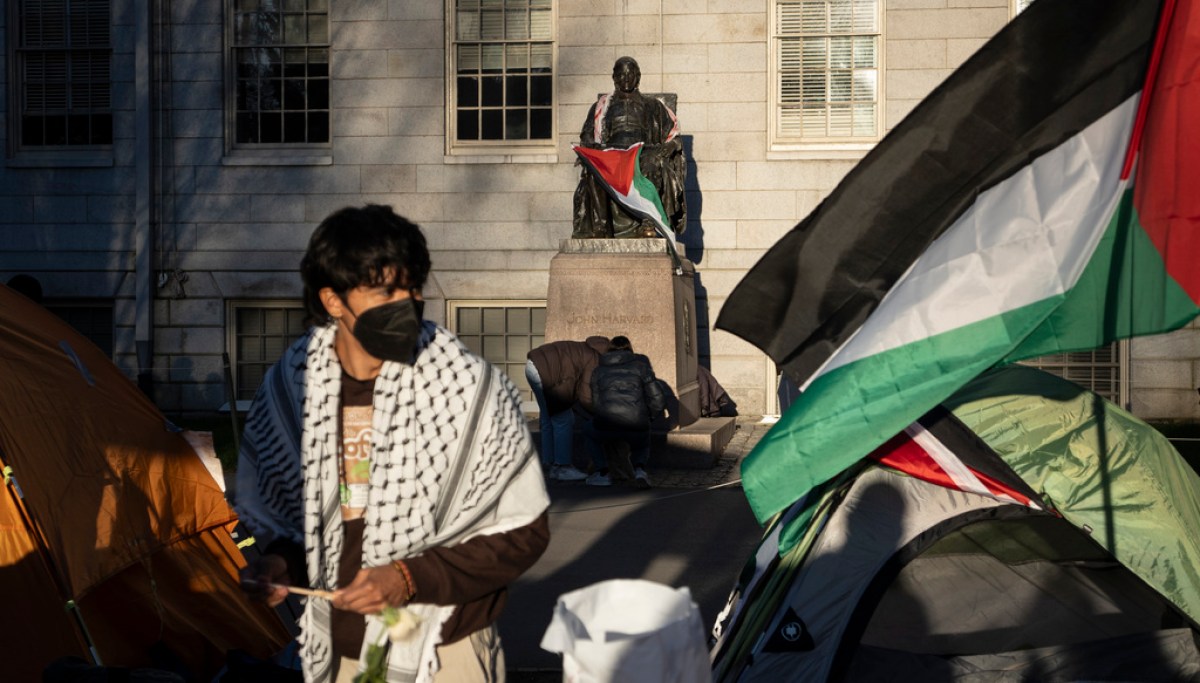



The Justice Department under the Trump administration has filed a federal civil-rights lawsuit against Harvard University, alleging that the school failed to protect Jewish and Israeli students from antisemitic harassment and intimidation following the October 7 Hamas attack and the ensuing Gaza war. Across outlets, reports agree that the DOJ claims Harvard showed deliberate indifference to a hostile environment on campus, including anti-Israel protests and alleged assaults or harassment of Jewish and Israeli students, and that the case is brought under Title VI of the Civil Rights Act. Coverage on both sides notes that the government is seeking to compel Harvard to comply with federal anti-discrimination law and to claw back or place at risk billions of dollars in federal funding and research grants awarded during the period of the alleged violations.
Liberal and conservative sources alike emphasize that this lawsuit is part of a broader national reckoning over campus speech, safety, and antisemitism after the start of the Israel–Hamas war. They agree that elite universities, and Harvard in particular, have faced intense scrutiny from lawmakers, donors, and activists over their responses to pro-Palestinian demonstrations and alleged antisemitic incidents. Both perspectives acknowledge that the case will test how far federal civil-rights enforcement can go in regulating university responses to campus protests and how institutions balance obligations to protect students from discrimination while respecting political expression.
Areas of disagreement
Framing of the lawsuit’s motives. Liberal-aligned coverage tends to situate the lawsuit within a long-running political clash between the Trump administration and elite universities, suggesting the case reflects broader culture-war priorities and scrutiny of higher education rather than a purely neutral enforcement action. Conservative outlets, by contrast, present the suit as a long-overdue, principled application of civil-rights law to protect Jewish students, treating political context as secondary to what they describe as clear evidence of antisemitic hostility.
Characterization of Harvard’s conduct. Liberal sources generally describe Harvard’s actions as possibly inadequate or slow but emphasize institutional complexity, competing free-speech pressures, and the difficulty of policing protests, sometimes using more cautious language about “alleged” failures. Conservative coverage portrays Harvard as having knowingly “allowed antisemitism to flourish,” emphasizing selective rule enforcement, tolerance of intimidation, and a pattern of deliberate neglect that they argue amounts to systemic discrimination.
Implications for campus speech and protest. Liberal-aligned reporting often highlights concerns that aggressive federal intervention could chill political speech and student activism, particularly around contentious foreign-policy issues like Israel–Palestine, and raises the risk of overreach in defining antisemitism. Conservative sources focus less on potential speech chilling and more on what they see as universities hiding behind free-expression arguments to excuse harassment, arguing that robust enforcement will simply force campuses to distinguish clearly between protected speech and unlawful intimidation.
Consequences for higher education. Liberal outlets tend to stress the potential destabilizing impact of threatening billions in federal research funding, warning about academic freedom, institutional autonomy, and collateral damage to students and scholarship. Conservative coverage emphasizes that the prospect of lost funding is an appropriate and necessary lever to force entrenched institutions to take antisemitism seriously, framing financial risk as a justified consequence of alleged civil-rights violations rather than an undue penalty.
In summary, liberal coverage tends to cast the DOJ’s lawsuit as a politically charged escalation in the broader culture war over universities and as a complex test of how to balance student safety with free expression, while conservative coverage tends to frame it as a straightforward, much-needed civil-rights enforcement action against an elite institution that knowingly tolerated pervasive antisemitism.