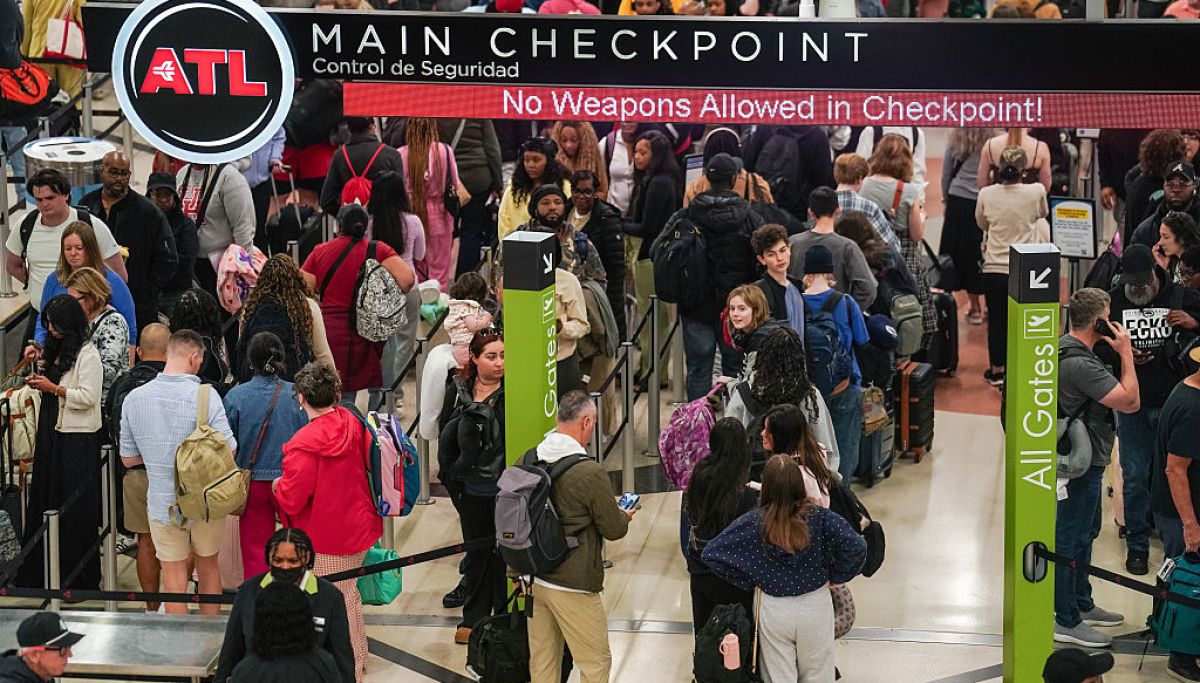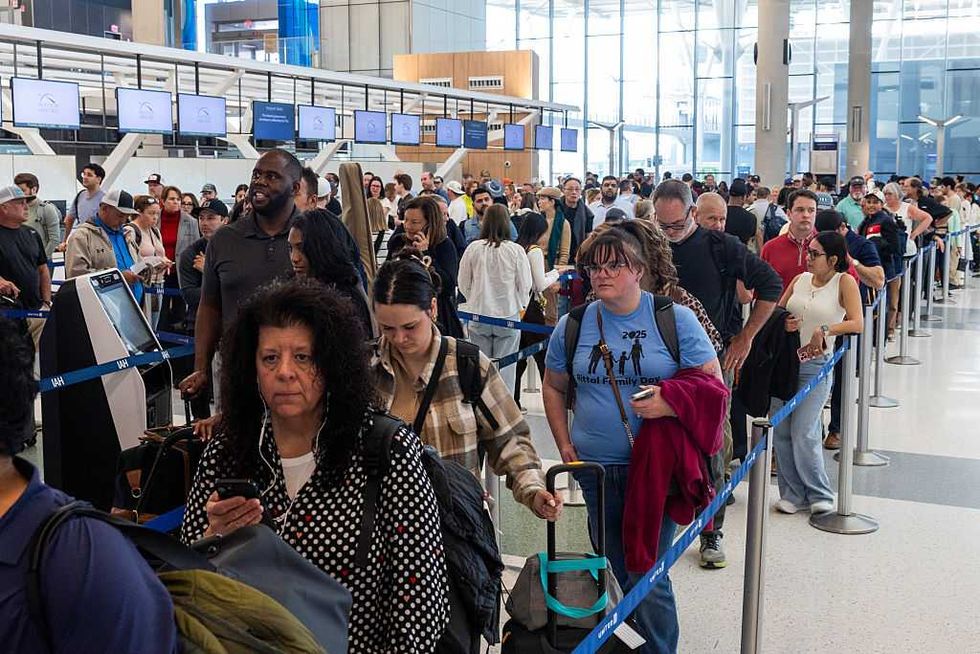


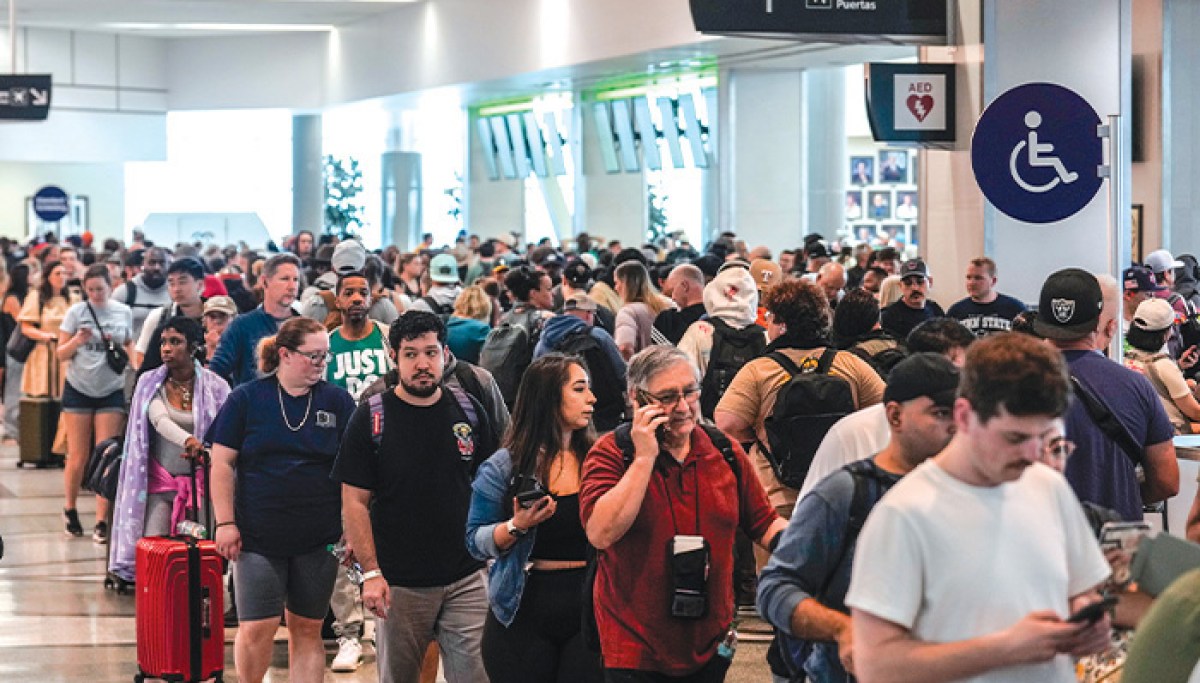
Airport security operations across the United States are being strained as a prolonged Department of Homeland Security funding standoff in Congress has left Transportation Security Administration officers working without pay, leading many to quit or call out sick. Both liberal- and conservative-aligned outlets report that this has produced extremely long security lines, sometimes exceeding two hours, and growing delays and disruptions at major hubs such as Atlanta’s Hartsfield-Jackson, Houston’s Hobby, Chicago O’Hare, and New York’s JFK, with airlines warning of possible checkpoint or terminal closures if staffing deteriorates further. Coverage across the spectrum also highlights the concrete financial distress facing TSA employees, including missed rent payments, threats of eviction, car repossessions, and difficulty covering basic expenses, as unions and airport officials sound alarms about worker morale and the potential impact on security.
Across outlets, the situation is framed as part of a broader partial shutdown of DHS that has dragged on for weeks, with TSA and other critical agencies like FEMA caught in the middle of a legislative impasse. Both liberal and conservative sources emphasize that TSA officers are considered essential and are legally required to report even without pay, creating a growing risk of attrition as workers seek other jobs, and they underscore that airlines, unions, and airport authorities are urging Congress and the administration to resolve the dispute quickly. There is shared acknowledgment that the standoff reflects deeper dysfunction in federal budgeting and oversight of homeland security functions, and that any long-term fix will likely require more stable appropriations, better contingency planning for critical infrastructure, and attention to the vulnerability of relatively low-paid federal frontline workers.
Areas of disagreement
Responsibility and blame. Liberal-aligned sources generally place primary responsibility on congressional Republican leaders and the executive branch, arguing that partisan brinkmanship and using DHS as leverage for unrelated policy demands have directly produced the funding lapse and worker hardship. Conservative outlets more often describe a generalized “Congress” or “Washington” failure, sometimes stressing Democratic intransigence or refusal to compromise on security or immigration priorities as a key cause of the deadlock. While liberals tend to personalize blame toward specific GOP figures and the administration, conservatives frame the problem as a broader systemic breakdown in budget negotiations with shared culpability.
Significance of disruptions. Liberal coverage tends to stress the seriousness of the staffing crisis, warning that mass sick-outs, resignations, and multi-hour lines at airports indicate a looming threat to both travel reliability and security. Conservative sources acknowledge long waits and chaos but sometimes emphasize that such disruptions are an unfortunate but predictable consequence of shutdown politics, occasionally questioning whether the TSA’s current structure and procedures are themselves efficient or necessary. As a result, liberals frame the delays as an urgent warning about undermining essential public services, while conservatives may treat them as evidence of bureaucratic fragility and possible overreach.
Framing of workers and unions. Liberal outlets typically highlight TSA officers and their unions as sympathetic frontline workers bearing the brunt of elite political dysfunction, frequently quoting union leaders who call the situation a “moral failure” and demanding immediate back pay and protections. Conservative coverage, while often acknowledging individual hardship and payless work, is more likely to treat union statements as one of several voices rather than the central moral authority, and may fold worker complaints into a broader critique of federal employment structures. Thus liberals cast the workers primarily as victims of political abuse deserving stronger labor safeguards, whereas conservatives more often position them within a wider debate over federal workforce size, compensation, and accountability.
Policy lessons and reforms. Liberal-leaning media generally argue that the crisis demonstrates the danger of allowing critical security functions to be held hostage to partisan fights, calling for protections that would insulate DHS and TSA funding from shutdowns and strengthen social safety nets for low-wage federal workers. Conservative outlets, when they discuss reforms, lean more toward questioning TSA’s overall effectiveness, suggesting that the disruption might be a catalyst to rethink or streamline airport security and reduce bureaucratic inefficiencies rather than simply increasing guaranteed funding. This leads liberals to advocate for stabilizing and buttressing existing institutions, while conservatives are more inclined to see an opportunity to reassess and potentially scale back or restructure them.
In summary, liberal coverage tends to emphasize clear partisan culpability, worker victimization, and the need to shore up DHS and TSA against future shutdowns, while conservative coverage tends to diffuse or share blame, highlight institutional inefficiency, and frame the crisis as a prompt to reconsider how airport security and federal employment are structured.
Story coverage