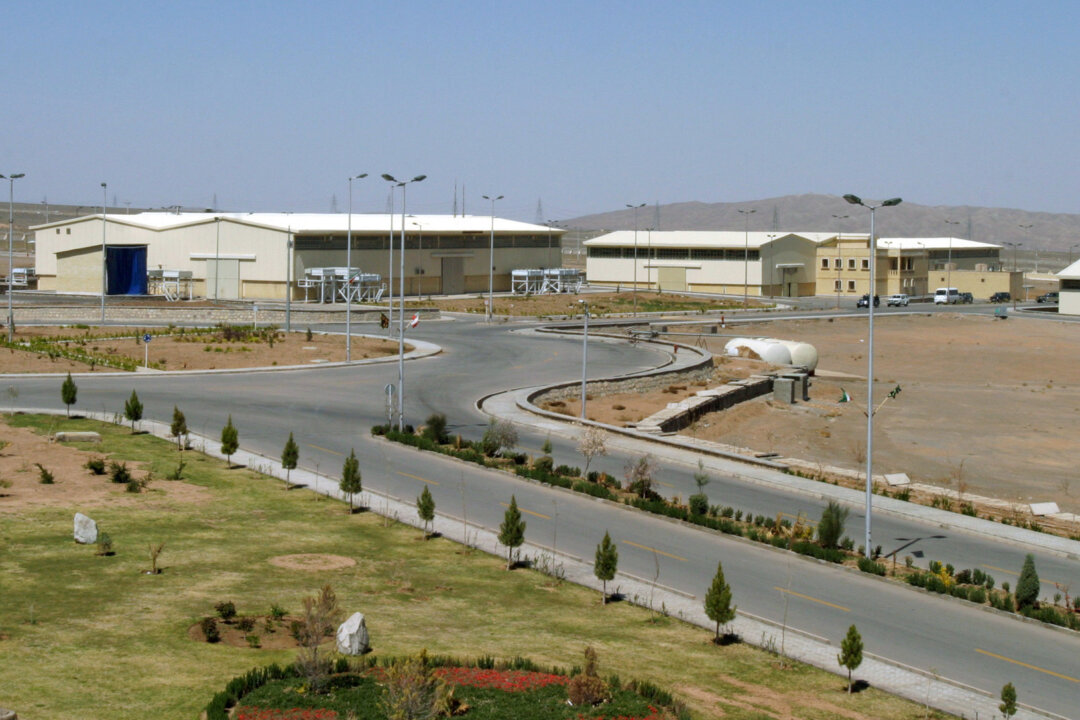

Iranian and international reports agree that Iran’s Natanz uranium enrichment facility was struck by some form of military action around March 21, roughly three to four weeks into a broader regional conflict. Both liberal- and conservative-aligned outlets relay that Iranian state media acknowledged an attack on the underground complex, emphasized that there was no radiation leak, and said the International Atomic Energy Agency had been notified. Coverage notes that this strike occurred amid a wider exchange of attacks involving Iran and Israel, including Israeli actions near Isfahan and Ramsar in Iran and damage in the Israeli city of Arad close to its own nuclear research site, with timelines differing slightly but converging on a late-March escalation. All sides report that the episode is part of an ongoing Middle East war drawing in U.S. military assets and affecting global energy markets and maritime security.
Across the spectrum, outlets situate Natanz as a core element of Iran’s nuclear infrastructure, central to its uranium enrichment efforts and long a focal point of international nonproliferation concerns. They agree that the current clashes build on years of shadow conflict between Iran and Israel, involving covert operations, cyberattacks, and previous sabotage at Natanz. There is shared acknowledgment that international institutions, particularly the International Atomic Energy Agency, play a monitoring role and were informed following the incident, and that major powers are urging de-escalation to prevent wider regional war. Both liberal and conservative sources present the strike as another phase in an entrenched struggle over Iran’s nuclear ambitions and regional influence, unfolding under intense diplomatic and economic pressure.
Areas of disagreement
Responsibility and blame. Liberal-aligned coverage highlights Iranian claims that Israel was behind the Natanz strike but underscores that Israel has denied responsibility and that independent verification is lacking, often framing attribution as contested and uncertain. Conservative-aligned coverage more prominently foregrounds Iranian assertions that the United States and Israel initiated the broader conflict and were responsible for the attack, sometimes presenting these accusations with less caveat, while also featuring Israeli officials’ warnings of increased operations against Iran. Liberal outlets thus stress ambiguity and competing narratives, whereas conservative outlets more readily bracket the strike within a U.S.- and Israel-led campaign against Iran.
Framing of the broader conflict. Liberal sources tend to frame the Natanz incident within a tit-for-tat cycle between Iran and Israel, emphasizing reciprocal strikes, regional instability, and the risk of escalation impacting global oil markets and sea lanes. Conservative coverage more often places the episode in the context of a war entering its fourth week that they describe as having been initiated by U.S. and Israeli actions, highlighting the deployment of additional U.S. troops and the need to confront Iran’s regional behavior. Where liberal outlets foreground mutual retaliation and the urgency of de-escalation, conservative outlets foreground deterrence, military resolve, and the responsibilities and risks borne by the United States and its allies.
Nuclear risk and intent. Liberal-aligned reporting generally stresses Iran’s assurances of no radiation leak as a key stabilizing fact, framing the strike as militarily serious but not yet a nuclear safety crisis, and often connecting this to calls for safeguarding nuclear sites under international law. Conservative-aligned reporting, while also mentioning the absence of radiation leakage, tends to focus more on Natanz as a critical node in Iran’s pursuit of sensitive nuclear capabilities, implicitly justifying why such a facility would be a likely military target in a confrontation with Israel and the United States. The liberal narrative leans toward risk management and legal-procedural concerns, whereas the conservative narrative leans toward strategic and security rationales for targeting Natanz.
Role of international actors. Liberal outlets emphasize international diplomatic reactions, focusing on calls from global powers for de-escalation and protection of maritime routes and energy supplies, with the IAEA presented as a key watchdog whose involvement signals the seriousness of any incident at Natanz. Conservative outlets, by contrast, highlight the United States primarily as a military actor reinforcing regional deployments and as an alleged initiator of the conflict in Iran’s telling, with less attention to multilateral diplomacy and more to alliance dynamics and deterrence. This yields a liberal portrayal centered on multilateral governance and crisis management, versus a conservative portrayal centered on power politics and contested U.S. leadership in the region.
In summary, liberal coverage tends to stress ambiguity over responsibility, mutual escalation between Iran and Israel, and the importance of legal, diplomatic, and economic frameworks for containing nuclear and regional risks, while conservative coverage tends to place the strike within a conflict attributed to U.S. and Israeli initiative, emphasize strategic justification for targeting Natanz, and spotlight military responses and deterrence over multilateral diplomacy.
Story coverage