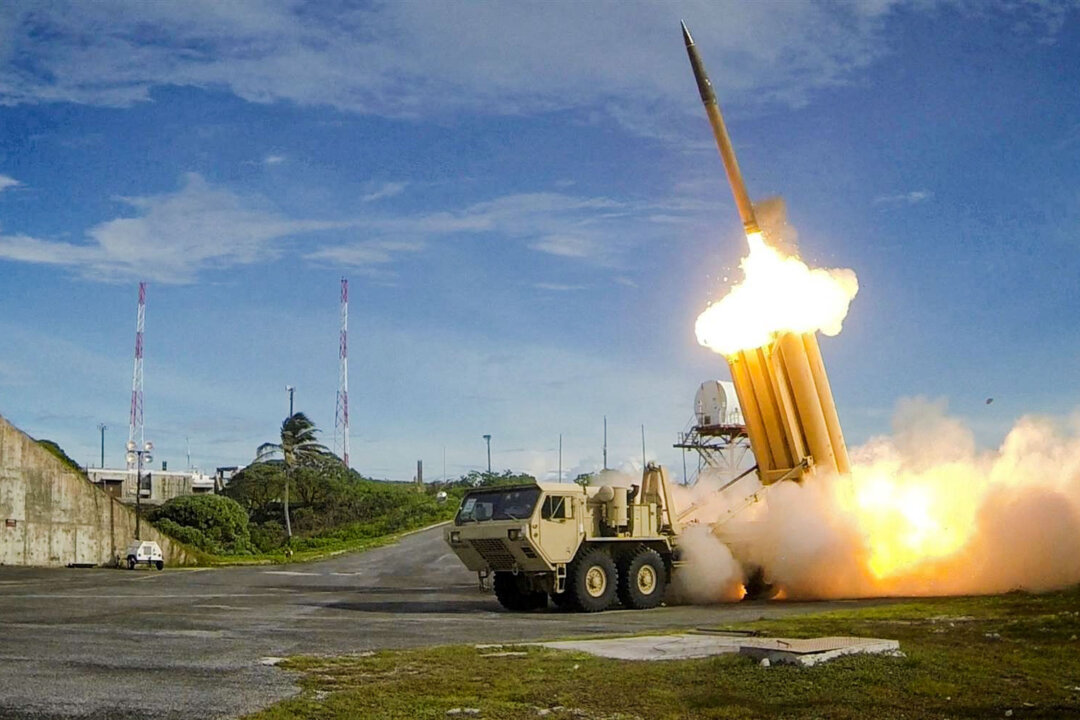



The latest coverage agrees that the Pentagon has signed a series of new, multi‑year contracts with major defense firms to sharply increase U.S. missile and related weapons production in response to stockpiles drawn down by recent conflicts. Lockheed Martin is highlighted as receiving a seven‑year agreement to ramp up production of the Army’s Precision Strike Missile, which has been used operationally against Iranian targets during Operation Epic Fury, a joint U.S.–Israeli campaign aimed at Iran’s military infrastructure. Reports also concur that BAE Systems is slated to quadruple production of guidance seekers for the THAAD missile defense interceptor, while Honeywell Aerospace will expand output of critical munitions components, including navigation and electronic warfare systems, under separate Pentagon deals.
Across outlets, there is shared description of this as part of a broader push to rebuild and expand the U.S. arsenal after weapons were depleted by supplying allies and conducting strikes tied to escalating tensions with Iran and other adversaries. Coverage agrees that the Pentagon is trying to shift from a peacetime procurement tempo to a more resilient, wartime‑ready industrial base, using longer‑term contracts and guaranteed demand signals to incentivize companies to invest in capacity. Both liberal and conservative reporting situate these moves within longstanding concerns about munitions stockpiles, supply‑chain fragility, and the need to integrate newer precision‑guided systems into U.S. and allied force posture, while noting the central role of the Army and Missile Defense Agency in setting requirements and overseeing these production surges.
Areas of disagreement
Motives and framing of the buildup. Liberal‑aligned coverage tends to frame the new contracts as a necessary but worrisome symptom of an entrenched security environment, emphasizing the risk of normalizing a perpetual wartime footing and the potential for escalation with Iran and other rivals. Conservative outlets more often cast the production surge as overdue strength, arguing the U.S. must rapidly replenish and expand its arsenal to deter adversaries, and portraying Operation Epic Fury as proof that such capabilities are vital and effective. While liberals emphasize the dangers of an open‑ended buildup, conservatives emphasize the dangers of not rearming fast enough.
Defense industry and profiteering. Liberal sources are more inclined to spotlight Lockheed Martin, BAE Systems, and Honeywell as beneficiaries of expanding Pentagon budgets, questioning whether long, guaranteed contracts entrench corporate dependence on conflict and weaken cost oversight. Conservative coverage, by contrast, tends to highlight these firms as essential partners in rebuilding the defense industrial base, focusing on jobs, technological innovation, and production capacity rather than on profit margins or lobbying influence. Where liberals worry about incentivizing corporate war‑fighting interests, conservatives frame the same contracts as strategic investments in national security infrastructure.
Fiscal and domestic trade‑offs. Liberal reporting is more likely to link missile‑production surges to broader budgetary concerns, raising questions about opportunity costs for domestic priorities and pressing for transparency on total program costs and lifecycle spending. Conservative outlets usually downplay these trade‑offs, arguing that defense spending is a core constitutional function and warning that underfunding munitions leaves the U.S. vulnerable, which in turn could prove costlier in both blood and treasure. Thus, liberals tend to weigh missile contracts against social and economic programs, while conservatives portray them as non‑negotiable baseline expenditures.
Diplomacy versus hard power. Liberal‑aligned coverage often situates the contracts within debates over whether the U.S. is over‑relying on military tools and under‑investing in diplomacy, arms control, and regional de‑escalation with Iran and other actors. Conservative coverage more frequently treats robust missile capacity as a precondition for successful diplomacy, arguing that adversaries only negotiate seriously when confronted with clear military superiority, and presenting operations like Epic Fury as demonstrations of resolve. Liberals stress that constant military ramp‑ups can undermine diplomatic space, whereas conservatives contend that without visible hard power, diplomacy is hollow.
In summary, liberal coverage tends to treat the Pentagon’s missile‑production surge as a necessary but troubling expansion of the military‑industrial status quo that demands stricter oversight, balanced domestic spending, and parallel diplomatic efforts, while conservative coverage tends to celebrate the same contracts as overdue investments that restore deterrence, support key industries, and demonstrate American resolve against adversaries.
Story coverage