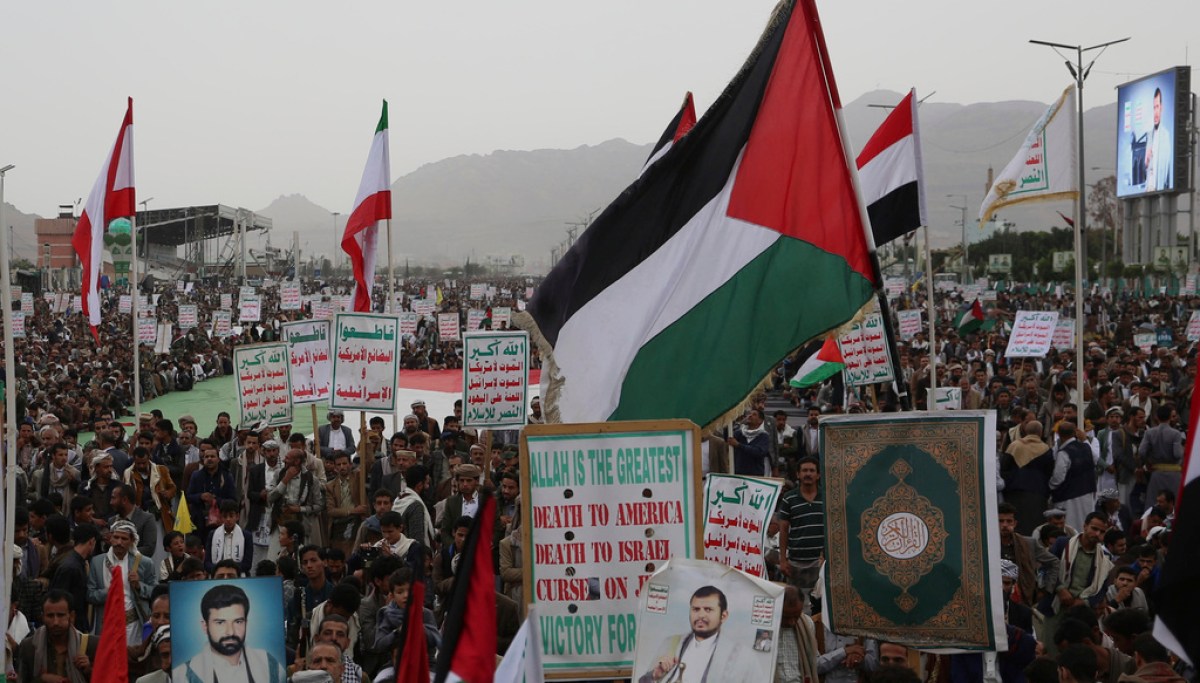
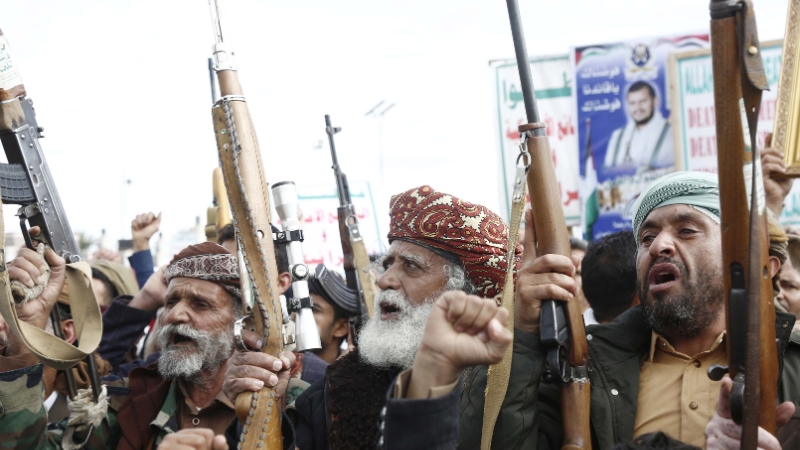
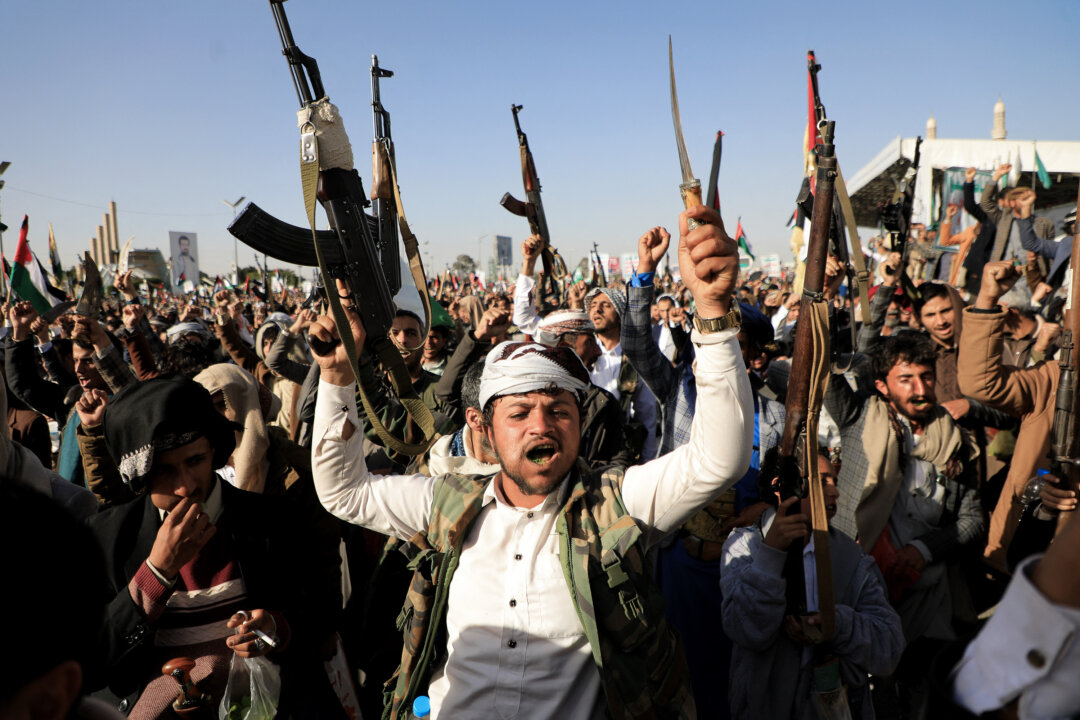
Yemen’s Iran-backed Houthi movement has announced its first missile strike targeting Israel since the current war with Iran and its allies began, with both liberal and conservative sources agreeing that at least one ballistic missile was launched from Yemen toward Israeli territory and intercepted by Israel’s military. Coverage across the spectrum concurs that the Houthis explicitly framed the attack as support for Iran and affiliated fronts in Lebanon, Iraq, and Palestine, and as the group’s “first military operation” directly against Israel in this conflict phase. Outlets on both sides report that the Israel Defense Forces confirmed detecting and intercepting a projectile launched from Yemen and that there were no reported Israeli casualties, while also noting parallel attacks in the region, including a missile strike on a Saudi airbase that injured US servicemembers.
Liberal and conservative reporting also converge on the broader regional and economic context, describing the Houthi move as an escalation that could widen the US–Iran confrontation and destabilize key maritime chokepoints. Both sides emphasize that the Bab el-Mandeb Strait and the Red Sea shipping corridor, already targeted by the Houthis in past campaigns, are at renewed risk, particularly in combination with Iran’s leverage over the Strait of Hormuz. There is agreement that the attack compounds fears of a multi-front confrontation involving Iran, its allied militias, and Israel, while diplomatic efforts remain limited or exclude major belligerents, and global markets react with anxiety over possible disruptions to energy flows and commercial trade routes.
Areas of disagreement
Framing the escalation. Liberal-aligned outlets tend to frame the Houthi strike primarily as part of a larger, spiraling regional conflict with significant global economic stakes, stressing how an expanding war could destabilize energy markets and shipping lanes. Conservative outlets more often present the event as a clear-cut expansion of the “Iran war” or of Israeli operations such as Operation Epic Fury, highlighting the Houthis’ role as an active combatant in the Iran-led axis. Liberal coverage is somewhat more likely to stress uncertainty around how far this escalation will go, whereas conservative coverage leans into the notion that the Houthi action marks a defined new front in an already critical confrontation.
Responsibility and blame. Liberal sources describe the Houthis as Iran-backed and aligned but sometimes frame the conflict in terms of a broader US–Iran power struggle and regional grievances, spreading responsibility across multiple actors and structural tensions. Conservative sources place clearer, more direct blame on Iran, repeatedly emphasizing the Houthis as Iranian proxies and portraying Tehran as orchestrating or encouraging the attack as part of a coordinated resistance network. While liberals acknowledge Iranian influence, conservatives are more explicit in assigning agency to Iran for destabilizing the region through groups like the Houthis.
Security versus economic emphasis. Liberal coverage foregrounds the potential economic fallout, repeatedly stressing the vulnerability of the Bab el-Mandeb, Red Sea, and Strait of Hormuz and the knock-on effects for oil prices and global trade, with military developments often framed through that lens. Conservative outlets also mention shipping and trade but tend to prioritize the military-security dimension, underscoring threats to Israel, US forces, and regional allies, and recalling prior Houthi attacks on vessels mainly as evidence of a mounting security risk. As a result, liberals more often portray the incident as a systemic risk to global stability, while conservatives focus on the need to counter hostile actors and protect allied assets.
Diplomatic pathways and prospects. Liberal-aligned reporting is more apt to discuss ongoing or attempted diplomatic efforts, such as regional meetings that exclude key belligerents, and to convey skepticism about but continued interest in negotiated de-escalation or conflict management. Conservative coverage gives less attention to diplomacy and more to military developments, rules of engagement, and deterrence, suggesting that stronger responses may be necessary to prevent further Houthi or Iranian aggression. Where liberals highlight the shortcomings and gaps in diplomacy as a worrying sign, conservatives more often imply that diplomatic tracks are overshadowed or rendered less meaningful by the scale of the military challenge.
In summary, liberal coverage tends to situate the Houthi missile strike within a broad narrative of regional escalation and global economic vulnerability, while conservative coverage tends to cast it as a sharp, Iran-driven security threat that demands a robust military and deterrent response.