
liberal
Missing aid boats have safely reached Cuba, US confirms
Two convoy vessels that were supposed to get to Havana by Wednesday have made it to Cuba, says US Coast Guard
14 days ago
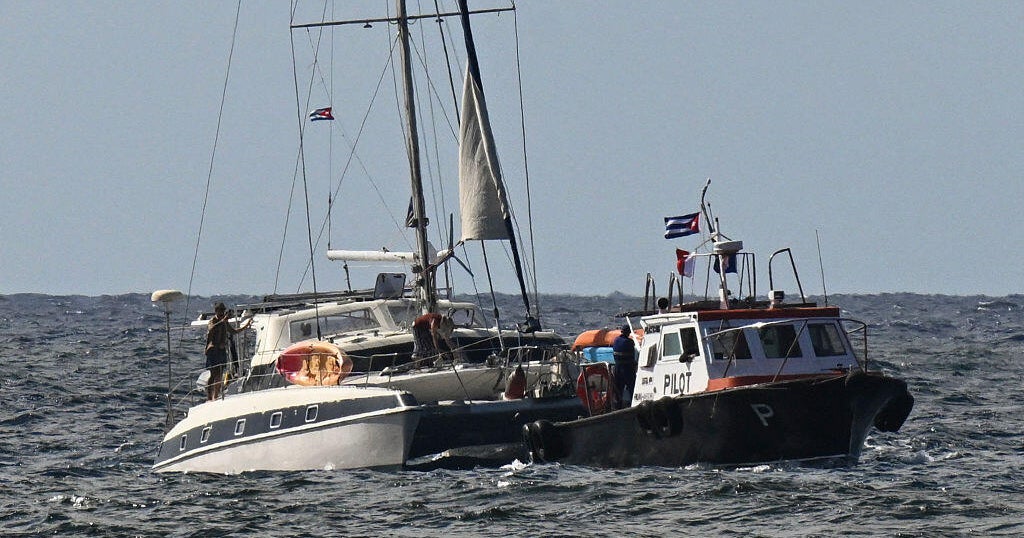
Two sailboats carrying humanitarian aid from Mexico to Cuba, initially reported missing, have been safely located and confirmed to have reached Cuban waters and then Havana. Liberal and conservative outlets agree that the boats were part of an organized humanitarian mission, that Mexico’s navy participated in locating them off the Cuban coast, and that the United States Coast Guard confirmed their safe arrival. Both sides report that the concern arose after communication was lost for a period of time, triggering search efforts, but that the crews were ultimately found to be safe. They also concur that adverse weather conditions and the need to alter course contributed to the delay in arrival, rather than any act of piracy or deliberate interference.
Coverage across the spectrum notes that the mission’s stated purpose was to deliver humanitarian aid to Cubans, with a focus on food, medicine, and other basic supplies. There is agreement that the voyage was organized by activist groups, including international participants and some public figures, and that Cuban authorities expressed concern and mobilized rescue or monitoring efforts. Both liberal and conservative stories acknowledge existing U.S.–Cuba tensions and sanctions as the broader context for the aid effort, and present the episode as one small part of a longer-running pattern of external humanitarian initiatives responding to Cuba’s internal shortages. They also describe the situation as highlighting the role of regional navies and coast guards in maritime safety coordination, regardless of political differences between the countries involved.
Framing of the mission’s purpose. Liberal outlets emphasize the convoy as a political and moral statement against the U.S. embargo and fuel-related restrictions, repeatedly highlighting that the aid sought to alleviate blackouts and medicine shortages in Cuba. Conservative coverage, by contrast, tends to describe the voyage more generically as a humanitarian shipment without dwelling on the blockade’s specifics or the organizers’ ideological agenda. Liberal stories spotlight the involvement of progressive international activists, former politicians, and cultural figures, whereas conservative reports largely omit these details and treat it as a routine maritime incident.
Attribution and responsibility. Liberal reporting stresses the role of U.S. policies, referring to a fuel blockade and broader sanctions as underlying causes of the hardships that made the aid necessary. Conservative accounts generally avoid framing the United States as responsible for Cuba’s internal crisis and instead present economic woes as a background fact without clearly assigning blame to Washington. While liberals point to the mission as evidence of international solidarity challenging U.S. policy, conservatives keep the focus on the search and rescue operation conducted by Mexico’s navy, with minimal discussion of policy culpability.
Characterization of risk and danger. Liberal sources clarify that, despite initial fears, the crews were never in serious danger and that bad weather and a longer route explained the communication gap, trying to defuse sensationalism while still underscoring the anxiety caused by the boats’ disappearance. Conservative coverage, more limited in detail, centers on the fact that the vessels were “missing” and later “located,” using terse language that underscores uncertainty but offers less nuance about the degree of risk. Liberal outlets place more emphasis on Cuban and international concern and coordination, while conservative outlets highlight the official announcement by Mexico’s navy as the key turning point.
Portrayal of Cuba and its government. Liberal-aligned media depict Cuban authorities, including the president, as actively concerned and engaged in ensuring the safety of the boats and the receipt of aid, subtly humanizing the Cuban state amid crisis. Conservative reports, where they mention Cuban authorities at all, treat them as background actors, neither praising nor criticizing their role, and refrain from framing the episode as a validation of the Cuban government’s narrative about sanctions. Liberals more readily echo Havana’s framing of the aid as a response to externally imposed hardship, while conservatives keep Cuba’s political system and claims about the blockade at arm’s length.
In summary, liberal coverage tends to treat the episode as a politically charged humanitarian mission that exposes the human costs of U.S. sanctions on Cuba and highlights transnational progressive solidarity, while conservative coverage tends to present it as a straightforward maritime search-and-locate story, downplaying the embargo debate and ideological context.