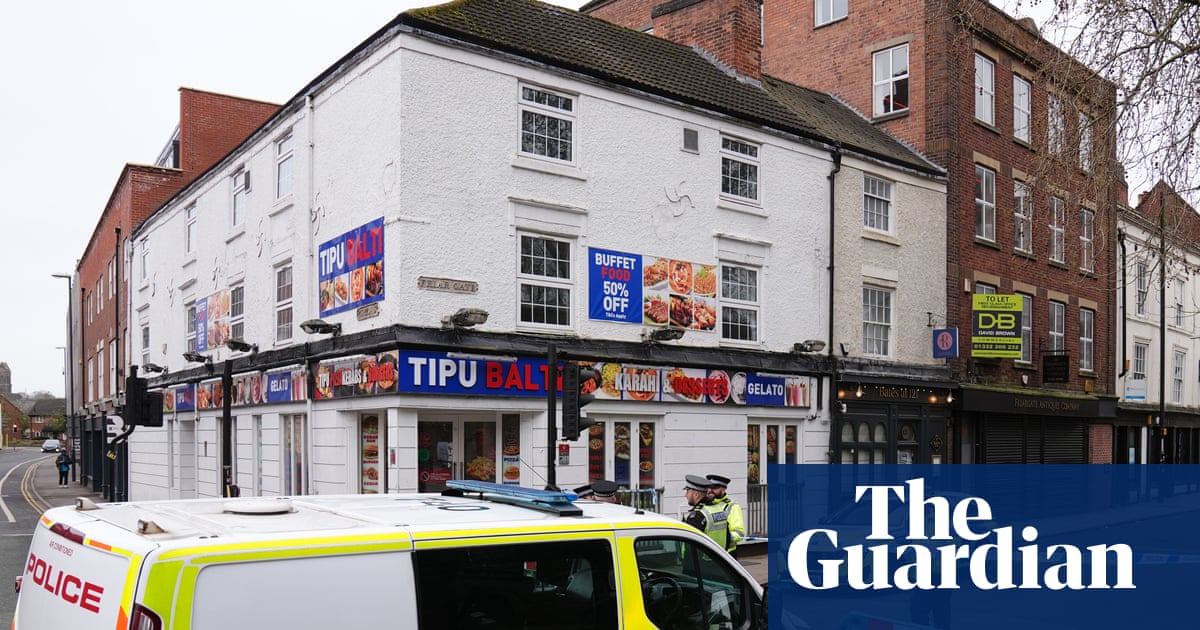
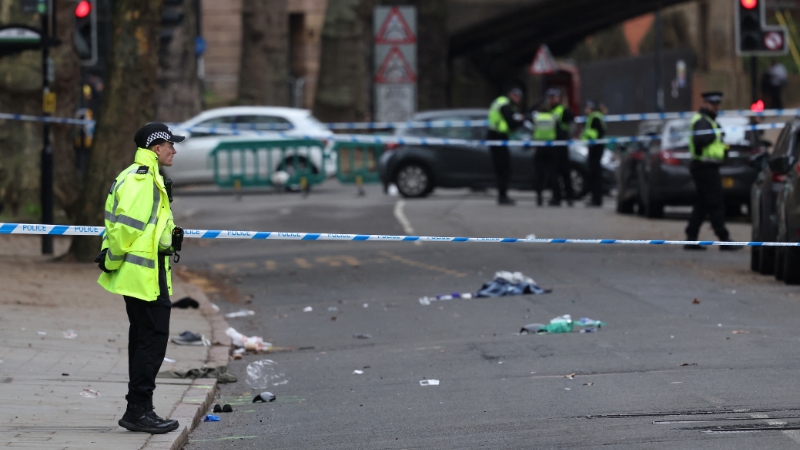
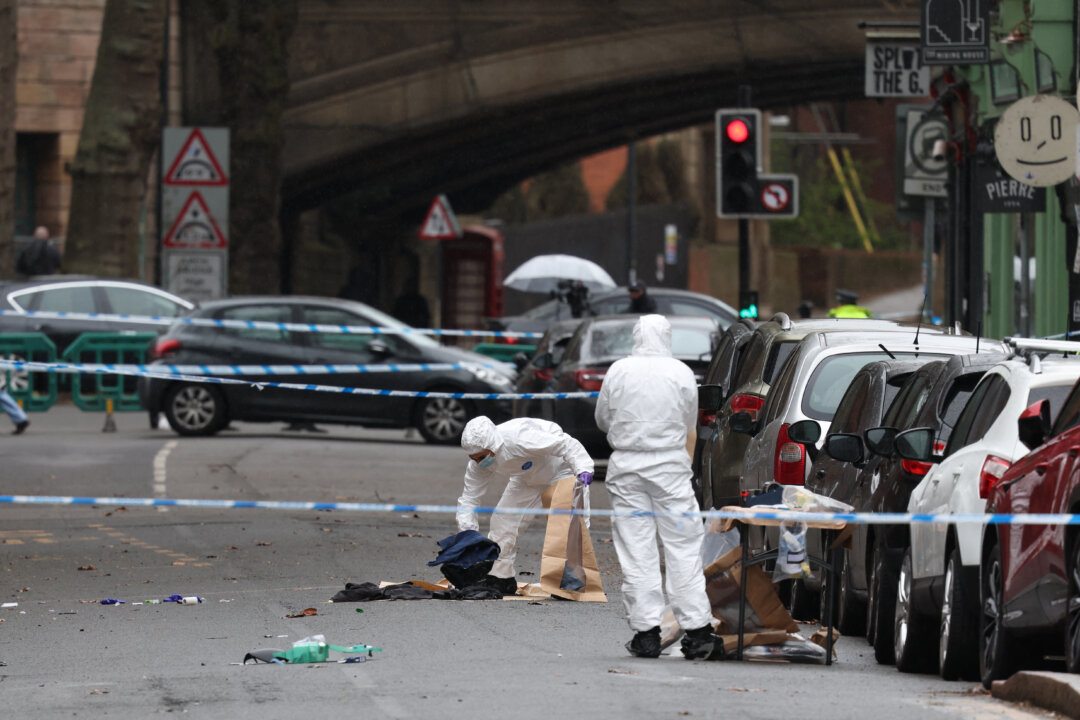
A car struck seven pedestrians in central Derby, England, at around 9:30 p.m. local time, leaving all seven injured but reported as serious rather than life‑threatening in both liberal and conservative coverage. Both sides report that a 36‑year‑old man has been arrested on suspicion of attempted murder, that emergency services treated victims at the scene before transporting them to hospital, and that eyewitness information helped police quickly locate the vehicle and detain the suspect.
Liberal and conservative outlets agree that counter-terrorism officers are assisting Derbyshire police with the investigation but that authorities have not designated the incident as a terror attack, stressing that they are keeping an open mind about the motive. They also concur that the incident occurred in a busy downtown area, that the suspect faces additional driving-related allegations, and that police are working through established investigative protocols while asking the public for information but urging people not to speculate.
Areas of disagreement
Framing of the incident. Liberal-aligned outlets tend to frame the event in strictly legal and procedural terms, emphasizing the suspicion of attempted murder and the ongoing investigation without suggesting broader narratives. Conservative outlets more readily use charged language such as “plows into crowd,” which can make the incident feel more like a deliberate mass attack, and sometimes foreground the drama of the scene. As a result, liberal coverage reads as more restrained and institutional, while conservative coverage leans toward a more sensational and emotionally driven framing.
Motive and terrorism context. Liberal coverage highlights police statements that the incident is not currently being treated as terrorism and repeats the call for an open mind on motive, downplaying speculation. Conservative coverage also notes that it is not formally labeled terrorism but gives greater prominence to the involvement of counter-terror officers, framing their role as a significant escalation. In doing so, conservative outlets create more space for readers to connect the event to terror-related concerns, whereas liberal outlets focus on the absence of such a designation.
Suspect identity and background. Liberal sources, based on the provided context, largely omit details about the suspect’s ethnicity or nationality, stressing only age, arrest status, and legal suspicion. Conservative outlets, by contrast, mention rumors that the suspect may be of Indian nationality, even while acknowledging these details are not fully confirmed. This leads liberal coverage to foreground due process and verified facts, while conservative coverage is more willing to raise questions about the suspect’s background and potential implications.
Broader social implications. Liberal-aligned reporting tends to treat the event as a serious but localized criminal investigation, avoiding links to wider social or cultural tensions and emphasizing police procedure and victim recovery. Conservative outlets are quicker to situate the story within broader anxieties about public safety and violent attacks in public spaces, implicitly inviting readers to see it as part of a larger pattern. This difference means liberal coverage stresses containment and caution, while conservative coverage leans toward emphasizing risk and systemic vulnerability.
In summary, liberal coverage tends to stress verified facts, legal process, and the current absence of a terrorism designation, while conservative coverage tends to use more dramatic language, highlight counter-terror involvement and rumored suspect background, and frame the incident within broader public-safety and cultural concerns.