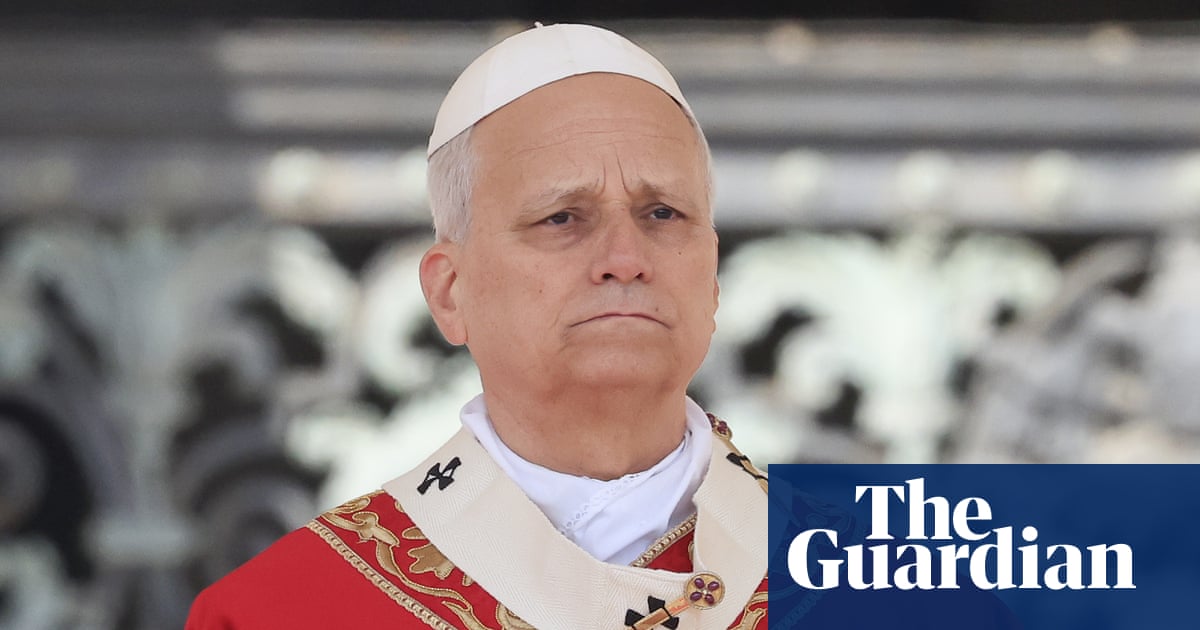
News coverage from both liberal and conservative outlets agrees that during a Palm Sunday Mass attended by tens of thousands at the Vatican, Pope Leo XIV delivered remarks rejecting the idea that God justifies war and violence. Both sides report that he said God does not heed the prayers of leaders whose hands are "full of blood," and that his homily came amid heightened U.S. military deployments to the Middle East and recent comments by Defense Secretary Pete Hegseth, who had publicly prayed for "overwhelming violence" against American enemies. Both sets of outlets also concur that the White House, through press secretary Karoline Leavitt, responded by defending the legitimacy of praying for U.S. troops, saying there is nothing wrong with such prayers, and that the Pope included specific prayers for Christians living in the Middle East.
Across coverage, there is shared context that the Pope’s Palm Sunday message fits within a long-standing Vatican tradition of emphasizing peace, nonviolence, and the incompatibility of Christian teaching with aggressive warfare. Outlets on both sides note that his remarks come at a time of ongoing conflicts and instability in the Middle East, where Christian communities are under pressure, giving added weight to his call for peace and his intercessions for regional Christians. Both liberal and conservative reports also situate the exchange within broader church–state dynamics and the historical pattern of popes addressing moral dimensions of war while political leaders assert the need to protect national security and support their armed forces.
Areas of disagreement
Target of the Pope’s criticism. Liberal-aligned outlets strongly frame the Pope’s language about leaders with "hands full of blood" as an implicit rebuke of Donald Trump and his administration’s posture toward expanding or intensifying U.S. military action in the Middle East. Conservative outlets, while quoting the same homily lines, tend to avoid linking the remarks directly to Trump and instead cast them as a general moral warning against abusing religion to justify war, portraying the comments as broadly applicable rather than personally targeted.
Framing of prayer and militarism. Liberal coverage highlights Defense Secretary Pete Hegseth’s call for "overwhelming violence" and juxtaposes it with the Pope’s reminder that Jesus rejected war, underscoring a critique of fusing Christian prayer with aggressive military aims. Conservative coverage emphasizes Karoline Leavitt’s defense that praying for troops is appropriate and frames the issue as the Pope potentially being misunderstood or over-interpreted, stressing that concern for soldiers’ safety and success is compatible with Christian practice.
Moral responsibility and tone. Liberal outlets tend to suggest that U.S. political leaders, especially in the Trump orbit, bear moral responsibility for escalating conflict and for instrumentalizing faith to bless state violence, using the Pope’s remarks as a moral indictment. Conservative outlets more often stress the legitimacy of state self-defense and downplay claims that current U.S. leaders have "blood on their hands," presenting the Pope’s words as a broader call to conscience that should not be read as direct condemnation of specific American officials.
Church–state implications. Liberal coverage often treats the episode as evidence of a growing rift between the Vatican’s peace-oriented stance and Trump-aligned nationalism, framing the Pope as a transnational moral counterweight to hawkish U.S. policy. Conservative coverage, by contrast, portrays the interaction as a manageable difference in emphasis between religious and political roles, insisting that while the Church may counsel peace, elected leaders retain the duty to use force when necessary and that such prudential judgments should not be seen as defying papal teaching.
In summary, liberal coverage tends to depict the Pope’s Palm Sunday remarks as a pointed, morally charged critique of Trump-era militarism and the use of Christian language to bless violence, while conservative coverage tends to interpret the same homily as a more general anti-war exhortation that should not be weaponized against U.S. leaders and that remains compatible with praying for the success and safety of American troops.