


liberal
U.K. police arrest 9 in raids on religious sect over alleged modern slavery, forced marriage, sex offenses
April 29, 2026 / 11:42 AM EDT / CBS News
a day ago
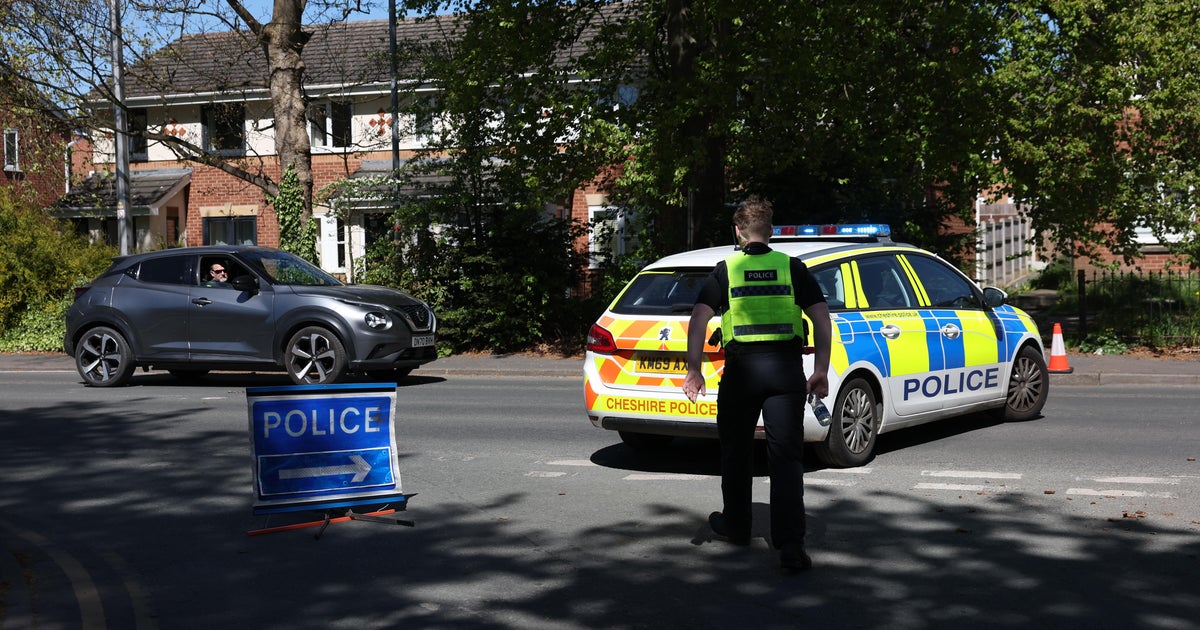
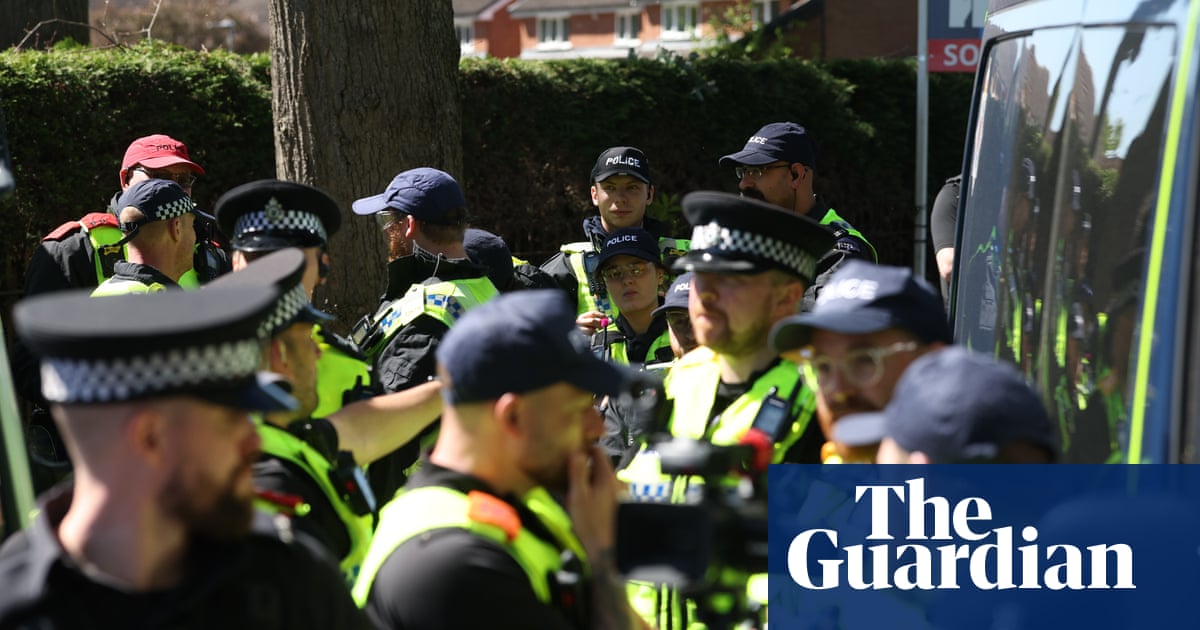
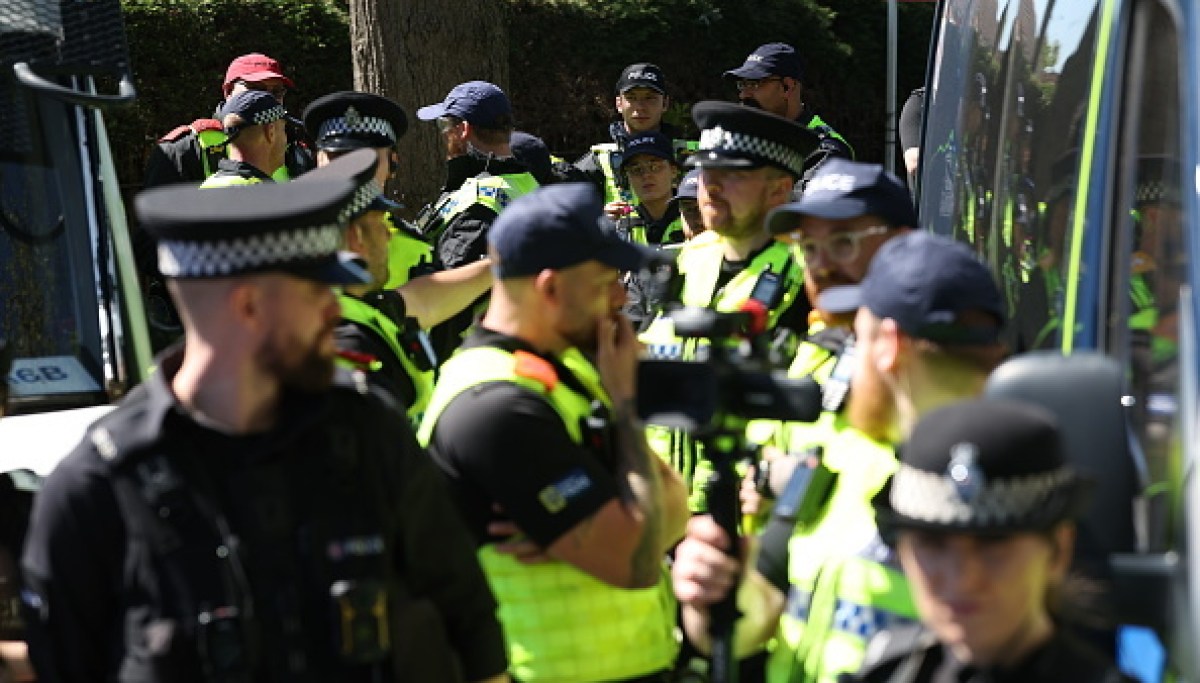
U.K. police arrested nine people in coordinated raids on the Ahmadi Religion of Peace and Light’s headquarters in Crewe, Cheshire, following allegations of modern slavery, forced marriage, and serious sexual offences. Both liberal- and conservative-leaning outlets agree that the suspects are connected to a religious sect that relocated its base to Crewe around 2021, that the operation involved specialist officers, and that the arrests were triggered by detailed complaints from at least one former member who reported rape and sexual abuse at the premises in 2023. Coverage across the spectrum notes that those detained are being questioned on suspicion of multiple offences, that the investigation is ongoing with potential for further victims to come forward, and that police have not yet announced formal charges or trial dates as of the latest reports.
Across outlets, the shared context emphasizes that the case is being treated as a complex modern slavery and exploitation investigation under U.K. law, involving potential trafficking-like control, coercion, and abuse within a closed religious environment. Liberal and conservative sources both highlight that the Ahmadi Religion of Peace and Light presents itself as a breakaway or alternative Islamic or “new age” movement that has previously attracted scrutiny in Europe, including over immigration and asylum-related issues in Sweden and the U.K. They concur that the group’s international membership and transnational activities complicate the investigation, and that police and safeguarding agencies are positioning this as part of a broader effort to tackle exploitation, forced marriage, and abuse within insular communities of various kinds.
Framing of religion and identity. Liberal-leaning coverage tends to refer more generically to a “religious sect” or “religious group,” only secondarily mentioning its Islamic or messianic character and stressing that it is distinct from mainstream Islam. Conservative outlets more prominently foreground the sect’s Islamic or “Muslim cult” identity in headlines and ledes, while sometimes still noting that it is not representative of orthodox Islam. This creates a difference in emphasis, with liberal reporting downplaying broad religious labels to avoid stigmatizing Muslims generally, while conservative reporting highlights the Islamic framing as central to understanding the group.
Language of extremity and sensationalism. Liberal sources typically use institutional and legal language—“modern slavery,” “serious sexual offences,” “forced marriage”—and avoid heavily emotive descriptors beyond what police have officially stated. Conservative sources are more likely to lean into dramatic phrasing such as “cult,” “slavery,” and “messianic Islamic sect” in prominent positions, framing the story as an alarming example of abuse within a fringe, quasi-religious movement. As a result, liberal coverage feels more procedural and investigative, while conservative coverage feels more alarm-focused and sensational in tone.
Broader political and societal implications. Liberal coverage situates the case within wider concerns about safeguarding, immigration oversight, and the policing of closed religious communities, but generally avoids tying it to large-scale critiques of immigration or multiculturalism and keeps the focus on institutional responses. Conservative outlets more readily connect the story to debates about how Western societies handle non-traditional or imported religious movements, occasionally implying that lax asylum or immigration policies have enabled abusive sects to establish headquarters in the U.K. Thus liberals emphasize systemic protection for victims, while conservatives emphasize potential policy failures that allowed the group to operate.
Representation of the group’s distinctiveness. Liberal-leaning reports stress that the Ahmadi Religion of Peace and Light is a fringe, controversial movement whose beliefs and practices differ sharply from mainstream Islam, portraying it as an anomalous sect rather than an example of a broader religious community. Conservative accounts, while sometimes acknowledging this distinction, often spend less space clarifying the separation from wider Muslim communities and instead underline its status as a “messianic Islamic” or “Muslim cult,” making the religious identifier more salient. This leads liberal outlets to foreground the group’s idiosyncrasy and new-age elements, while conservatives foreground its Islamic branding and charismatic-founder structure.
In summary, liberal coverage tends to emphasize the case as a law-enforcement and safeguarding issue involving a fringe religious sect distinct from mainstream Islam, while conservative coverage tends to highlight the group’s Islamic or cult identity and connect the allegations more explicitly to concerns about immigration, imported religious movements, and social cohesion.